

What Structural Factors Led the Facade Front Failure in the Chicago Church Collapse
Chicago Church Collapse: Sacred Heart Church Facade Partially Collapses During Sunday Mass in Morgan Park, Officials Say
The partial collapse of the Sacred Heart Church’s facade front in Chicago’s Morgan Park neighborhood revealed more than a tragic structural failure—it exposed the urgent need for proactive maintenance and modern inspection practices for historic buildings. Experts conclude that long-term material degradation, coupled with environmental stress and deferred repair, likely led to the sudden failure during Sunday Mass. This event underscores how aging masonry structures, though visually resilient, can conceal deep mechanical weaknesses that demand continuous monitoring.
Overview of the Chicago Church Facade Collapse
The incident at Sacred Heart Church shocked both parishioners and structural engineers. It serves as a cautionary example of how architectural heritage can become a public safety risk when deterioration goes unchecked.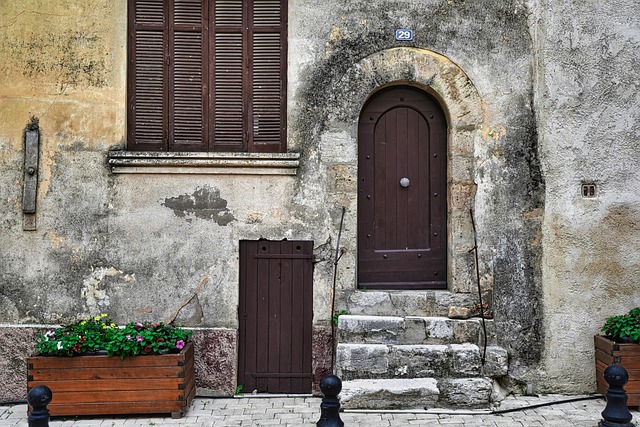
Context and Event Summary
The Sacred Heart Church collapse occurred during a Sunday service, when part of the facade front gave way without warning. Witnesses described hearing cracking noises moments before large sections of masonry detached from the upper wall. Emergency crews quickly evacuated the congregation and cordoned off the site to prevent further injury or damage. Structural engineers were dispatched within hours to assess the remaining stability and determine whether adjacent walls were at risk.
Timeline and Sequence of Structural Failure During Sunday Mass
Initial reports indicated that small fragments began falling minutes before the main section collapsed. The sequence suggested a progressive failure starting near decorative stonework at roof level, where water infiltration was suspected. Once critical joints lost cohesion, gravity-driven detachment propagated rapidly downward through weakened mortar lines until an entire panel separated from its support structure.
Immediate Response by Emergency Officials and Structural Engineers
Fire officials secured the perimeter while engineers used drones to survey inaccessible sections. Temporary shoring was installed to stabilize adjoining walls. The city’s building department initiated a full investigation into structural integrity, focusing on potential violations of facade inspection ordinances that require periodic assessments for older masonry buildings.
Importance of Analyzing Facade Failures in Historic Structures
Understanding facade failures in historical architecture is crucial not only for preservation but also for public safety management in urban environments.
Relevance of Facade Integrity to Public Safety and Preservation
Historic churches often stand near pedestrian zones, making facade stability essential to community safety. A single collapse can compromise cultural heritage and endanger lives simultaneously. Maintaining facade integrity preserves both architectural identity and civic trust in historic landmarks.
Structural Assessment Challenges Unique to Older Masonry Churches
Older churches present unique diagnostic challenges due to concealed cavities, irregular stone patterns, and undocumented repairs over decades. Many lack original blueprints or have undergone piecemeal restoration using incompatible materials that alter load paths.
Broader Implications for Urban Building Maintenance Standards
This event raises questions about inspection frequency across Chicago’s aging building stock. The city’s climate accelerates material fatigue, yet enforcement resources remain limited. Strengthening maintenance codes could prevent similar incidents across other heritage properties.
Structural Composition of the Sacred Heart Church Facade
To interpret why this collapse occurred, one must first consider how such ecclesiastical facades were originally built—both their beauty and their vulnerabilities.
Architectural Design and Material Characteristics
Sacred Heart Church followed early 20th-century Gothic Revival design principles with heavy load-bearing masonry walls supporting ornate stone detailing. Its facade front combined limestone cladding over brick backup walls bound by lime-based mortar—materials typical for churches built between 1910 and 1930.
Common Materials Used in Early 20th-Century Ecclesiastical Construction
Builders relied on locally quarried limestone for its sculptural qualities but underestimated its long-term weathering under freeze-thaw cycles common in Chicago winters. Mortar mixes were often soft to accommodate minor movement but eventually eroded faster than expected when exposed to pollutants or moisture intrusion.
Role of Masonry, Mortar, and Decorative Elements in Facade Stability
Decorative pinnacles and cornices added aesthetic richness but introduced stress concentrations where thin sections met heavier blocks. When mortar joints failed or anchors corroded behind these features, localized instability could cascade into broader wall detachment.
Interaction Between Structural Elements and Environmental Loads
Even robust masonry structures rely on balanced interaction between roof systems, buttresses, and foundations to distribute loads efficiently.
How Facade Walls Integrate with Roof Trusses, Buttresses, and Foundations
In Gothic-style churches like Sacred Heart, vertical loads transfer from roof trusses into side buttresses before reaching foundations. The front wall primarily resists wind pressure rather than carrying major weight; however, any disruption in anchorage between facade veneer and internal framing compromises this balance.
Distribution of Vertical and Lateral Loads Across Exterior Walls
Vertical loads act through gravity on piers while lateral forces from wind or seismic activity push outward on tall facades. Without adequate ties connecting outer masonry layers to interior walls, these forces can cause bulging or delamination over time.
Typical Stress Points in Large Masonry Facades Under Environmental Exposure
Critical stress points include parapet edges, window arches, and cornice lines where temperature gradients induce expansion differentials between materials—a frequent trigger for cracking patterns visible years before collapse events.
Potential Structural Factors Contributing to the Failure
Preliminary engineering analysis points toward cumulative degradation rather than a single catastrophic trigger.
Deterioration of Masonry Materials Over Time
Chicago’s freeze-thaw cycles expand trapped moisture inside porous stone or brick units, gradually fracturing them from within. Mortar erosion weakens bonding capacity between units until load transfer becomes uneven across joints. Moisture infiltration accelerates decay by leaching salts that crystalize internally—a slow but relentless process visible as surface spalling or efflorescence.
Insufficient Anchoring and Connection Systems
Many early-1900s facades used mild steel ties now heavily corroded after decades of exposure behind damp masonry layers. As corrosion expands metal volume by up to seven times its original size, it exerts internal pressure that cracks surrounding mortar beds. Over time this reduces anchorage redundancy so even minor vibrations can initiate detachment sequences.
Foundation Movement or Settlement Issues
Differential settlement beneath corner piers may tilt vertical alignment enough to open diagonal cracks along facade panels. These fissures act as water entry points that worsen instability during seasonal freeze cycles. Long-term creep deformation may also distort geometry subtly until cumulative strain exceeds tensile limits of brittle masonry joints.
Environmental and Maintenance Influences on Structural Integrity
Beyond inherent design factors, environmental conditions play an equally decisive role in determining how long such structures endure safely.
Effects of Weathering and Climate Exposure in Chicago Conditions
Temperature swings exceeding 50°F within days impose thermal expansion stresses across rigid materials lacking flexibility joints. Wind gusts off Lake Michigan amplify lateral loading on tall facades while snow buildup adds intermittent vertical pressure near parapets. Airborne pollutants accelerate chemical reactions within limestone surfaces leading to black crust formation that traps moisture beneath it—furthering decay unseen from ground level.
Role of Inspection, Maintenance, and Deferred Repairs
Routine inspections every five years are standard under local ordinances but often limited to visual checks without invasive testing tools like borescopes or ultrasonic scanners. Deferred maintenance—often due to budget constraints—lets small fissures widen unchecked until they threaten structural safety margins significantly.
Gaps in Preservation Funding Leading to Progressive Deterioration Trends
Historic congregations face shrinking membership bases reducing available funds for upkeep. Without dedicated preservation grants or municipal subsidies many rely on volunteer labor unable to address complex engineering repairs requiring specialized expertise or scaffolding access equipment costs exceeding annual budgets.
Engineering Assessment After the Collapse Event
Once debris cleared sufficiently investigators began detailed evaluation combining traditional fieldwork with digital modeling technologies now standard practice among forensic engineers.
On-Site Evaluation Techniques Used by Investigators
Teams performed close-range visual mapping identifying initiation zones around upper cornices where detachment originated. Drones captured high-resolution imagery allowing orthographic reconstruction without risking personnel safety near unstable remnants. Samples extracted from fallen blocks underwent compressive strength testing revealing reduced cohesion consistent with prolonged moisture exposure rather than acute overload conditions.
Structural Modeling and Simulation Approaches
Finite element analysis simulated pre-collapse stress distribution confirming concentration near anchor tie locations consistent with corrosion-induced weakening hypotheses. Comparing theoretical load paths against observed crack propagation validated assumptions about insufficient lateral restraint behind decorative stonework layers once corrosion advanced beyond threshold levels measurable through non-destructive radar scanning techniques used post-event.
Validation Against Historical Design Documents or Renovation Records
Archived parish renovation logs indicated partial repointing completed mid-1990s using Portland cement mortars harder than original lime-based compositions—a mismatch likely accelerating joint separation under thermal cycling due to incompatible elasticity ratios documented widely across heritage conservation literature (see ASTM C1324 guidelines).
Lessons for Future Preservation and Safety Strategies
The Sacred Heart case demonstrates how heritage stewardship must evolve beyond reactive repair toward predictive monitoring frameworks integrating modern sensing technologies into old fabric discreetly yet effectively.
Improving Facade Monitoring Systems in Heritage Structures
Installing embedded sensors capable of detecting micro-displacements or humidity fluctuations enables real-time alerts before visible cracking occurs. Data analytics platforms can correlate environmental readings with movement trends predicting risk escalation thresholds warranting intervention long before physical distress manifests externally.
Predictive Maintenance Using Data Analytics From Environmental Sensors
Continuous data collection allows pattern recognition identifying abnormal strain signatures tied directly to seasonal weather variations unique per site microclimate—transforming maintenance scheduling from calendar-based routines into evidence-driven decision models improving resource allocation efficiency dramatically across citywide heritage portfolios.
Establishing Threshold Criteria for Early Warning Alerts in Aging Buildings
Defining quantitative thresholds such as allowable displacement rates (e.g.,