
Is Baroque Architecture the Defining Element of Prague’s Architectural Legacy
Prague’s Architectural Legacy Includes Gothic, Baroque, Renaissance & Beyond
Prague’s architecture is a living palimpsest where centuries of artistic ambition coexist. The city’s identity is not bound to a single style but shaped by its transitions—from Gothic verticality to Baroque drama and beyond. While Gothic structures embody Prague’s medieval faith, Baroque architecture captures its emotional and political zenith under Habsburg rule. Later revivals and modernist reinterpretations ensured that the city’s built environment remained in dialogue with its past. Today, Prague’s architectural legacy stands as one of Europe’s richest chronicles of stylistic evolution.
The Architectural Evolution of Prague
Prague’s urban form reveals an intricate layering of epochs, each leaving traces that remain visible in its streets and skyline. The city grew organically around its Romanesque nucleus, absorbing successive waves of stylistic innovation without erasing what came before.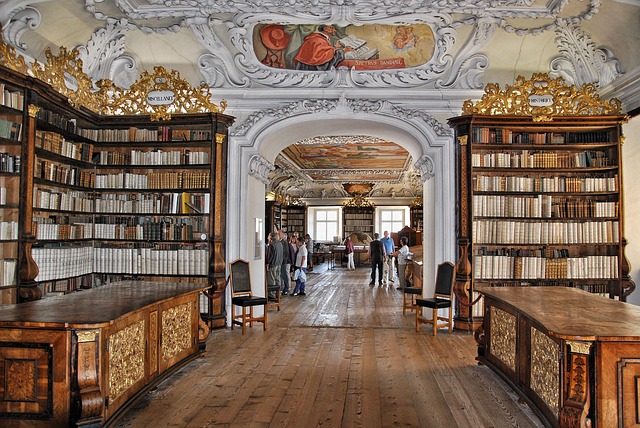
Layers of History in Prague’s Urban Fabric
The cityscape unfolds as a continuum from early Romanesque foundations to modernist interventions. Each era—Gothic, Renaissance, Baroque—adds depth rather than replacement. In Old Town and Malá Strana, one can observe how ribbed vaults rise beside stuccoed façades or how Renaissance courtyards hide beneath later Rococo masks. This coexistence creates a visual dialogue that defines Prague’s character: dense, textured, and remarkably cohesive despite stylistic diversity.
The Transition from Gothic to Baroque Dominance
By the late 16th century, the decline of medieval Gothic ideals made space for new forms of expression. The Counter-Reformation brought renewed Catholic patronage that favored theatricality over austerity. Under Habsburg rule, architecture became a tool for persuasion—churches and palaces projected divine authority through grandeur and movement. The shift was not abrupt but evolutionary; Gothic spires often persisted above newly ornamented façades, symbolizing continuity amid change.
The Emergence of Baroque Architecture in Prague
The rise of Baroque architecture in Prague cannot be separated from the turbulence of the 17th century. War, faith, and imperial ambition converged to produce a style that sought to move hearts as much as impress minds.
Historical Context and Influences
The aftermath of the Thirty Years’ War transformed Bohemia into a stronghold of Catholic renewal. Italian architects such as Carlo Lurago and Francesco Caratti were invited to reimagine sacred spaces with dynamic spatial compositions unfamiliar to local builders. Their influence merged with Bohemian craftsmanship—stucco workers from Plzeň or stone carvers from Kutná Hora—to create a distinctly Czech version of Baroque exuberance rooted in local materials like sandstone and lime plaster.
Key Characteristics of Prague’s Baroque Expression
Prague’s Baroque buildings emphasize contrast and movement: curving façades catch shifting light while interiors dissolve boundaries between structure and ornament. Sculpture, fresco painting, and architecture merge into unified experiences where illusion becomes theology in stone. Light serves both symbolic and compositional roles—filtered through domes or reflected off gilded altars—to evoke transcendence within confined urban plots.
Landmark Examples Defining the Baroque Identity of Prague
The city’s Baroque monuments function as both artistic achievements and historical documents. They narrate how faith, politics, and artistry intertwined during Bohemia’s post-war reconstruction.
Ecclesiastical Architecture as a Symbolic Core
Churches were central to expressing Catholic triumph after decades of conflict. Their design fused devotion with spectacle.
St. Nicholas Church in Malá Strana
St. Nicholas stands as the epitome of High Baroque ambition in Central Europe. Its monumental dome dominates the Lesser Town skyline while the interior unfolds rhythmically through columns and galleries bathed in natural light. Every sculptural detail—from cherubs on cornices to painted vaults—contributes to a unified theological narrative meant to inspire awe rather than contemplation alone.
Loreta Complex and Its Pilgrimage Function
The Loreta complex illustrates Czech piety expressed through architectural theater. Built around a replica of the Holy House of Loreto, it combined pilgrimage devotion with sensory experience: bells chimed hourly across cloistered courtyards while silver reliquaries gleamed under candlelight. This fusion typifies how Czech Baroque merged faith with emotion.
Civic and Palatial Architecture in the Baroque Era
Beyond churches, civic buildings adopted similar grandeur to project secular authority within an imperial framework.
Wallenstein Palace as a Political Statement in Stone
Commissioned by General Albrecht von Wallenstein after his military triumphs, this palace asserted aristocratic power through scale and symmetry. Its gardens introduced Italianate order into Prague’s medieval fabric while frescoed halls celebrated loyalty to empire—a visual manifesto carved into masonry.
Kinský Palace on Old Town Square
Kinský Palace bridges late-Baroque weight with Rococo grace. Its façade ripples gently across Old Town Square, signaling refinement over dominance. Inside, decorative stuccoes replaced heavy ornamentation with playful asymmetry that anticipated Enlightenment sensibilities emerging across Europe.
Interactions Between Baroque and Other Architectural Traditions in Prague
Baroque architecture did not erase earlier layers but engaged them directly. Many reconstructions used existing frameworks as structural anchors for new expression.
Renaissance Foundations Beneath the Baroque Surface
Numerous palaces retained Renaissance cores even as façades were recast in swirling stucco reliefs. This hybridization produced forms unique to Central Europe: rectangular courtyards framed by curved porticos or sgraffito walls hidden behind sculptural masks—a conversation between restraint and exuberance embedded within masonry itself.
Gothic Resonances within a Baroque Cityscape
Gothic spires continued punctuating Prague’s skyline long after domes rose beside them. Churches like Týn retained their medieval silhouettes while neighboring Jesuit complexes embraced movement over verticality. Adaptive reuse preserved these older structures yet reframed them within new stylistic vocabularies—a dialogue between memory and reinvention visible at nearly every street corner.
Beyond the Baroque: Continuity and Transformation in Prague’s Architectural Legacy
The story did not end with the 18th century; subsequent generations revisited Baroque principles through revivalism or critique.
Nineteenth-Century Historicism and Neo-Baroque Revivals
During national revival movements of the 19th century, architects reinterpreted earlier motifs to assert cultural identity under imperial rule. Neo-Baroque civic buildings like theaters or museums echoed past grandeur but served modern functions such as education or governance—bridging nostalgia with progress.
Modernism’s Dialogue with Historical Contexts
Twentieth-century architects approached history critically rather than sentimentally. Functionalist works maintained clarity yet referenced traditional urban rhythms: setbacks aligned with historic cornices; window proportions recalled classical ratios even when rendered in concrete or steel. This restraint allowed modernism to coexist respectfully within one of Europe’s most historically charged environments.
Assessing Whether Baroque Architecture Defines Prague’s Legacy Today?
Today’s perception of Prague often centers on its baroque architecture because it encapsulates both emotional resonance and political symbolism unmatched by other periods.
Comparative Significance Within the City’s Stylistic Spectrum
While Gothic cathedrals define spiritual origins—the ascent toward heaven—Baroque monuments express human drama grounded on earth: faith embodied through motion rather than height. Their density across districts grants them visual dominance that shapes how visitors perceive “historic Prague,” even when surrounded by later additions like Art Nouveau façades or Cubist experiments.
Enduring Influence on Urban Perception and Cultural Memory
Touristic imagery frequently foregrounds domes, statues, and plazas born from the baroque era because they embody spectacle at civic scale. Conservation policies likewise prioritize these ensembles as emblematic heritage assets central to national identity debates. Yet their meaning remains relational: they gain significance precisely because they converse with older Gothic towers beneath them and newer glass façades beyond them—a continuum rather than hierarchy within architectural memory.
FAQ
Q1: Why is baroque architecture so prominent in Prague?
A: It flourished after the Thirty Years’ War when Catholic patrons commissioned monumental projects reflecting renewed religious authority under Habsburg influence.
Q2: How does St. Nicholas Church represent High Baroque design?
A: Through its vast dome, rhythmic interior articulation, integrated sculpture, painting programs, and masterful use of light symbolizing divine presence.
Q3: What distinguishes Czech baroque from Italian models?
A: Local adaptation using Bohemian materials like sandstone combined Italian spatial dynamism with regional craftsmanship traditions producing softer ornamentation tones.
Q4: Did later styles replace baroque completely?
A: No; later revivals reinterpreted it while modernist architects engaged its urban logic instead of rejecting it outright.
Q5: How does baroque architecture shape modern perceptions of Prague?
A: Its visual density across key districts creates an emotional image that defines how residents and visitors alike experience the city today.