
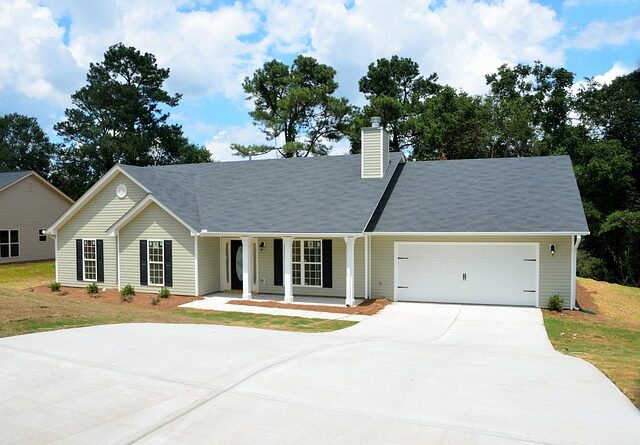
Are Single Story Home Plans Redefining Closed Floor House Designs Today
12 Closed Floor House Plans That Prove Defined Spaces Are Back
Single story home plans are quietly reshaping modern residential architecture. The open-concept era once promised freedom and flow, yet homeowners now seek comfort in structure. Defined rooms, acoustic control, and spatial hierarchy have returned not as nostalgia but as a refined response to how people live today. This shift signals a more mature design language—one that values privacy and purpose as much as openness.
The Architectural Shift Toward Single Story Home Plans
The move toward single story living isn’t simply about convenience; it’s a reflection of changing lifestyles and architectural maturity. As households evolve, design priorities shift from spectacle to subtlety, from vast openness to meaningful separation.
Evolution of Floor Plan Preferences
Open-concept layouts dominated residential design through the 2000s. Walls came down, kitchens merged with living rooms, and visual continuity became the new luxury. Yet after years of blurred boundaries, many homeowners began craving definition again. The pandemic accelerated this change—remote work demanded quiet corners, while families sought personal retreats within shared homes. Single story home plans now balance both: they maintain visual flow while allowing each room to serve a clear purpose.
Resurgence of Defined Spaces
Defined spaces have returned not as rigid boxes but as adaptable zones. Architects use layout geometry to create natural separations between activity areas—kitchens that open partially to dining rooms or studies tucked behind sliding panels. This redefinition allows flexibility without reverting to old-fashioned compartmentalization. The result feels intentional rather than closed off.
Flexibility Without Sacrificing Flow
Single story home plans excel at maintaining horizontal fluidity even with enclosed areas. Circulation paths remain intuitive; sightlines stretch across courtyards or through glazed partitions. It’s less about walls and more about rhythm—how one moves from public to private zones seamlessly.
The Influence of Lifestyle and Functionality on Design Trends
Lifestyle shifts have always driven architectural change, but few periods have tested domestic space like recent years. Work-from-home realities, multi-generational living, and accessibility concerns are reshaping how designers think about spatial organization.
Remote Work, Family Dynamics, and Privacy Needs
The home office is no longer an afterthought squeezed into a corner. It’s often acoustically isolated yet visually connected through glass or clerestory windows. Families with children value noise control during work hours but still want proximity for supervision—a challenge single story layouts solve efficiently.
Accessibility and Aging-in-Place Requirements
Single story homes naturally suit aging-in-place principles by eliminating stairs and minimizing physical barriers. Doorways can be widened easily; bathrooms can integrate curbless showers without compromising style. This practicality has made single level living appealing across age groups.
Noise Control and Functional Zoning
Closed floor concepts excel in managing sound between zones—a critical feature for compact urban lots where density amplifies noise transfer. Defined rooms also allow independent temperature control or lighting scenes tailored to each function.
Redefining Closed Floor Concepts Through Modern Design Principles
Today’s closed floor homes aren’t throwbacks; they’re hybrids blending traditional structure with modern openness. Designers use visual cues rather than solid barriers to guide experience through space.
Integrating Traditional Separation with Contemporary Aesthetics
Partial walls anchor furniture arrangements while maintaining sightlines. Glass partitions introduce transparency without losing acoustic separation. Varied ceiling heights subtly signal transitions between social and private zones—an approach borrowed from hospitality design where ambiance shifts by area.
Balancing Openness with Enclosure
Modern architects treat enclosure as a spectrum rather than an absolute state. Sliding panels or pivot doors allow spaces to expand or contract depending on activity level or time of day. This adaptability keeps interiors dynamic instead of static.
Material Choices and Lighting Design Reinforcing Boundaries
Material contrast plays a major role: textured plaster in living rooms versus smooth oak paneling in studies defines mood without physical division. Layered lighting—task lamps in offices, diffused uplights in lounges—further distinguishes each zone while maintaining overall harmony.
Spatial Efficiency in Single Story Layouts
Efficiency defines the success of any single story plan. Every square foot must work hard since expansion happens horizontally rather than vertically.
Optimizing Circulation Paths
Good circulation avoids wasted corridors while preserving privacy buffers around bedrooms or baths. Architects often align doorways diagonally to extend perceived depth across modest footprints.
Modular Design Elements for Adaptable Living Spaces
Modular cabinetry or movable partitions let homeowners reconfigure spaces as needs evolve—from nursery to study or guest suite to hobby room—without structural changes.
Natural Light Penetration with Privacy Preservation
Clerestory windows bring daylight deep into interiors while shielding views from neighbors. Courtyard-centered designs achieve the same effect by turning glazing inward instead of outward.
Design Strategies That Elevate Single Story Closed Floor Homes
The best closed floor homes feel neither cramped nor disconnected; they rely on proportion, zoning, and subtle hierarchy to guide experience naturally.
Zoning for Privacy and Functionality
Public areas like living rooms face the street side; private quarters retreat toward gardens or courtyards. Transitional spaces such as foyers mediate between them, softening acoustic shifts and visual exposure.
Furniture Placement and Built-ins Defining Zones
Built-in shelving or banquettes act as dividers that preserve airiness while signaling functional boundaries—a technique favored in Scandinavian single story designs where minimalism meets warmth.
Enhancing Comfort Through Proportion and Scale
Balanced room proportions prevent visual confinement even when walls exist. Slightly higher ceilings in communal areas create hierarchy; lower ones in bedrooms foster intimacy without feeling small.
The Role of Technology and Sustainability in Modern Closed Floor Designs
Technology now complements architectural logic rather than competing with it, while sustainability principles turn enclosed layouts into energy-efficient systems.
Smart Home Integration Within Defined Spaces
Zoned climate systems heat or cool only occupied rooms, cutting energy waste significantly according to IEA building efficiency data (IEA, 2023). Smart lighting responds to occupancy sensors so illumination adapts automatically across separated zones.
Automated Shading Systems Managing Daylight
Automated blinds track sun angles throughout the day, balancing glare reduction with solar gain management—a practical necessity when each room has distinct orientation within a single level footprint.
Sustainable Materials and Energy Performance Considerations
Eco-friendly finishes like low-VOC paints improve indoor air quality within enclosed volumes where ventilation patterns differ from open plans. Enhanced insulation around each room stabilizes temperature gradients efficiently measured under ISO 6946 thermal performance standards (ISO, 2022).
How Architects Are Reimagining the Closed Floor Paradigm Today
Architects today treat privacy not as isolation but as calibrated connection—spaces breathe individually yet contribute collectively to overall coherence.
Blending Privacy with Connectivity in Contemporary Homes
Semi-open transitions such as interior courtyards allow simultaneous separation and interaction among family members—a spatial dialogue common in Mediterranean-inspired single story home plans adapted for modern climates.
Courtyard-Centered Single Story Plans Enhancing Circulation
Courtyards double as light wells guiding movement intuitively around their perimeter; they also anchor microclimates that moderate temperature swings naturally through cross-ventilation principles recognized by ASHRAE building standards (ASHRAE 62.1).
Adapting Traditional Compartmentalization
Traditional compartmentalization evolves into flexible zoning: movable joinery replaces permanent walls so social patterns dictate configuration rather than fixed blueprints—a quiet revolution redefining domestic architecture’s next chapter.
Future Directions in Single Story Residential Architecture
Hybrid models will likely dominate coming decades—homes that toggle between open-plan energy during gatherings and closed-plan calm during daily routines.
Demographic data show rising demand among both young families seeking safety for children and older adults prioritizing accessibility (Bloomberg Residential Outlook 2024). As building technologies advance—from prefabricated wall modules to AI-driven environmental controls—the aesthetic language of closed floor homes will continue refining itself toward simplicity paired with sensory richness.
FAQ
Q1: Why are single story home plans gaining renewed interest?
A: They combine accessibility with efficient layouts suited for evolving lifestyles including remote work and multi-generational living arrangements.
Q2: How do modern closed floor designs differ from traditional ones?
A: Modern versions use partial transparency, modularity, and smart systems instead of rigid compartmentalization common decades ago.
Q3: Are single story homes more sustainable than multi-level houses?
A: Often yes; their compact envelopes reduce vertical heat loss and simplify passive ventilation strategies when properly designed.
Q4: What materials enhance comfort in enclosed layouts?
A: Natural woods, breathable plasters, low-VOC coatings, and acoustic panels maintain healthy indoor conditions within defined spaces.
Q5: Can closed floor concepts still feel spacious?
A: Absolutely; thoughtful proportions, layered lighting, internal courtyards, and controlled sightlines create openness even without continuous volume connections.