
Luxe decor furniture ideas for a layered and livable home
What luxe decor furniture means in today’s interiors
Luxe decor furniture is not simply furniture with a high price tag. In a well-designed home, it usually refers to pieces with strong proportions, tactile materials, considered detailing, and enough comfort for daily use. The most convincing luxury rooms feel layered rather than staged: a sculptural sofa, a natural stone table, warm wood storage, soft lighting, art, and a few personal objects that give the space a sense of memory. Recent industry coverage from Houzz, the American Home Furnishings Alliance, and major design publications points in a similar direction: homeowners are showing more interest in warmer wood tones, rounded forms, richer texture, mood-lifting color, and furniture that looks collected over time.
That shift matters because luxury decor can feel flat when every item is polished, new, and visually loud. A more durable approach starts with architecture, scale, and use. Before choosing a statement chair or marble coffee table, consider how the room should feel, how people move through it, and which one or two pieces deserve attention. For more interior inspiration across furniture, finishes, and styling, visit the Furniture & Decor section.
Start with proportion before choosing statement pieces
The fastest way to make expensive furniture look ordinary is to ignore scale. A luxe room needs breathing space around important pieces, clear walking paths, and a focal point that is visible without taking over every view. This is especially important in open-plan living rooms, where a sofa, dining table, lounge chair, console, and rug may all be seen at once.
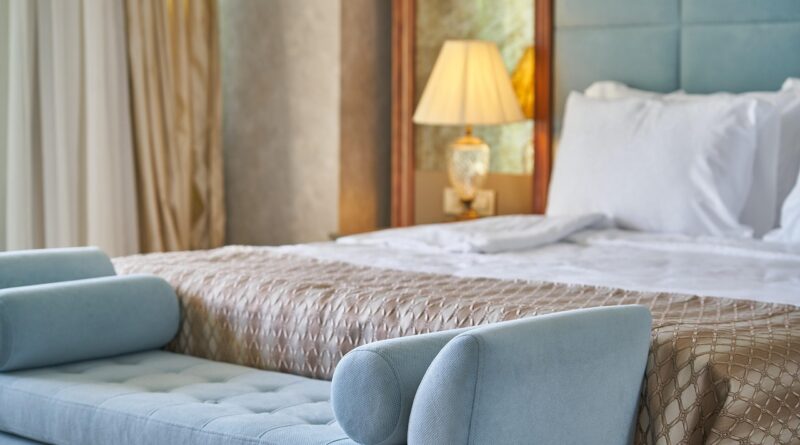
Begin by identifying the room’s anchor. In a living room, that may be a curved sectional, a pair of lounge chairs, a fireplace wall, or a large artwork. In a bedroom, it may be an upholstered bed with integrated side tables, a quiet bench at the foot, or a wall of warm timber wardrobes. Once the anchor is clear, secondary pieces should support it through contrast rather than competition.
- Leave enough negative space around sculptural furniture so its shape can be read from more than one angle.
- Use rugs to define zones, but avoid rugs that are too small for the seating group.
- Pair low, heavy pieces with taller vertical elements such as floor lamps, drapery, art, or shelving.
- Limit each room to one major furniture gesture, then let texture and lighting do the rest.
Good proportion also helps smaller rooms feel more refined. A compact apartment does not need oversized furniture to feel luxurious. It may benefit more from a tailored sofa, a stone-topped side table, wall-mounted lighting, and fewer but better accessories.
Choose materials with depth, not just shine
Luxury interiors often fail when they rely too heavily on glossy finishes. Shine can be useful, but a room feels richer when light moves across varied surfaces: honed stone, oiled wood, brushed metal, bouclé, linen, leather, ceramic, lacquer, wool, and glass. The aim is not to use every premium material at once. It is to create a balanced palette where each finish has a clear role.
Industry trend reports in 2026 have repeatedly highlighted natural materials, warmer wood tones, tactile surfaces, and furniture that appears crafted or customized. These observations do not mean every home should follow a trend. They do suggest that the current idea of luxury is moving away from flawless showroom polish and toward material honesty, softness, and longevity.
| Material | Where it works well | What to check before buying |
|---|---|---|
| Natural stone | Coffee tables, consoles, side tables, fireplace surrounds | Ask whether the surface is honed, polished, sealed, porous, or prone to staining. |
| Warm wood | Dining tables, cabinets, beds, shelving, accent chairs | Look for stable construction, consistent finishing, and a tone that suits the flooring. |
| Brushed or aged metal | Lighting, table bases, hardware, mirror frames | Choose finishes that patinate gracefully rather than finishes that only look good when perfect. |
| Textured upholstery | Sofas, lounge chairs, ottomans, benches | Check rub ratings, cleanability, cushion structure, and how the fabric catches light. |
| Ceramic and glass | Lamps, vases, occasional tables, decorative objects | Use them as accents so the room does not become visually fragile or cluttered. |
A practical rule is to build the room around three material families. For example, a living room may combine walnut, honed travertine, and textured cream upholstery, with small accents in bronze and smoked glass. A bedroom may combine oak, wool, linen, and plaster-like ceramic lamps. This level of restraint makes the space feel intentional rather than overworked.
Use curves and sculptural forms carefully
Curved sofas, rounded armchairs, oval dining tables, scalloped edges, and organic coffee tables have become highly visible across residential design coverage. The appeal is clear. Curves soften rectilinear architecture, make seating areas feel more conversational, and help furniture look less rigid. In luxe decor furniture, curved forms can also create a sense of custom design because the eye reads them as shaped rather than simply assembled.
However, a curved piece is most effective when it has contrast. A rounded sofa may look stronger beside a linear stone plinth table. A circular mirror can feel more elegant above a simple rectangular console. An organic side table can warm up a tailored lounge chair. When every object is curved, the room can lose structure.
Where curved furniture works best
- In living rooms that need softer circulation around a central seating area.
- In bedrooms where rounded bedside tables or benches can reduce visual heaviness.
- In dining spaces where an oval table improves movement and conversation.
- In entryways where a curved console or mirror creates an inviting first impression.
Where to be cautious
Be careful with curved furniture in very narrow rooms, against walls with many door openings, or in layouts that already have complex circulation. Curves need room to breathe. If the footprint is tight, a gently rounded arm, softened corner, or oval side table may be more practical than a large crescent sofa.
Layer lighting to make furniture look richer
Lighting is one of the main differences between a furnished room and a finished room. Luxe decor furniture rarely looks its best under a single ceiling light. It needs a mix of ambient, task, and accent lighting so materials gain shadow, depth, and warmth.
Start with soft ambient light, then add lamps where people actually sit, read, serve drinks, or move through the space. Wall sconces can frame art, a floor lamp can give height to a seating group, and a table lamp can make a console or sideboard feel composed. Dimmers are especially useful because they allow the same furniture to feel practical during the day and more atmospheric in the evening.
- Use warm, consistent light temperatures within the same room so finishes do not clash.
- Place lamps at different heights to avoid a flat lighting scheme.
- Use accent light to reveal texture, such as fluted wood, plaster walls, woven shades, or stone veining.
- Avoid over-lighting glossy surfaces, which can create glare and make luxury materials feel commercial.
Lighting should also support comfort. A beautiful chair without a reading lamp, a dining table without flattering overhead light, or a bedroom with only recessed ceiling lights will not feel fully resolved. See also: Building Styles.
Build a collected look with art, vintage pieces, and restraint
A luxurious room should not look as though every object came from the same showroom on the same day. The strongest spaces usually include some tension between old and new, smooth and rough, tailored and relaxed. Vintage furniture, inherited objects, handmade ceramics, framed works on paper, unusual lamps, and books can all add character, provided they are edited carefully.
This collected approach aligns with a broader movement toward personality in interiors. Rather than treating decor as filler, use it to shape scale, color, and story. A large artwork can establish a palette. A vintage chair can break up a room of new upholstery. A ceramic lamp can introduce irregularity beside clean-lined cabinetry. The point is not to add more, but to choose pieces that change the feeling of the room.
A simple styling hierarchy
- Choose the main furniture anchor and let it control the room’s scale.
- Add one material contrast, such as stone against wood or linen against leather.
- Introduce one artistic element that is large enough to matter.
- Use smaller accessories in groups of three or five, but vary height and texture.
- Edit anything that repeats the same shape, finish, or color without adding value.
Restraint is especially important with metallic accents. Brass, bronze, chrome, and nickel can elevate a room, but too many reflective details make the space feel busy. Pick one dominant metal finish and one secondary finish, then repeat them with intention.
Make luxe furniture practical for everyday living
True luxury should make a home easier to live in, not more stressful. Before buying a statement piece, consider maintenance, durability, delivery constraints, and how the furniture will age. A white textured sofa may be beautiful, but it needs the right fabric and cleaning plan. A marble table may anchor a room, but the owner should understand etching and staining. A large sectional may look generous, but it still has to fit through elevators, stairs, doorways, and tight turns.
For upholstered furniture, ask about the frame, cushion fill, suspension, fabric performance, and replacement options. For wood furniture, look at joinery, veneer quality, finish repairability, and how the tone works with flooring. For stone, ask about sealing, weight, porosity, and edge profiles. For lighting, check scale, bulb compatibility, shade material, and whether the fixture creates glare.
Budget should also be distributed intelligently. It often makes sense to spend more on the pieces that carry daily use and visual weight: sofas, dining tables, beds, lounge chairs, and lighting. Smaller decorative objects can be mixed across price points. A room can feel luxe with one excellent sofa, a well-sized rug, good lamps, and carefully chosen accessories. It does not require every item to be rare or expensive.
Frequently asked questions
What is luxe decor furniture?
Luxe decor furniture refers to pieces that create a refined, elevated interior through proportion, material quality, comfort, and detail. It may include sculptural sofas, stone tables, tailored chairs, warm wood storage, distinctive lighting, and decor with texture or craft value.
How can I make a room feel luxurious without replacing everything?
Start by editing clutter, improving lighting, and adding one high-impact material or shape. A better rug, a pair of lamps, a stone side table, tailored drapery, or a single sculptural chair can change the room more effectively than many small decorative purchases.
Is curved furniture a short-term trend?
Curved furniture is highly visible in current design coverage, but rounded forms are not new. The safest approach is to choose curves where they improve comfort, circulation, or softness, rather than buying a dramatic shape only because it is fashionable.
Which colors work best with luxe decor furniture?
Warm neutrals, deep browns, muted greens, clay tones, soft creams, and saturated accents often work well because they complement wood, stone, leather, metal, and textured textiles. The best palette depends on natural light, flooring, architecture, and the mood you want to create.
What should I prioritize when buying luxury furniture?
Prioritize scale, comfort, construction, material maintenance, and long-term flexibility. A piece that looks impressive but is uncomfortable, fragile, or wrongly sized will not feel luxurious once it becomes part of daily life.