
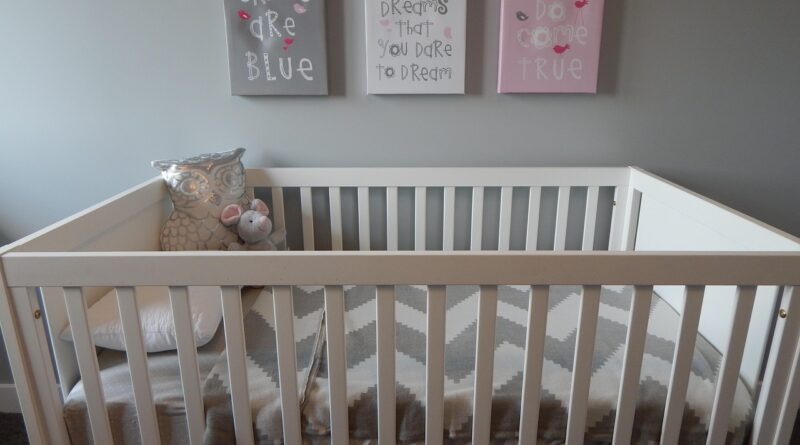
Nursery wall decor ideas that balance style, safety, and longevity
Start with the wall, not the crib
Effective nursery wall decor has a clear job: it should make the room feel warm, keep the sleep area visually calm, and still make sense when the baby becomes a toddler. The strongest schemes usually do not fill every blank surface. They use a few well-placed elements, such as framed prints, removable wallpaper, a mural, shelves, decals, or a soft color block, to define the room without adding unnecessary hazards near the crib.
Safety guidance from the American Academy of Pediatrics and the U.S. Consumer Product Safety Commission supports a practical design principle: keep the crib clear, keep cords and heavy objects away from sleep zones, and secure anything that could tip, fall, or be pulled down.

For more home styling ideas across interiors, visit the Furniture & Decor section.
Safety rules that shape nursery wall decor
Decorating a nursery is different from decorating an adult bedroom because the risk profile changes quickly. A newborn cannot reach the wall, but a baby who is rolling, standing, or climbing soon can. Placement therefore matters as much as appearance.
The American Academy of Pediatrics’ 2022 safe sleep recommendations advise keeping soft objects, loose bedding, pillows, bumper pads, and similar items out of the infant sleep area. For wall decor, the practical takeaway is simple: do not treat the crib as a display platform. Mobiles, canopies, garlands, name signs, shelves, and framed art should not be positioned where they can fall into the crib or become reachable as the child develops.
The U.S. Consumer Product Safety Commission also emphasizes anchoring furniture and reducing cord hazards around children. In a nursery, that affects choices such as floating shelves, tall bookcases, wall-mounted lighting, window treatments, and framed pieces above dressers. Secure installation is not a final styling detail; it is part of the design.
- Keep the sleep zone clear. Do not use pillows, quilts, plush decor, or loose textiles inside the crib.
- Avoid heavy objects over the crib. If artwork hangs near the crib wall, place it beyond the child’s reach and use secure hardware.
- Control cords. Choose cordless window coverings where possible and keep lamp, monitor, and blind cords away from the crib and changing table.
- Anchor furniture. Dressers, bookcases, and storage units used as part of the wall design should be anchored to the wall.
- Plan for movement. What is safe for a newborn may not be safe for a standing toddler, so review the room every few months.
Choose a visual direction that can grow
A nursery theme should be specific enough to feel intentional but flexible enough to survive the first room refresh. Instead of building the entire space around a single character or highly literal motif, start with a visual direction that can work with new bedding, books, toys, and storage over time.
Nature themes remain useful because they can shift from baby-soft to more sophisticated. A woodland wall can start with gentle animal prints and later work with botanical posters, natural wood shelves, or a reading corner. Sky, ocean, garden, and desert palettes are similarly adaptable. Abstract themes are another durable option: soft arches, color blocking, checkerboard borders, or hand-painted shapes can make a nursery feel designed without tying it to an age-specific story.
Color often carries more of the room than the motif. Warm neutrals, muted greens, dusty blues, clay, cream, and pale ochre tend to pair well with wood furniture and woven storage. Brighter colors can work, but they are usually easier to manage as accents rather than on every wall. In a small nursery, one feature wall can add personality while the rest of the room stays restful.
Wall decor options by commitment and budget
Nursery wall decor ranges from temporary prints to permanent millwork. The right choice depends on whether the home is rented, how long the room is likely to function as a nursery, and how comfortable the household is with installation, repainting, and later removal.
| Decor option | Best use | What to check before installing |
|---|---|---|
| Framed prints | Flexible gallery walls, calm art above a dresser, or seasonal updates | Use lightweight frames where possible, secure hardware, and shatter-resistant glazing in child zones |
| Removable decals | Rental-friendly patterns, small motifs, or playful accents | Test paint compatibility and avoid peeling pieces within reach of a toddler |
| Peel-and-stick wallpaper | Feature walls behind a dresser, reading nook, or open wall | Check wall texture, humidity, adhesive quality, and removal instructions |
| Painted mural | Custom color blocking, landscapes, arches, or large-scale shapes | Use appropriate interior paint and allow full curing before regular room use |
| Floating shelves | Displaying books, small keepsakes, or baskets away from the crib | Anchor into studs or suitable wall anchors and keep heavy items off high shelves |
| Textile wall hanging | Softening sound and adding texture to an open wall | Keep away from the crib, radiator, cords, and reachable areas as the child grows |
For many nurseries, a layered mix works better than one dramatic purchase. A painted half wall, two framed prints, and a small book ledge can feel more personal than a fully themed wallpaper installation. It also gives the room space to evolve.
How to style the main nursery walls
The crib wall
The crib wall is often the first wall people want to decorate, but it needs restraint. A painted arch, wallpaper panel, or mural can create a focal point without placing objects directly over the baby. If framed art is used nearby, keep it securely installed and outside the child’s reach. Avoid garlands, loose fabric, low-hanging mobiles, and anything that could detach or be pulled down.
The changing area
The changing area can handle more visual detail because the baby is supervised there. This is a good place for framed art, a small shelf, or a practical peg rail for lightweight essentials. Keep diapering supplies within adult reach, not child reach, and make sure decor does not interfere with function. A calm print, a mirror placed safely away from grabbing hands, or a small wall light can make the zone feel finished.
The reading corner
A reading corner is one of the best places to invest in wall decor because it can remain relevant for years. Forward-facing book ledges, a washable rug, a compact chair, and a warm wall color can create a dedicated story area. As the child grows, the same wall can hold alphabet prints, rotating artwork, or school-age books. This is where a slightly richer color or patterned wallpaper often works well.
The gallery wall
A nursery gallery wall should feel collected rather than crowded. Combine different sizes, but keep the color palette consistent. A simple formula is one larger anchor print, two medium pieces, and two or three smaller pieces. Personal elements such as a birth month flower, a family illustration, or a framed textile sample can add warmth without making the room feel overly themed.
Material, color, and installation details worth checking
Small material decisions can affect how a nursery wall looks and functions. For framed art, lightweight frames and acrylic glazing are often more practical than heavy glass in child areas. For shelves, depth matters: shallow ledges reduce visual bulk and are easier to style safely. For wallpaper, samples are important because nursery lighting changes throughout the day, and a print that looks soft online may feel busy in a small room. See also: Building Styles.
Paint should be chosen with indoor use in mind. Many major paint brands offer low-odor or low-VOC interior options, but labels and curing guidance still matter. If painting late in pregnancy or close to the baby’s arrival, allow for ventilation and drying time rather than rushing the installation.
Scale is another common problem. Tiny prints can disappear above a dresser, while oversized patterns can overwhelm a small room. Before buying, tape paper templates to the wall and view them from the doorway, the crib, and the changing area. This simple check helps prevent undersized art and visual clutter.
Lighting also changes the effect of wall decor. A mural or gallery wall near a window may need softer colors to avoid glare, while a shaded wall can handle warmer tones. If using wall sconces, choose fixtures and cord arrangements that keep controls out of reach and do not introduce dangling cords near the crib.
Current decor signals to use carefully
Trend reports can be useful, but a nursery should not be designed only around what is circulating on visual platforms. Etsy’s Spring and Summer 2026 Seller Trend Report reported increased interest in wall art decor and gallery prints, while Pinterest’s 2026 trend coverage pointed to nostalgia, playful interiors, and expressive decor moments. For nursery wall decor, the practical lesson is not to copy a trend directly, but to translate it into a room that can age well.
Personalized name art, nostalgic motifs, handmade textures, and mural-style walls all fit this direction. The risk is taking the theme too far. A circus-inspired palette, for example, can become a warm stripe, a single whimsical print, or a vintage-style poster rather than a full room of high-contrast graphics. A crochet or textile trend can appear as a wall accent outside the sleep zone, not as loose bedding or crib decor.
From an interiors standpoint, the most resilient nursery trend is flexibility. Parents and designers are moving toward rooms that photograph well but also function as everyday spaces. That means washable surfaces, easy art swaps, storage that can be anchored, and colors that work with future furniture. The wall should create atmosphere without forcing every object in the room to match.
A practical planning checklist
Before buying nursery wall decor, walk through the room as a series of zones. Decide which wall needs a focal point, which wall needs storage, and which wall should remain quiet. Then review the plan through both design and safety lenses.
- Choose one main focal wall instead of decorating every wall equally.
- Keep the crib area visually calm and physically clear.
- Use removable elements if the room may change within two or three years.
- Check wall anchors, frame weight, shelf depth, and cord placement.
- Repeat two or three colors across art, textiles, and storage for cohesion.
- Leave space for future items such as books, artwork, and toddler furniture.
- Review the room again when the baby starts rolling, crawling, standing, and climbing.
This approach produces a nursery that feels designed, not over-decorated. It also makes updates easier: swap prints, repaint an arch, change shelf styling, or add a reading lamp without rebuilding the whole room.
Frequently asked questions
What is the safest wall decor to use near a crib?
The safest approach is to avoid placing heavy, loose, or dangling decor directly over the crib. A painted design, wallpaper, or mural gives the crib wall personality without adding objects that could fall or become reachable. If framed art is used elsewhere on the same wall, secure it properly and reassess placement as the child grows.
Are nursery wall decals a good idea?
Wall decals can be a good choice for renters or parents who want a low-commitment design. Use decals from reputable sellers, test them on the wall finish, and avoid small peeling pieces within toddler reach. They work especially well for stars, leaves, abstract dots, and other patterns that do not need perfect alignment.
How many colors should a nursery wall palette include?
Most nurseries work well with three to five repeated colors: a base wall color, one or two accent tones, a wood or neutral tone, and possibly a deeper contrast color. More colors can work, but they need repetition and breathing room. A limited palette usually makes mixed art and furniture feel intentional.
What wall decor lasts beyond the baby stage?
Botanical prints, abstract murals, soft geometric patterns, book ledges, nature-inspired artwork, and simple color blocking tend to last longer than highly specific baby motifs. Personalized art can also last if it is designed in a style that feels more like room decor than a nursery prop.
Where should a nursery gallery wall go?
A gallery wall usually works best above a dresser, beside a reading chair, or on an open wall away from the crib. Keep the arrangement high enough to avoid grabbing hands as the child grows, use secure hardware, and choose lightweight frames when possible.