
How 1 Story House Plans Compare to Modern Multi Level Designs for Comfort
How to Choose One Story House Designs That Fit Your Lifestyle
Selecting the right home layout is a technical and lifestyle decision. For many homeowners, 1 story house plans offer practical comfort, efficient use of space, and long-term adaptability. They simplify movement, reduce structural complexity, and often cost less to build and maintain. Multi-level homes, by contrast, deliver spatial hierarchy and architectural drama but demand more from construction systems and mechanical design. The best choice depends on how one values accessibility, energy performance, and spatial experience.
Architectural Fundamentals of 1 Story House Plans
A one-story home’s design philosophy centers on simplicity and horizontal expansion. Its structure favors direct load paths and seamless circulation.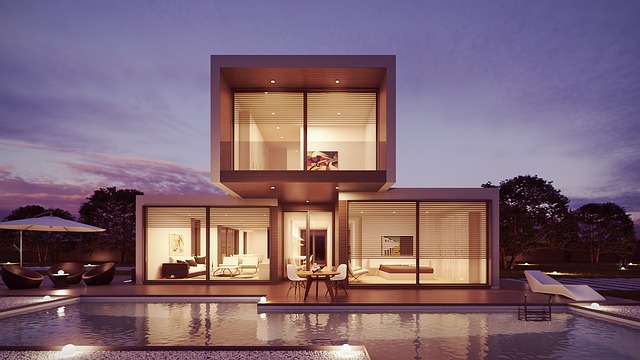
Spatial Configuration and Structural Efficiency
One-story layouts emphasize horizontal expansion over vertical stacking. Load distribution is simplified, reducing structural complexity and cost. The absence of staircases enhances accessibility and circulation flow. In practice, this means fewer transitional zones—bedrooms, living areas, and kitchens can align along a single axis without vertical barriers. Engineers often note that shorter load paths translate into fewer framing redundancies.
Material Utilization and Construction Techniques
Single-level structures often use reinforced slabs or truss systems for roofing. Reduced vertical load allows for lighter framing materials. Construction timelines are shorter due to simplified sequencing. Builders frequently prefer pre-engineered trusses in 1 story house plans because they accelerate assembly while maintaining strength-to-weight efficiency.
Modern Multi-Level Design Characteristics
Modern multi-level homes reflect urban density trends where verticality substitutes for land area. They integrate distinct zones across floors for privacy and function.
Vertical Zoning and Functional Segmentation
Multi-level homes separate private and public zones across floors. Vertical circulation creates natural divisions for acoustics and privacy. Mechanical systems must be designed to accommodate vertical distribution. This zoning supports modern living patterns—quiet bedrooms upstairs, active spaces below—while improving social separation within compact footprints.
Structural and Mechanical Considerations
Load-bearing walls and columns are strategically placed to support upper levels. HVAC zoning becomes critical for maintaining consistent comfort across floors. Foundation design must account for higher dead loads and lateral forces. Engineers typically apply reinforced concrete or steel frames in these designs to handle increased vertical stress without compromising flexibility in interior layouts.
Comparative Analysis: Comfort Dynamics in 1 Story vs Multi-Level Homes
Comfort is not just thermal but also acoustic, spatial, and psychological. Comparing both configurations reveals how structure influences daily experience.
Thermal Comfort Distribution
One-story homes maintain more uniform temperature gradients due to single-plane airflow. Multi-level designs experience stratification, requiring advanced HVAC balancing. Insulation continuity differs significantly between the two configurations. For instance, heat naturally rises; thus upper floors may feel warmer unless zoned climate control is integrated.
Acoustic Comfort and Noise Control
Horizontal layouts minimize vertical sound transmission between floors. Multi-level structures require additional acoustic insulation in floor assemblies. Room placement strategies influence perceived sound comfort in both designs. In single-story homes, noise isolation relies more on partition thickness than inter-floor barriers.
Accessibility and Movement Efficiency
Single-story plans eliminate barriers such as stairs, enhancing mobility for all ages. Multi-level homes offer spatial hierarchy but may reduce accessibility convenience. Circulation path design impacts energy expenditure and daily usability comfort. This makes 1 story house plans particularly suitable for aging-in-place strategies or family environments with young children.
Energy Efficiency Considerations in Design Comparison
Energy performance depends on geometry as much as technology; form dictates envelope behavior and mechanical system demand.
Envelope Performance and Heat Transfer Behavior
Roof-to-wall ratio affects heat gain differently in single vs multi-level forms. Compact multi-story envelopes reduce exposed surface area per unit volume. Orientation plays a decisive role in passive heating and cooling effectiveness. Architects often orient one-story houses along east-west axes to balance solar exposure across rooms.
HVAC System Optimization Strategies
One-story homes benefit from simpler duct routing with lower static pressure losses. Multi-level systems require zoned controls to balance differential thermal loads. Integration of smart thermostats improves performance consistency across levels. Simplified ductwork also reduces maintenance points over time—a small but measurable operational advantage.
Spatial Experience and Psychological Comfort Factors
Beyond physics, architecture shapes emotion through proportion, light, and connection between spaces.
Perception of Space and Scale in 1 Story Homes
Open-plan layouts create visual continuity, promoting a sense of spaciousness. Ceiling height variations can enhance depth perception without additional floors. Direct outdoor access from multiple rooms increases perceived openness. Many designers use clerestory windows or sliding glass walls to merge interior zones with gardens or patios seamlessly.
Vertical Experience in Multi-Level Designs
Height differentiation introduces spatial drama and architectural interest. Visual connection between floors contributes to dynamic interior experiences. Staircase design influences both aesthetic flow and user comfort perception. A well-designed central staircase can act as both sculptural feature and social connector within the home’s core volume.
Long-Term Adaptability and Maintenance Implications
Durability extends beyond materials—it includes how easily a building adapts to new needs or maintenance cycles over decades.
Lifecycle Flexibility of Single-Level Structures
Easier renovation potential due to accessible service lines and open floor plates characterizes single-level structures. Aging-in-place design principles align naturally with one-story configurations. Lower maintenance costs are associated with exterior envelope access simplicity since rooflines are reachable without specialized equipment.
Maintenance Complexity in Multi-Level Homes
Elevated facades require specialized equipment for upkeep tasks like painting or inspection. Plumbing, electrical, and HVAC systems are more segmented vertically, complicating repairs. Structural retrofitting involves greater engineering coordination compared to single-level models—especially when adding lifts or modifying load-bearing partitions later in life cycles.
FAQ
Q1: Are 1 story house plans cheaper to build?
A: Generally yes; they require fewer materials for structural reinforcement since there’s no second floor load transfer system involved.
Q2: Which type offers better energy efficiency?
A: Multi-level homes tend to have less surface area per unit volume which can reduce heat loss but may need complex HVAC zoning to manage comfort evenly.
Q3: What makes one-story houses ideal for aging residents?
A: Their step-free circulation eliminates mobility barriers like stairs while keeping all essential functions on one level.
Q4: Do multi-level homes have better resale value?
A: In dense urban markets they often do because they maximize living space on smaller plots though maintenance costs may offset some gains long-term.
Q5: How does roof design differ between the two types?
A: One-story houses usually feature wider truss spans while multi-level structures rely on stacked load paths that distribute weight through intermediate floors rather than broad roof systems.