
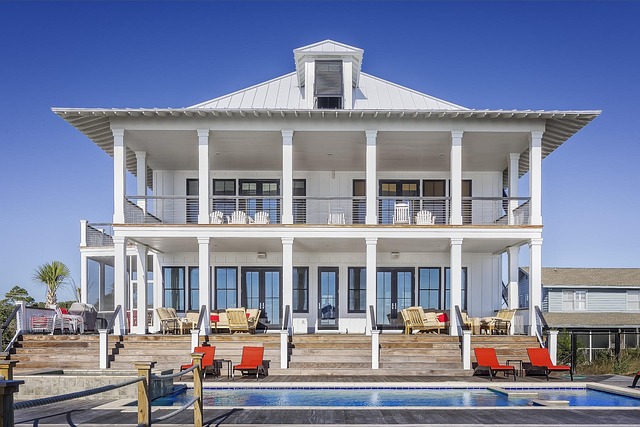
What Are Modern House Floor Plans and How Do They Influence Energy Systems
FAQs on Modern House Floor Plans
Modern house floor plans combine spatial efficiency, energy performance, and digital integration into a single architectural framework. The best designs balance open layouts with environmental control, enabling both comfort and sustainability. Experts agree that the future of residential architecture lies in how well design interacts with energy systems—especially as home battery storage and smart technologies become standard components of modern living.
Defining the Concept of Modern House Floor Plans
Modern house floor plans have evolved beyond aesthetics to embody functionality, adaptability, and technological fluency. They reflect a shift toward sustainable living where space planning aligns with environmental goals.
Open Spaces and Functional Layouts
Modern floor plans emphasize open spaces that allow fluid movement between living zones. This arrangement supports social interaction while maximizing usable area. Fewer internal walls improve daylight penetration, reducing artificial lighting demand during daytime hours.
Sustainability and Energy Efficiency
Architectural design now aligns with sustainability targets through passive strategies such as orientation-based heating and cooling. High-performance glazing, insulated envelopes, and material reuse contribute to lower operational energy use. The International Energy Agency (IEA) notes that buildings designed for passive efficiency can reduce heating demand by up to 60% compared to conventional layouts.
Spatial Organization and Environmental Performance
Spatial organization directly affects airflow, daylight distribution, and thermal stability. Proper zoning ensures that high-activity areas receive optimal ventilation while private zones maintain stable temperatures. Computational fluid dynamics (CFD) models are often used in early-stage design to predict how air moves through open-plan structures.
Architectural Principles Behind Modern Layouts
Modern architecture prioritizes light, ventilation, and flexibility within structural limits. The principles guiding these layouts extend beyond aesthetics into measurable performance outcomes.
Minimizing Structural Barriers
Reducing structural barriers enhances natural light penetration throughout the building envelope. Large-span beams or load-bearing cores replace interior partitions, creating expansive interiors without sacrificing stability. This approach also supports future adaptability if spaces require reconfiguration.
Orientation and Passive Design
Orientation remains one of the most critical factors in thermal regulation. South-facing windows (in northern hemispheres) capture winter sun while overhangs prevent summer overheating. Cross-ventilation pathways are planned to exploit prevailing winds for natural cooling—a principle supported by ISO 52016 energy modeling standards.
Smart Systems Integration
Integration of smart home systems within architectural frameworks allows real-time control over lighting, HVAC, and shading devices. These systems collect data from sensors embedded in walls or ceilings to adjust conditions automatically based on occupancy or time of day.
The Relationship Between Floor Plan Design and Energy Performance
The connection between spatial configuration and energy flow is central to modern residential design. Architects now consider how every wall or window influences overall system efficiency.
Spatial Configuration and Energy Flow Dynamics
Room placement defines thermal zones that determine HVAC load distribution. Open-plan layouts may complicate temperature regulation because conditioned air spreads freely across zones. Introducing partial partitions or sliding panels creates localized conditioning areas that save energy without compromising openness.
Building Envelope Interaction with Energy Systems
The wall-to-window ratio governs heat gain and loss patterns across seasons. A higher glazing ratio increases solar gain but may reduce insulation effectiveness if not properly treated with low-emissivity coatings. Material selection—from aerated concrete blocks to vacuum-insulated panels—directly impacts retention capacity and comfort levels indoors.
Roof Geometry and Solar Potential
Roof geometry dictates solar exposure critical for photovoltaic system output. Flat roofs favor modular PV installation, while sloped designs must align angles for peak irradiance capture at midday hours. Studies by the International Renewable Energy Agency (IRENA) show optimized tilt angles can raise annual solar yield by 10–15%.
Integration of Home Battery Storage Systems in Modern Floor Plans
As renewable generation becomes common in residential settings, home battery storage systems emerge as essential components requiring careful architectural integration.
Architectural Considerations for Battery System Placement
Battery units perform best in controlled environments shielded from extreme temperature fluctuations. Locating them near main electrical panels minimizes transmission losses while simplifying maintenance access. Designers must also allocate ventilation zones around enclosures to prevent heat buildup during charge cycles.
Electrical Infrastructure Coordination within the Layout
Conduits, wiring paths, and inverter locations must follow architectural logic rather than retrofit convenience. Routing power lines along structural voids reduces visual clutter and improves safety compliance under IEC 62933 standards governing stationary energy storage installations.
Load Balancing Across Zones
Load balancing ensures consistent power supply across different dwelling areas even during peak demand periods. When integrated with rooftop solar arrays, batteries stabilize grid interaction by storing surplus electricity for later use—particularly valuable during evening consumption peaks when grid tariffs rise sharply.
Influence of Smart Home Technologies on Energy Optimization
Digital connectivity transforms how occupants interact with their homes’ energy ecosystems, making automation a core driver of performance improvement.
Automation in Managing Consumption
Smart thermostats learn occupancy habits to regulate HVAC operation dynamically. Lighting systems equipped with motion sensors dim or switch off automatically when rooms are unoccupied, trimming unnecessary consumption typical in open layouts where multiple fixtures operate simultaneously.
Real-Time Monitoring and Battery Management
Real-time monitoring platforms track charging cycles of home batteries to avoid over-discharge conditions that shorten lifespan. Integration between inverter software and building management systems allows predictive scheduling based on weather forecasts or grid pricing signals published by local utilities.
Adaptive Lighting Systems
Adaptive lighting responds not just to occupancy but also daylight intensity measured through façade sensors. This fine-tuned response maintains visual comfort while cutting electricity use—a small but cumulative gain across the building’s lifecycle performance metrics.
Data Integration Between Architectural Design and Energy Systems
Data-driven design closes the feedback loop between architecture and engineering disciplines through continuous monitoring frameworks.
IoT Networks for Predictive Control
Internet-of-Things (IoT) networks gather environmental data—temperature gradients, humidity levels, CO₂ concentrations—to refine predictive algorithms controlling HVAC equipment efficiency over time.
Digital Twins for Simulation
Digital twins replicate physical properties of buildings virtually to simulate performance scenarios before construction begins. By adjusting variables like insulation thickness or window size digitally, architects test outcomes without costly physical prototypes—a practice increasingly standardized under BIM Level 3 protocols across Europe.
Continuous Feedback Loops
Continuous feedback allows iterative refinement after occupancy begins; measured performance informs updates in both control software and architectural detailing for subsequent projects within similar climatic contexts.
Evaluating the Synergy Between Design Efficiency and Energy Systems Performance
Efficiency metrics quantify how well architectural intent translates into measurable sustainability outcomes across operational phases.
Metrics for Assessing Efficiency
Thermal comfort indices evaluate indoor stability relative to external fluctuations using parameters defined by ASHRAE Standard 55. Energy Use Intensity (EUI) benchmarks total consumption per square meter annually—critical for comparing homes under varied climatic conditions.
Lifecycle Analysis Perspective
Lifecycle analysis captures embodied energy from material extraction through disposal relative to operational savings achieved via efficient systems integration—a holistic measure increasingly required by green certification programs like LEED v4 or BREEAM New Construction 2018 editions.
Future Directions in Integrated Design
Future trends point toward modular floor plans adaptable to evolving technologies such as hydrogen-ready fuel cells or next-generation solid-state batteries. AI-driven design tools already model spatial-energy relationships autonomously while standardization efforts aim to link CAD-based architectural modeling directly with dynamic simulation engines used in building physics research worldwide.
FAQ
Q1: How do modern house floor plans improve indoor comfort?
A: By combining open layouts with passive ventilation paths and smart climate controls that maintain stable temperature zones year-round.
Q2: What factors influence where home battery systems should be installed?
A: Placement depends on proximity to electrical panels, ambient temperature stability, safety clearances, and ease of maintenance access within the plan layout.
Q3: Can open-plan designs reduce overall energy costs?
A: Yes, though they require careful zoning; without partitions heat can disperse unevenly so secondary controls like automated dampers are often added for balance.
Q4: How do digital twins support architectural decision-making?
A: They allow simulation of different material choices or orientations before construction begins so designers can predict real-world performance outcomes accurately.
Q5: What role will artificial intelligence play in future residential architecture?
A: AI will analyze occupant behavior patterns alongside sensor data to refine both spatial configuration decisions and real-time energy management strategies continuously over a building’s life cycle.