
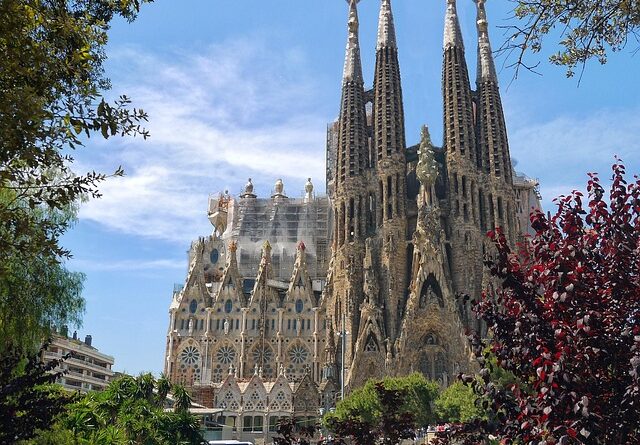
Is the Glory Facade Sagrada Familia Redefining Modern Sacred Architecture
Architect Working on Sagrada Familia: It’s a Dream Come True
The completion of the glory facade Sagrada Familia represents more than architectural mastery; it is a spiritual and technical convergence that unites Gaudí’s 19th‑century genius with 21st‑century craftsmanship. For the architects continuing his vision, the project is both a professional challenge and a personal calling. The fusion of traditional stone carving with algorithmic modeling has turned Gaudí’s unfinished dream into a living laboratory for sacred architecture. Each decision—material, structural, or symbolic—echoes his belief that divine beauty could be expressed through geometry and light.
The Vision Behind the Glory Facade of the Sagrada Familia
The glory facade, as conceived by Antoni Gaudí, was meant to be the most monumental and spiritually charged of all façades. It serves as the architectural climax of his lifelong theological narrative.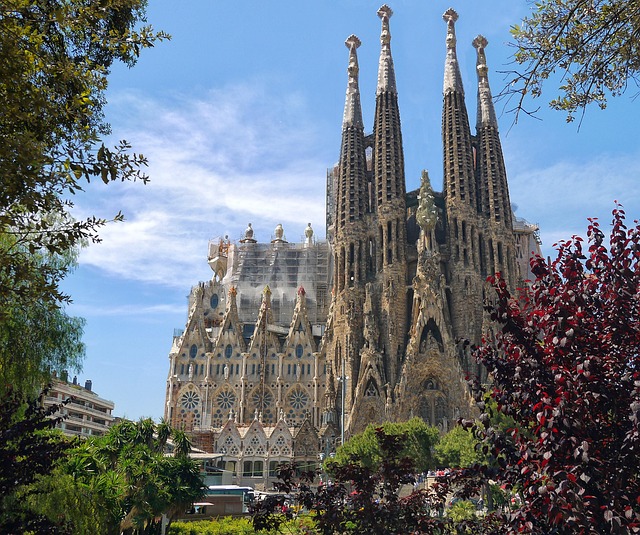
Gaudí’s Original Concept and Its Symbolic Intent
Gaudí envisioned the glory facade as an allegory of humanity’s path toward salvation. His design was to depict sin, repentance, and divine illumination through ascending spatial sequences. The lower levels were intended to represent earthly struggles, while the upper sections opened toward celestial light. The integration of parabolic arches and hyperbolic vaults symbolized transcendence beyond human limitation. Every sculptural group was planned to narrate a moment from Christian doctrine—virtues rising against vices, culminating in Christ’s triumphal entry into divine glory.
Continuity and Interpretation by Contemporary Architects
Today’s architects face the delicate task of interpreting Gaudí’s incomplete drawings without diluting their spiritual power. They must translate his organic geometry into digital language while preserving theological coherence. Through archival research and 3D analysis, they reconstruct missing details with respect for historical intent. Yet modern reinterpretation inevitably emerges: new materials and construction methods introduce subtle shifts in texture and proportion that reflect today’s sensibilities while maintaining fidelity to Gaudí’s essence.
Digital Modeling and Parametric Design in Realizing His Vision
Parametric modeling allows precise control over complex geometries that Gaudí could only sketch manually. Using Building Information Modeling (BIM) systems, each stone block is digitally mapped before fabrication. This ensures structural accuracy while enabling artisans to carve surfaces that interact dynamically with natural light. The process transforms Gaudí’s analog imagination into measurable form without compromising its mystical intent.
Architectural Language and Material Expression of the Glory Facade
The glory facade is not merely decorative; it is structurally expressive. Its geometry embodies both physical stability and metaphysical symbolism.
Structural Innovation in Stonework and Geometry
The vertical rhythm of columns mirrors tree trunks branching toward heaven—a recurring metaphor in Gaudí’s architecture. Advances in computational design have refined this organic logic into precise load paths where curvature distributes weight efficiently across inclined pillars. CNC‑cut stone pieces now achieve tolerances within millimeters, allowing seamless assembly that respects original craftsmanship while meeting modern safety codes defined by European structural standards such as EN 1996 for masonry design.
Light, Texture, and Spiritual Atmosphere
Light plays an active theological role in the glory facade sagrada familia. Morning rays filter through carved portals to evoke redemption after darkness; at dusk, shadows emphasize introspection and mortality. Textured stone surfaces scatter sunlight into soft gradients rather than glare, creating a meditative ambiance within adjacent interiors. Night illumination employs warm LED tones calibrated for energy efficiency under IEC lighting guidelines while sustaining symbolic resonance—the golden hue representing divine presence.
Chromatic Choices and Theological Implications
Color remains integral to sacred meaning: warm ochres signify creation; blues recall heavenly purity; greens suggest renewal through grace. These chromatic transitions correspond to liturgical themes embedded within Catholic doctrine, transforming architectural space into visual theology.
Theological Symbolism Embodied in Architectural Form
Beyond structure lies narrative theology rendered in stone reliefs, inscriptions, and sculptural tableaux.
Narrative Representation of Christian Doctrine
Every sculptural ensemble on the glory facade follows a doctrinal sequence—from temptation scenes at ground level to resurrection imagery above the central portal. Spatial progression thus mirrors spiritual ascent: pilgrims move from confession toward communion with divine truth. This narrative rhythm fuses architecture with catechesis, making faith tangible through physical movement.
Integration of Art, Sculpture, and Architecture
Collaboration among sculptors, mosaicists, and architects ensures unity between form and meaning. Sculptural figures are not ornamental but integral load‑bearing components that merge artistic storytelling with structural necessity—a synthesis reminiscent of medieval cathedrals yet executed through modern precision tools.
Redefining Sacred Architecture Through Modern Techniques
Completion efforts at Sagrada Familia have redefined how heritage projects engage technology without losing sanctity.
Digital Tools in the Completion Process
Laser scanning captures micro‑deformations on existing surfaces for accurate restoration alignment within BIM environments. Algorithmic modeling simulates stress behavior under wind loads per ISO 4354 standards to verify long‑term durability. Such digital precision supports ethical restoration by distinguishing original fabric from contemporary additions transparently documented for future scholars.
Ethical Balance Between Craftsmanship and Technology
While technology accelerates production, artisans remain central to authenticity. Hand finishing preserves tactile irregularities that convey human devotion—an element machines cannot replicate fully. The ethical challenge lies in merging efficiency with reverence for material soul.
Sustainability and Material Ethics in Sacred Construction
Stone sourcing now prioritizes quarries adhering to environmental management frameworks like ISO 14001 to reduce ecological impact. Energy‑efficient lighting systems minimize heat emission while enhancing chromatic depth during liturgical events. Climate‑responsive ventilation integrated behind façade cavities stabilizes interior humidity without mechanical intrusion—a discreet dialogue between sustainability and spirituality.
The Glory Facade as a Catalyst for Contemporary Sacred Design Discourse
The ongoing realization of Gaudí’s final façade has sparked global reflection on how sacred architecture can evolve amid digital culture.
Influence on Global Religious Architecture Trends
From Latin American cathedrals employing parametric vaulting to Asian temples integrating daylight simulation tools, many projects echo Sagrada Familia’s hybrid methodology—traditional symbolism interpreted through computational logic. This influence affirms that innovation need not sever ties with devotion but can amplify its reach across cultures.
Philosophical Reflections on Transcendence in Modern Architecture
In an era dominated by efficiency metrics and screen aesthetics, the glory facade reminds practitioners that architecture still mediates transcendence through matter itself. Its interplay of geometry, light, and narrative restores faith in built form as a vessel for metaphysical experience rather than mere spectacle or branding exercise.
FAQ
Q1: Why is the Glory Facade considered Gaudí’s most important work?
A: It synthesizes his entire theological vision—depicting humanity’s journey from sin toward divine union—and integrates all his architectural innovations into one cohesive expression.
Q2: How do modern architects stay faithful to Gaudí’s original plans?
A: They rely on surviving models, archival drawings, digital scans of plaster fragments, and parametric analysis to reconstruct missing elements while respecting his symbolic logic.
Q3: What technologies are used today in constructing the Sagrada Familia?
A: Advanced BIM coordination, laser scanning for dimensional accuracy, CNC stone milling for complex geometries, and sustainable LED lighting systems are key tools guiding completion.
Q4: How does light influence visitors’ spiritual perception at different times?
A: Morning light evokes rebirth through soft gold tones; afternoon beams highlight sculptural reliefs; evening illumination deepens contemplative mood with subdued amber hues.
Q5: What lessons does the Glory Facade offer future sacred architecture?
A: It demonstrates that faith-driven design can coexist with cutting-edge technology when guided by clear theological purpose and respect for material integrity.