
How Polycarbonate Facades Redefine Sustainability in the Paired Cubes Pavilion in Korea
Over 3,500 Recyclable Polycarbonate Panels Assemble Paired Cubes Pavilion in Korea
The paired cubes pavilion in Korea stands as a refined demonstration of how polycarbonate façades can merge environmental performance with architectural expression. Built using over 3,500 recyclable panels, the structure showcases the potential of modular assembly and transparent materials to redefine spatial experience. Its design balances precision engineering with poetic light play, embodying sustainable principles without compromising aesthetics. The pavilion’s success lies not only in its visual clarity but also in its technical innovation—an exemplar of how recyclable materials are shaping contemporary architecture.
Architectural Context of the Paired Cubes Pavilion in Korea
The pavilion’s architectural narrative is anchored in the dialogue between geometry and perception. It explores how paired cubic forms can evoke duality while maintaining structural simplicity.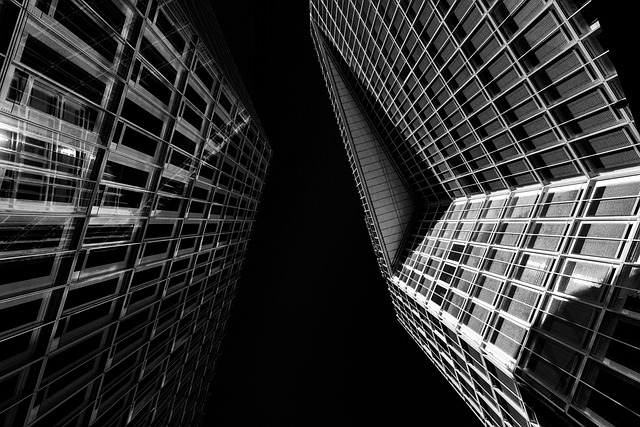
Conceptual Framework and Design Philosophy
The design is guided by an exploration of spatial duality through two interrelated cubic volumes. These paired forms create both separation and unity, producing a rhythmic balance between solid and void. Transparency is central to the concept: light filters through polycarbonate façades to animate interior surfaces throughout the day. The architects treat light not as a decorative feature but as an active material that defines space. Geometry, materiality, and environmental performance are interwoven—each decision about proportion or orientation contributes to thermal comfort and visual quality.
Structural Composition and Material Selection
The pavilion employs modular assembly principles derived from industrial prefabrication logic. Its lightweight steel framing supports translucent polycarbonate panels that form both enclosure and façade. This system minimizes on-site labor while ensuring dimensional accuracy. The use of polycarbonate reduces overall weight compared to glass, allowing finer structural members and greater transparency. The result is a balance between efficiency and expression: a structure that appears delicate yet performs robustly under environmental stress.
The Role of Polycarbonate Facades in Sustainable Architecture
Polycarbonate façades have become increasingly relevant in sustainable design discussions for their adaptability, recyclability, and energy performance. Their use in this Korean pavilion demonstrates how technical material choices can articulate broader ecological values.
Material Properties and Environmental Benefits
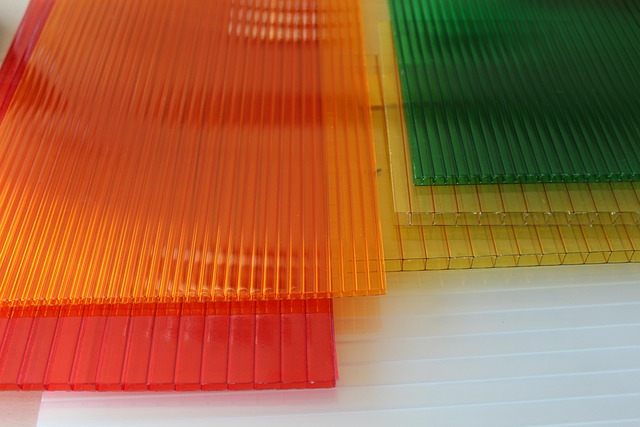
Polycarbonate is a recyclable thermoplastic known for its durability and resilience under varying climates. Unlike traditional glass or metal cladding, it requires less energy during production, contributing to lower embodied carbon emissions. Its reusability aligns with circular design strategies that prioritize disassembly over demolition at end-of-life stages. For architects seeking materials that merge sustainability with expressive potential, polycarbonate offers a compelling alternative.
Performance Characteristics in Architectural Applications
Beyond its environmental advantages, polycarbonate performs strongly as an architectural envelope material. It exhibits high impact resistance and UV stability, maintaining clarity over time even under strong sunlight exposure. Its inherent thermal insulation properties help reduce heating loads during colder months while preventing overheating during summer. Light diffusion through multiwall panels eliminates glare yet provides ample daylight—creating interiors that remain visually comfortable without reliance on artificial lighting.
Innovative Use of Over 3,500 Recyclable Panels in the Pavilion
The project’s innovation lies not only in material selection but also in fabrication precision and assembly logic. Each panel contributes to an integrated system designed for sustainability from conception to completion.
Fabrication and Assembly Techniques
Over 3,500 panels were precision-cut using CNC technology to ensure consistent fit across modular frames. This approach enabled rapid on-site installation while maintaining tight tolerances between components. Interlocking joints minimized waste by eliminating secondary sealing materials or adhesives. Prefabrication off-site improved quality control since each element was inspected before delivery—reducing errors typical of field construction.
Adaptive Design Strategies for Environmental Responsiveness
Environmental responsiveness guided every aspect of panel configuration. Orientation studies determined how each façade section could optimize daylight penetration without excessive heat gain. Some sections incorporate adjustable ventilation flaps within the panel grid, allowing natural airflow when needed. The translucent envelope reduces dependence on artificial lighting during daytime hours while maintaining privacy—a subtle equilibrium between openness and enclosure that enhances occupant comfort.
Redefining Aesthetic Expression Through Polycarbonate Transparency
Transparency here functions as both metaphor and method: it transforms perception while reflecting cultural sensitivity to light’s ephemeral qualities.
Visual Dynamics and Perception of Space
As sunlight shifts across the day, the pavilion’s surfaces transition from opaque milky tones at dawn to crystalline translucency at noon before returning to soft diffusion at dusk. This dynamic interaction between reflection and refraction gives depth to otherwise minimal geometry. Visitors experience changing atmospheres rather than static enclosures; the space becomes alive through its response to weather conditions—a quiet reminder that architecture can breathe with its environment.
Integration with Urban and Cultural Contexts
Set within a Korean urban landscape rich with contrasts between tradition and modernity, the pavilion acts as an architectural dialogue rather than an isolated object. Its paired cubes recall balance found in Korean aesthetics—yin-yang harmony expressed through built form. Polycarbonate serves as a metaphor for adaptability within contemporary culture: flexible yet resilient, modest yet luminous. By embracing such material innovation, the project extends beyond function into cultural commentary about transparency in modern urban life.
Sustainability Beyond Material Choice: Lifecycle Considerations
True sustainability extends beyond selecting recyclable materials; it involves thinking through maintenance cycles, longevity, and reuse potential across decades of operation.
Maintenance, Longevity, and End-of-Life Scenarios
Polycarbonate resists corrosion far better than metal claddings exposed to humidity or pollution, reducing maintenance frequency significantly over time. Panels can be cleaned easily using non-abrasive methods without degrading optical quality. At end-of-life stages, components can be disassembled rather than demolished—allowing reuse or recycling into new architectural products. Such strategies align closely with international sustainable construction standards like ISO 20887 on design for disassembly.
Broader Implications for Future Architectural Practice
This pavilion demonstrates how polycarbonate façades may replace conventional systems sustainably while maintaining expressive freedom for designers worldwide. It signals an emerging trend toward modular pavilions where lightweight structures achieve both economy and elegance through recyclable materials. For future practice, this project encourages architects to rethink temporary installations not as disposable events but as circular systems capable of reintegration into new contexts—a shift essential for responsible architecture today.
FAQ
Q1: Why did the designers choose polycarbonate instead of glass?
A: Polycarbonate offered similar transparency at half the weight of glass while providing better impact resistance and recyclability.
Q2: How does the pavilion manage natural ventilation?
A: Adjustable sections within façade panels allow controlled airflow without compromising structural integrity or visual uniformity.
Q3: Are all 3,500 panels identical?
A: No, they follow standardized dimensions but vary slightly depending on curvature or connection requirements within each cube module.
Q4: What sustainability certifications could such a project meet?
A: The design aligns with ISO standards on life-cycle assessment and could contribute credits under LEED or BREEAM frameworks due to material reuse potential.
Q5: How does light behavior change inside throughout the day?
A: Morning light produces soft diffusion ideal for exhibitions; midday sun generates brighter reflections; evening transitions create warm ambient tones that reveal structural depth unseen earlier hours.