
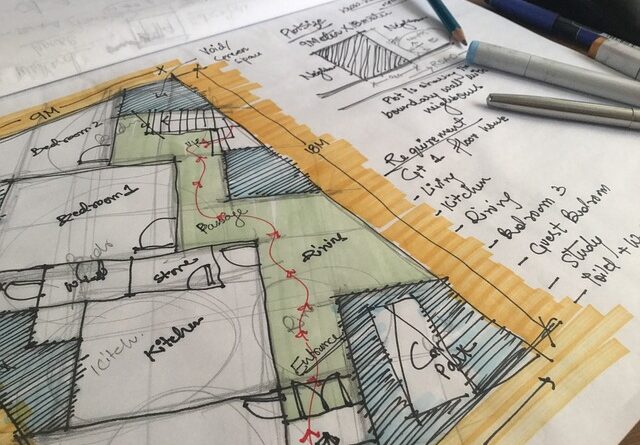
Are Bungalow House Plans the Key to Creating 40 Small Homes That Feel Spacious
40 Small House Plans That Are Just The Right Size
Compact homes are no longer a compromise but a deliberate design choice. The current trend in residential architecture shows that smaller footprints can deliver both comfort and sophistication when guided by thoughtful planning. Bungalow house plans and 2 story house plans each offer unique spatial strategies that maximize usability, energy efficiency, and aesthetic balance. By studying how scale, proportion, and material selection interact within limited dimensions, architects can create homes that feel generous without expanding their physical size.
Understanding the Appeal of Bungalow House Plans?
Bungalows remain a timeless favorite because they combine simplicity with livability. Their design language emphasizes connection—to the outdoors, to natural light, and to daily life’s essentials—making them ideal for modern families seeking efficient comfort.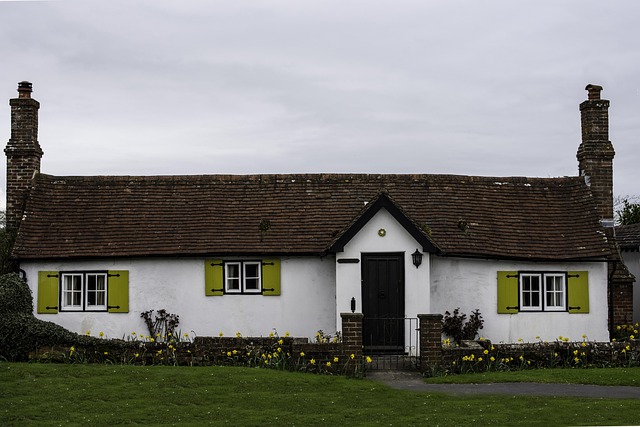
Architectural Characteristics That Define Bungalows
A bungalow typically presents a single-story or one-and-a-half-story layout emphasizing horizontal lines. This low profile helps the structure blend into its surroundings while maintaining accessibility for all ages. Open floor plans connect living, dining, and kitchen spaces to encourage social interaction and fluid movement. Deep overhangs paired with low-pitched roofs protect from sun and rain while extending usable outdoor space through wide porches. These features collectively produce a sense of shelter without heaviness.
Why Bungalow Designs Suit Compact Living
For compact living, bungalow house plans excel because every square foot counts. Efficient layouts minimize circulation areas like hallways, allowing more space for primary functions. The structural simplicity—often wood framing with short spans—reduces cost and construction time. Moreover, large windows and clerestories promote cross ventilation and daylighting, which enhance perceived spaciousness even in modest footprints.
The Relationship Between Scale and Spatial Perception in Small Homes?
Designing small homes demands precision in proportion and flow. Architects must manage how users perceive volume rather than simply measuring it in square feet.
Design Principles That Make Small Homes Feel Larger
Visual continuity is key. Placing windows opposite each other or aligning openings toward garden views extends sightlines beyond interior walls. Built-in storage units integrated into walls or staircases eliminate clutter that visually fragments space. Ceiling height variations—like a raised living area or dropped dining zone—define functions without solid partitions, maintaining openness while adding character.
The Psychological Impact of Proportion and Layout
Human perception responds strongly to balance. When room dimensions follow harmonious ratios such as 3:4 or 4:5, the space feels naturally comfortable. Repetition of architectural elements like beams or window mullions creates rhythm that subconsciously organizes visual experience. Material palettes also play psychological roles: light-toned surfaces expand perceived depth while textured finishes add tactile warmth that compensates for smaller scale.
Integrating Two-Story House Plans Within Compact Footprints?
As urban plots shrink, vertical expansion becomes an intelligent alternative to horizontal sprawl. Two-story configurations offer flexibility without compromising outdoor space.
Vertical Expansion as a Solution for Limited Lots
Adding an upper level effectively doubles livable area within the same footprint—a practical response to dense neighborhoods where land prices dominate budgets. Structural design must address load transfer through compact columns or shear walls while keeping stair placement efficient to avoid wasted circulation zones. Separating private bedrooms upstairs from public zones below enhances privacy and acoustic comfort.
Comparing Bungalow and Two-Story Configurations in Small Home Design
Each typology carries trade-offs. Bungalows emphasize accessibility with all functions on one level; they suit aging residents or families with young children. Two-story house plans focus on density management by stacking functions vertically, which improves land-use efficiency but introduces stairs as circulation challenges. Thermal performance also differs: bungalows maintain even temperatures more easily due to their single-layer envelope, whereas two-story homes require careful insulation between floors to prevent heat stratification.
Design Strategies for Creating Spaciousness in 40 Compact Home Plans?
Across forty case studies of compact dwellings worldwide, recurring design strategies reveal how limited square footage can still feel generous through spatial logic rather than size inflation.
Spatial Planning Techniques Across Multiple Layouts
A modular grid system allows architects to adapt core layouts across varying lot widths without redesigning structural logic each time. Flexible rooms—such as guest spaces doubling as home offices—respond to evolving family needs without increasing area. Centralized service cores (bathroom, kitchen stack) reduce plumbing runs and free up perimeter walls for glazing or built-ins.
Materiality and Detailing in Small Home Architecture
Material choice profoundly influences perception of scale. Continuous flooring materials like polished concrete or wide-plank wood visually unify adjacent zones into one flowing surface. Light-reflective finishes amplify brightness where windows are limited, while minimalist detailing around doors or cabinetry minimizes visual noise that could otherwise break spatial continuity.
Sustainability Considerations in Compact Residential Design?
Compact housing inherently supports sustainability through reduced material use and lower operational energy demand—but only when paired with passive strategies tailored to local climate conditions.
Energy Efficiency Through Passive Design Approaches
Orientation plays a decisive role: south-facing glazing captures winter sun while roof overhangs block summer glare in temperate regions. Cross ventilation enabled by aligned openings cuts reliance on air-conditioning systems during mild seasons. High-performance insulation suited to small volumes maintains thermal stability year-round with minimal mechanical intervention—a principle supported by international standards such as ISO 13790 on building energy performance modeling.
Resource Optimization in Construction and Maintenance
Prefabricated wall panels or modular bathroom pods shorten build times for clustered developments of small units while reducing site waste per ISO 14040 life cycle assessment frameworks. Using durable claddings like fiber cement or recycled metal lowers maintenance frequency across decades of service life. Water-efficient fixtures further conserve resources without reducing user comfort—an increasingly critical factor under global water stress projections by IEA reports.
The Broader Implications of Small Bungalow Developments in Urban Contexts?
Beyond individual houses, compact bungalow clusters influence broader urban morphology by bridging the gap between detached housing and high-rise density models.
Addressing Density Challenges Through Thoughtful Design Typologies
Small bungalows arranged around shared courtyards form medium-density neighborhoods suited for urban infill sites where infrastructure already exists but land parcels remain fragmented. Shared green areas promote social interaction yet maintain privacy through careful orientation of entries and fenestration patterns. Such developments also support walkable communities by integrating with local transit corridors rather than depending on private vehicles.
Future Trends Influencing Small Home Architecture
Technology continues reshaping small-space living: smart thermostats adjust microclimates efficiently; modular furniture adapts layouts throughout the day; energy monitoring systems guide occupant behavior toward conservation goals aligned with IRENA’s renewable integration forecasts. Adaptive reuse further expands potential—transforming disused garages or warehouses into compact dwellings reduces embodied carbon compared with new construction. Lifestyle shifts toward remote work sustain demand for flexible interiors inspired by the functional clarity of traditional bungalows but executed through contemporary materials and digital fabrication methods.
FAQ
Q1: What makes bungalow house plans ideal for small lots?
A: Their single-level configuration minimizes structural complexity while maximizing outdoor connection through porches and open layouts suited for narrow plots.
Q2: How do two-story house plans improve land use efficiency?
A: They expand vertically instead of horizontally, doubling interior area within the same footprint while maintaining open ground space for gardens or parking.
Q3: Which materials best enhance spaciousness in compact interiors?
A: Light-colored finishes, continuous flooring surfaces, and reflective materials help bounce natural light deeper into rooms to create visual expansion.
Q4: Are small homes more sustainable than larger ones?
A: Generally yes; smaller volumes consume less energy for heating and cooling when designed with proper insulation, shading devices, and passive ventilation systems.
Q5: How do future technologies affect compact home design?
A: Smart home systems manage lighting, temperature, and energy use efficiently while modular construction techniques enable faster assembly with reduced waste.