
Empire State Building style explained through Art Deco architecture
What style is the Empire State Building?
The Empire State Building style is Art Deco, specifically the tall, vertical, modernistic skyscraper version of Art Deco that shaped New York in the late 1920s and early 1930s. Federal preservation records classify the building as Art Deco Style, and the New York City Landmarks Preservation Commission describes it as one of the major modernistic towers that defined the midtown skyline. Designed by Shreve, Lamb and Harmon and opened on May 1, 1931, the building translates Art Deco into height: a stepped silhouette, strong vertical window bands, metallic spandrels, stylized geometric details, and a dramatic mast. For readers comparing architectural categories, it is a useful reference point within Building Styles because it shows how architectural style can come from massing and engineering as much as ornament.
Why Art Deco is the correct classification
Art Deco is often recognized through geometric ornament, stylized natural or industrial motifs, polished materials, symmetry, and a sense of speed or modern progress. In skyscrapers, the style also became a way to organize tall buildings visually. The Empire State Building is not covered with the exuberant automotive ornament associated with the Chrysler Building, which is why some observers question whether it is truly Art Deco. It is. Its Art Deco identity is concentrated in proportion, silhouette, vertical rhythm, metalwork, and interior design rather than heavy exterior carving.
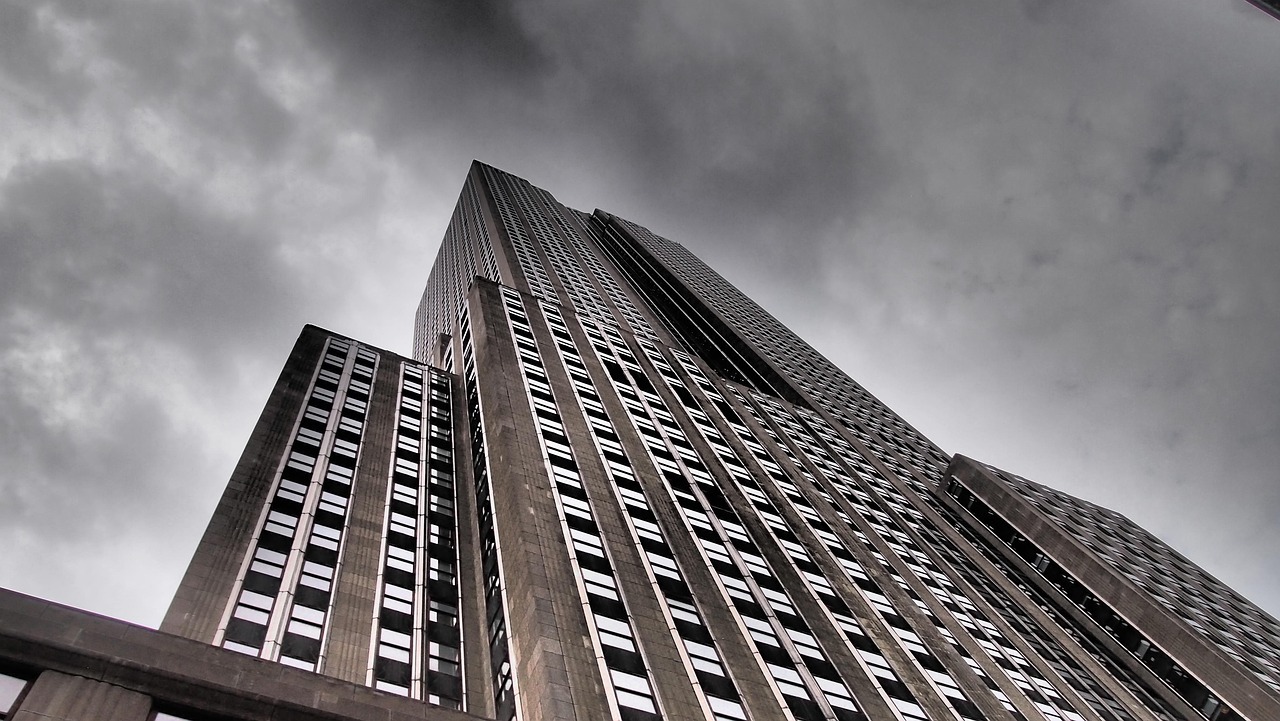
The National Park Service National Historic Landmark documentation places the building under Art Deco Style and identifies its architectural significance. The same documentation emphasizes the vertical lines that make the tower read as a soaring spire. That distinction matters: the building is not simply tall; it is composed to make height legible. Its details support the upward motion instead of competing with it.
A skyscraper version of Art Deco
Many Art Deco civic buildings, theaters, and apartment houses use zigzags, chevrons, sunbursts, stepped parapets, and decorative panels at a smaller scale. The Empire State Building uses some of these devices, especially at entrances and in interior spaces, but its strongest Art Deco feature is the overall tower form. The design turns a commercial office block into a symmetrical, tapering monument. It is best understood as skyscraper Art Deco, not merely as a tall building with Art Deco decoration applied to it.
The exterior features that define the Empire State Building style
The building sits on a five-story base and rises through a sequence of setbacks. Preservation descriptions identify shallow setbacks around the 21st, 25th, 30th, and 72nd floors, with more pronounced changes near the upper commercial office portion and observatory level. These breaks are not random picturesque gestures. They organize the mass into a tapered form that carries the eye from base to crown.
Several exterior elements make the Art Deco reading clear:
- Vertical window bands: Long strips of windows and spandrels reduce the visual weight of the broad office floors and draw attention upward.
- Metal spandrels and frames: Aluminum and nickel-chrome-steel details give the façade a machine-age character associated with 1930s modernity.
- Limestone tower surfaces: The pale stone gives the building a disciplined, monolithic appearance rather than a patchwork façade.
- Symmetrical massing: The setbacks occur in a controlled sequence, creating a balanced tower instead of an irregular skyline shape.
- A mast-like crown: The aluminum, chrome-nickel-steel, and glass mast completes the vertical composition and gives the tower its instantly recognizable profile.
The result is restrained, but not plain. The Empire State Building does not depend on a heavily sculpted crown to announce its style. It turns repetition, alignment, and tapering mass into architectural expression. That restraint is one reason the tower has remained visually adaptable in photographs, skyline views, and later lighting schemes.
How zoning and construction shaped the look
The Empire State Building style cannot be separated from New York zoning and commercial office planning. The 1916 New York zoning framework encouraged tall buildings to step back as they rose so that more light and air could reach the street. By the 1920s and early 1930s, architects had turned that legal requirement into a recognizable skyscraper language. The setback tower became both a compliance strategy and a visual symbol of modern New York.
According to federal landmark documentation, the Empire State Building plan was driven by a concise commercial program: efficient rentable office space, compact vertical circulation, perimeter offices close to windows, a limestone exterior, and a strict completion schedule. The building was constructed from March 17, 1930, to May 1, 1931, a remarkably short period for a 102-story project. That speed helps explain the discipline of the design. The façade is not a slow accumulation of handcrafted effects; it is a coordinated system that could be repeated, assembled, and understood from a distance.
This is where style and practicality meet. The setbacks helped address legal and daylight conditions. The deep but efficient office floors responded to leasing needs. The rhythm of metal and windows supported rapid construction and visual unity. The Art Deco character emerged from the way these requirements were shaped into a monumental composition.
The lobby shows the decorative side of the style
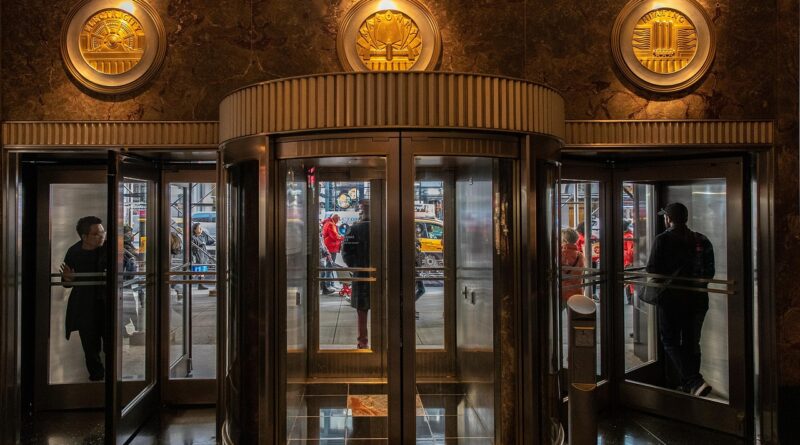
If the exterior demonstrates Art Deco through massing and verticality, the lobby shows the style through surface, material, and symbolism. The Fifth Avenue entrance and interior spaces include marble, metalwork, stylized panels, elevator banks, geometric ceiling treatments, and an iconic image of the building itself. The New York City interior landmark designation covers major public interior areas and their fixtures, including wall surfaces, ceiling surfaces, murals, light fixtures, elevator doors, plaques, railings, and related components.
The lobby also helps correct a common misunderstanding. Some visitors see the exterior as relatively austere and assume the building is only loosely Art Deco. Inside, the design language becomes more explicit. Metallic finishes, starburst imagery, stylized industrial symbols, and geometric organization turn the ground-floor experience into a ceremonial passage. The building presents itself as a modern machine, a commercial address, and a civic emblem at the same time.
The owner’s public history records a major restoration effort in the 2000s, including work to recreate the original gold and aluminum ceiling. That restoration matters for the style because it reinforces the continuity between exterior silhouette and interior spectacle. The Empire State Building is not just an office tower with a decorative lobby; it is a coordinated Art Deco environment from street entrance to skyline crown. See also: Building Layout.
How it differs from similar architectural styles
The Empire State Building is sometimes confused with other early twentieth-century styles because skyscrapers often borrow from multiple traditions. Its classification becomes clearer when it is compared with neighboring categories.
| Style | Typical traits | Why the Empire State Building is different |
|---|---|---|
| Beaux-Arts | Classical orders, grand axial planning, sculptural historic ornament | The tower keeps monumentality and symmetry but removes most classical façade language in favor of modern vertical lines. |
| Gothic Revival | Pointed arches, tracery, medieval references, highly articulated crowns | The Empire State Building rises like a spire, but its details are geometric and machine-age rather than medieval. |
| Streamline Moderne | Rounded corners, horizontal bands, aerodynamic forms | Some entrance and metal details feel streamlined, but the dominant composition is vertical, stepped, and tower-like. |
| International Style | Glass curtain walls, minimal ornament, exposed functional logic | The building predates the widespread glass-box office tower and retains Art Deco symbolism, metal ornament, and monumental massing. |
| Skyscraper Art Deco | Setbacks, vertical emphasis, geometric details, stylized modern materials | This is the best fit: the building turns height, rhythm, and machine-age detail into a unified architectural identity. |
This comparison also explains why the word modernistic appears in many older discussions of the building. In the 1930s, modernistic did not necessarily mean the later International Style. It often referred to a modern, decorative, forward-looking design language that is now commonly grouped under Art Deco.
Timeline of the building’s style and recognition
| Date | Event | Why it matters for the style |
|---|---|---|
| March 17, 1930 | Construction began, according to the building’s official history. | The rapid schedule encouraged a disciplined, repeatable façade system. |
| May 1, 1931 | The Empire State Building officially opened. | Its 102-story form became a defining image of Depression-era New York ambition. |
| 1953 | A television antenna was added above the mast. | The addition extended the silhouette that many viewers now associate with the building. |
| May 19, 1981 | The New York City Landmarks Preservation Commission designation report recognized the building’s exterior significance. | The report framed the tower as a key modernistic skyscraper and city symbol. |
| 1986 | The building was recognized as a National Historic Landmark. | Federal recognition reinforced its national architectural importance. |
| 2000s | Major restoration work revived significant lobby finishes and ceiling decoration. | The work strengthened public understanding of the building as an Art Deco interior as well as an exterior icon. |
Why the style still feels contemporary
The Empire State Building remains compelling because its design is direct. Its stepped massing explains the tower at a glance. Its vertical bands make height feel intentional rather than merely structural. Its ornament is present but controlled, allowing the building to read as both historic and modern depending on the viewing distance.
From an architectural analysis perspective, the building offers an important lesson: Art Deco was not only surface decoration. In major skyscrapers, it could organize the relationship between zoning, structure, office planning, materials, and skyline identity. The Empire State Building is one of the clearest examples of how a commercial high-rise can become a civic symbol through architectural style.
Its most durable quality is balance. The building is monumental without being overloaded, decorative without becoming fussy, and modern without rejecting the ceremonial role of architecture. That balance is why the Empire State Building style continues to define how many people imagine a classic New York skyscraper.
Frequently asked questions
Is the Empire State Building Art Deco or modern?
It is Art Deco. It can also be described as modernistic in the language of its period, but that should not be confused with the later International Style of glass-and-steel modernism. Its setbacks, vertical emphasis, metal details, geometric interior design, and landmark documentation all support the Art Deco classification.
Who designed the Empire State Building?
The building was designed by Shreve, Lamb and Harmon. Preservation records identify William F. Lamb as the firm’s chief designer for the project, while Starrett and Eken served as contractors.
What makes the Empire State Building different from the Chrysler Building?
Both are famous New York Art Deco skyscrapers, but they express the style differently. The Chrysler Building is more ornamental and theatrical at the crown, while the Empire State Building is more restrained, symmetrical, and dependent on massing, vertical rhythm, and silhouette.
Are the setbacks part of the Art Deco style?
Yes, in the context of New York skyscrapers. Setbacks were strongly shaped by zoning rules, but architects turned them into a defining visual language. In the Empire State Building, the setbacks help create the tapered tower profile that supports its Art Deco identity.
Is the lobby also Art Deco?
Yes. The lobby is one of the clearest places to see the decorative side of the style, including marble, metalwork, stylized imagery, geometric organization, and restored ceiling decoration. Its landmark status reflects the importance of these interior features.