
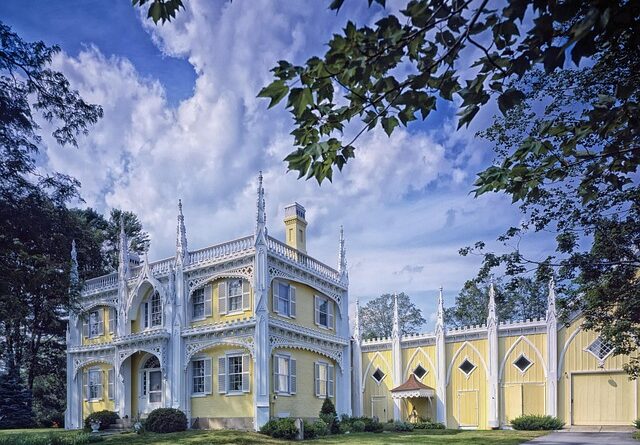
What Defines A Gothic Revival House In The Context Of Park Slope’s Historic Architecture
This $6.75M Gothic Revival Townhouse in Park Slope Was Once a Church Rectory
Once serving as a church rectory, this $6.75 million Gothic Revival townhouse in Park Slope now stands as an example of how 19th‑century religious architecture can be reimagined for modern living. The property retains its ecclesiastical charm—pointed arches, stained glass, and intricate woodwork—while offering contemporary comfort. Its transformation demonstrates how adaptive reuse preserves Brooklyn’s architectural legacy without freezing it in time. The townhouse embodies the Gothic Revival spirit: verticality, ornamentation, and moral symbolism expressed through structure and detail.
Architectural Characteristics of Gothic Revival Houses
The Gothic Revival style emerged as a romantic reinterpretation of medieval design, emphasizing spirituality and craftsmanship over industrial uniformity. In residential architecture, it translated into homes that appeared both monumental and intimate.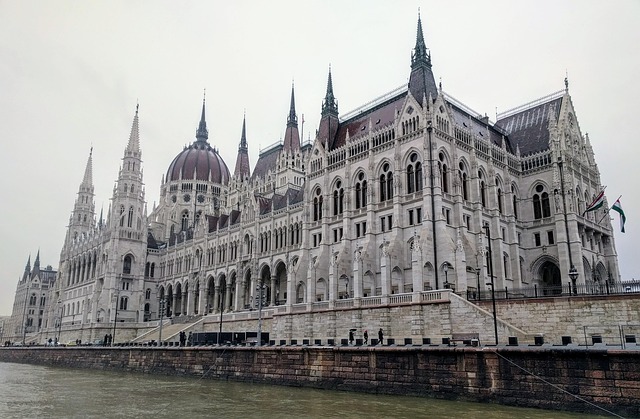
Defining Elements of the Gothic Revival Style
A typical gothic revival house features steeply pitched roofs that draw the eye upward, reinforcing the vertical emphasis characteristic of the style. Pointed arches frame windows and doors, while finials and decorative bargeboards accentuate rooflines with sculptural precision. Tracery—delicate stone or wood patterns within windows—adds rhythm to façades. Unlike classical symmetry, these houses often display asymmetrical layouts and complex roof compositions, giving them an organic silhouette reminiscent of rural English churches.
Materials and Construction Techniques
Stone and brick masonry dominate the exterior palette, chosen to convey permanence and moral solidity. Builders frequently incorporated carved limestone around entryways or window surrounds to highlight craftsmanship. Woodwork appears in ornamental gables or window frames where artisans could express individuality through carving. Stained glass became both a decorative and spiritual element, filtering colored light into interiors and symbolizing divine illumination—a motif borrowed from ecclesiastical architecture.
The Emergence of Gothic Revival Architecture in Brooklyn
Brooklyn’s embrace of the Gothic Revival paralleled America’s broader fascination with moralized design during the mid‑19th century. As cities expanded, architects sought styles that balanced progress with tradition.
Historical Context of the Movement in 19th‑Century America
The movement drew heavily from English precedents such as those promoted by Augustus Pugin, who argued that Gothic architecture embodied Christian virtue through honest construction. American architects adopted these ideals to reform urban aesthetics they saw as overly industrial or materialistic. Churches, universities, and wealthy patrons favored the style for its association with faith and intellect. In cities like New York, it became a marker of cultural aspiration during rapid urbanization.
The Spread of Gothic Revival in Park Slope’s Development
Park Slope’s proximity to Prospect Park made it an attractive enclave for affluent families seeking architectural distinction within commuting distance of Manhattan. Builders adapted Gothic motifs to fit rowhouse typologies: pointed dormers above brownstone stoops, clustered chimneys recalling medieval manors, and lancet windows punctuating façades otherwise typical of urban housing stock. This blending of romanticism with practicality gave Park Slope its layered streetscape identity—a visual dialogue between tradition and modernity that still defines the neighborhood today.
Adaptive Reuse: From Church Rectory to Residential Townhouse
Transforming a religious building into a residence requires sensitivity to both heritage value and functional needs. The former rectory in Park Slope illustrates how adaptive reuse can sustain historic character while supporting contemporary lifestyles.
Architectural Adaptation of Religious Structures for Domestic Use
Preservation often begins by retaining defining ecclesiastical elements such as lancet windows, buttresses, or vaulted ceilings. These features lend grandeur uncommon in domestic interiors yet remain compatible with open‑plan layouts when carefully integrated. Modern interventions—HVAC systems, updated insulation, discreet lighting—must be inserted without compromising visual integrity. In this townhouse conversion, stained glass panels remain intact while new glazing improves energy performance behind them.
Challenges in Preserving Authenticity During Conversion
Converting sacred spaces introduces technical challenges: maintaining structural stability when subdividing large halls or inserting new floors; meeting safety codes without obscuring historic details; sourcing materials consistent with original masonry or millwork. Within Park Slope’s landmark district, preservation guidelines require documentation before any alteration and encourage reversible methods so future restorations remain possible. Successful projects balance authenticity with livability rather than treating history as static décor.
The Role of Ornamentation in Defining Gothic Revival Identity
Decoration is not mere embellishment in Gothic design—it conveys meaning through form. Ornamentation distinguishes this style from others by merging symbolism with structure.
Symbolic and Aesthetic Purposes of Decorative Detailing
Carved stone motifs frequently depict foliage or biblical imagery reflecting moral lessons about nature’s divine order. Iron railings echo vertical lines found in window tracery, reinforcing upward movement throughout façades. Even minor details like door hinges or gate finials follow geometric patterns derived from medieval precedent. Such craftsmanship transforms everyday components into carriers of cultural memory.
Interior Articulation Reflecting Exterior Principles
Inside a gothic revival house, pointed arches frame passageways while exposed beams emphasize height much like ribbed vaults in cathedrals. Dark woods—oak or walnut—complement patterned encaustic tiles underfoot, creating warmth despite somber tones. These interiors foster intimacy within grandeur; residents experience continuity between exterior symbolism and interior atmosphere rather than separation between shell and soul.
Park Slope’s Historic Fabric and Architectural Cohesion
Park Slope remains one of Brooklyn’s most architecturally coherent districts precisely because diverse revival styles coexist within shared material language.
Relationship Between Gothic Revival Residences and Surrounding Styles
Italianate cornices meet Romanesque arches along adjacent blocks; Queen Anne turrets rise beside pointed gables—all unified by brownstone façades drawn from local quarries. This chromatic consistency allows stylistic variety without visual discordance. Urban regulations established later reinforced this harmony by restricting façade alterations visible from the street—a policy that preserved collective identity even as individual buildings evolved.
Influence on Contemporary Restoration Practices in Park Slope
Today’s restorations emphasize minimal intervention: replacing deteriorated elements with matching materials rather than synthetic substitutes; documenting every modification for archival record; designing additions distinguishable yet sympathetic to originals. Contemporary architects sometimes reinterpret Gothic vocabulary using sustainable materials such as recycled steel tracery or low‑energy glazing shaped like lancet windows. These gestures show that revivalism need not be nostalgic—it can inform responsible design for current environmental realities.
FAQ
Q1: What defines a Gothic Revival house compared to other Victorian styles?
A: It emphasizes vertical lines, pointed arches, ornate detailing like tracery and finials, often using asymmetrical forms rather than balanced classical proportions.
Q2: Why was the style popular among churches and wealthy homeowners?
A: It conveyed moral seriousness and spiritual aspiration through craftsmanship associated with medieval faith traditions.
Q3: How does adaptive reuse benefit historic neighborhoods like Park Slope?
A: It keeps heritage buildings active within modern economies while reducing demolition waste and preserving cultural continuity.
Q4: What materials are essential for authentic restoration?
A: Traditional stone or brick masonry paired with handcrafted woodwork ensures compatibility with original construction methods.
Q5: How do modern architects reinterpret Gothic motifs today?
A: They apply simplified geometries or sustainable materials inspired by original forms to express continuity without imitation.