
What makes a deco arts building an Art Deco building?
The short answer
A “deco arts building” usually means an Art Deco building: a 20th-century architectural style recognized by geometric ornament, vertical emphasis, stepped forms, smooth wall surfaces, stylized decoration, and a strong machine-age character. The name Art Deco is linked to the 1925 Paris exposition of decorative and industrial arts, but buildings in the style appeared in different forms across cities, resorts, civic centers, theaters, and commercial districts during the 1920s and 1930s.
The key point is that Art Deco is not just decoration applied to a facade. In strong examples, the style connects massing, materials, ornament, signage, interior design, and urban image into one clear architectural identity.
For readers comparing architectural periods, this guide fits within the broader family of building styles, where visual evidence, dates, materials, and local context all matter.
Where Art Deco came from
Art Deco developed from several overlapping forces, not from one single manifesto. Museum and architectural history sources commonly connect the name to the Exposition internationale des arts décoratifs et industriels modernes, held in Paris in 1925. The exposition gave international visibility to modern decorative design, luxury materials, craft, fashion, interiors, and architecture. In practice, the style had roots before 1925 and continued to evolve after it.
Unlike early modernism, which often rejected ornament, Art Deco embraced decoration while making it look modern. It drew from Cubism, classical composition, ancient Egyptian and Mesoamerican motifs, the speed of machines, ocean liners, cinema culture, electricity, aviation, and the vertical ambition of the modern city. That mix is why Art Deco can feel both historical and futuristic.
In the United States, many preservation field guides date Art Deco architecture broadly from about 1925 to 1940. That range is useful, but it is not absolute. Some buildings used Deco elements earlier, and some regions continued to use simplified versions into the early 1940s. The style also overlapped with Streamline Moderne, New Deal civic architecture, and local commercial traditions.
How to identify an Art Deco building
No single feature proves that a building is Art Deco. A reliable identification comes from a group of related traits. A plain building with one zigzag panel may only be Deco-influenced, while a complete Art Deco building usually coordinates its massing, facade rhythm, entrance, materials, and ornament.
Vertical massing and stepped profiles
Many urban Art Deco buildings emphasize height. Skyscrapers and office towers often use strong vertical piers, recessed windows, and setbacks that make the building appear to rise in stages. These stepped forms were partly aesthetic and partly shaped by zoning rules in cities such as New York, where upper floors had to recede to allow light and air to reach the street.
Smaller buildings can use the same idea at a different scale. A one- or two-story storefront may have a raised central parapet, fluted pilasters, or a tower-like sign bay that creates a miniature skyline effect. The result is upward movement, symmetry, and a stronger sense of arrival at the entrance.
Geometric ornament
Art Deco ornament is usually stylized rather than naturalistic. Common motifs include chevrons, zigzags, sunbursts, fountains, lightning bolts, stepped triangles, speed lines, fans, reeds, floral abstractions, and low-relief figures. The ornament often appears around entrances, spandrels, parapets, elevator doors, lobbies, and signage panels.
This is one reason the phrase “deco arts building” can be misleading. The style is not simply decorative art placed on a building. In strong examples, the ornament reinforces the composition. A sunburst over an entry, a fluted pier running through several floors, or a metal grille with repeated geometric forms all help organize the architecture.
Smooth surfaces and modern materials
Art Deco buildings often use smooth stone, terra cotta, glazed brick, stucco, cast concrete, metal panels, decorative grilles, glass block, colored tile, and polished interior finishes. Depending on the building type, these materials could suggest luxury, hygiene, modernity, or industrial precision.
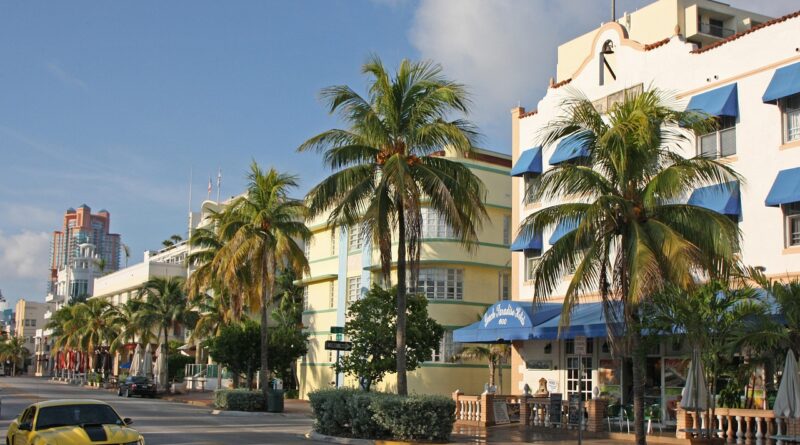
Color also plays a role. Some urban towers use darker stone, metallic accents, and deep shadow lines. Resort districts may use pastel stucco, neon, terrazzo, and rounded corners, especially where Art Deco overlaps with Streamline Moderne. Civic buildings often use limestone or concrete with carved reliefs that communicate public purpose and permanence.
How different building types used the style
Art Deco adapted well because it could be grand, commercial, affordable, or theatrical. It was not limited to skyscrapers. The table below shows how the same design language appeared in different building types.
| Building type | Typical Art Deco expression | What to look for |
|---|---|---|
| Skyscrapers and office towers | Vertical piers, setbacks, metal ornament, dramatic crowns | Stepped silhouette, recessed windows, stylized spandrels, lobby detailing |
| Cinemas and theaters | Theatrical facades, neon, marquee signs, rich interior patterns | Bold entrance, geometric ceilings, decorative grilles, integrated signage |
| Hotels and apartments | Symmetrical fronts, pastel finishes, corner windows, relief panels | Raised parapets, bands of windows, terrazzo entries, stylized name panels |
| Civic and institutional buildings | Monumental but simplified forms, public murals, carved reliefs | Strong central entrance, durable materials, allegorical or industrial motifs |
| Storefronts and small commercial blocks | Applied facade systems, tile, glass, metal trim, vertical sign towers | Geometric transoms, curved display windows, fluted pilasters, signage frames |
This flexibility is why Art Deco districts can feel varied without becoming visually chaotic. A hotel, a cinema, and a post office may have different scales and budgets, yet still share rhythm, geometry, and a modern decorative language.
Art Deco is not the same as Art Nouveau or Streamline Moderne
Readers often confuse Art Deco with nearby styles. The distinctions are not always clean, especially in buildings that combine several influences, but they are useful for description and preservation work.
Art Nouveau, which peaked earlier around the turn of the 20th century, tends to use flowing lines, plant forms, asymmetry, and organic curves. Its ornament often looks grown or hand-drawn. Art Deco is usually sharper, more symmetrical, and more geometric. It may use natural motifs, but it abstracts them into panels, rays, fans, or repeated patterns. See also: Building Layout.
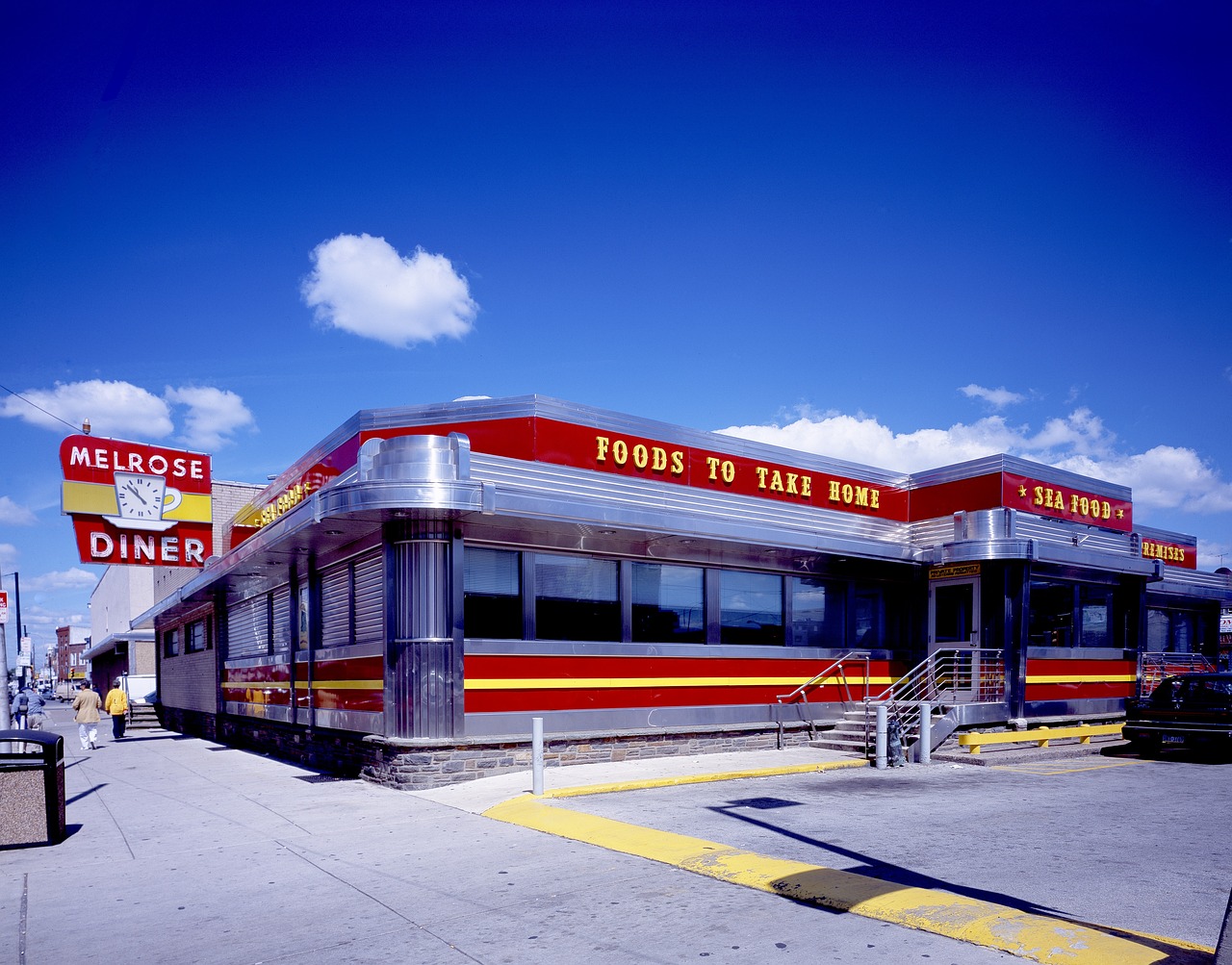
Streamline Moderne is closely related, but it is generally smoother and more horizontal. It favors rounded corners, flat roofs, pipe railings, glass block, bands of windows, and forms inspired by ships, trains, automobiles, and aerodynamic design. Some buildings combine Art Deco vertical emphasis with Streamline curves, especially in 1930s hotels, diners, and apartment buildings. In those cases, it is more accurate to describe the building as Art Deco and Streamline-influenced rather than forcing it into only one category.
Beaux-Arts and classical architecture can also overlap with Deco. Some interwar buildings keep classical symmetry and monumental entrances but replace traditional columns and ornament with stylized relief, flat planes, and modern materials. That hybrid quality is part of Art Deco’s appeal.
Famous examples show the range of the style
The Chrysler Building in New York
The Chrysler Building, completed in 1930 and designed by William Van Alen, is one of the clearest examples of Art Deco as corporate image. Its crown, spire, metal ornament, and automotive motifs connect the building to speed, industry, and brand identity. New York City landmark documentation identifies it as an outstanding example of Art Deco architecture and notes the importance of its stainless-steel ornament and spire. The lesson is that Art Deco often turns technology into symbolism.
The Empire State Building
The Empire State Building shows how Art Deco could shape a skyscraper without depending on excessive surface detail. Its setbacks, vertical lines, limestone facade, and carefully composed lobby create a disciplined version of the style. It shows that an Art Deco building can be restrained and monumental rather than ornate in every detail.
Miami Beach
Miami Beach illustrates the district-scale power of Art Deco. The city’s architectural history highlights the Miami Beach Architectural District, listed on the National Register of Historic Places on May 14, 1979. Its hotels and apartments are often lower than New York towers, but they use pastel color, relief ornament, neon, eyebrows, symmetrical facades, and corner emphasis to create a distinctive resort identity. This example matters because it shows that Art Deco is not only a skyscraper style.
Napier in New Zealand
Napier offers a different story. After the destructive Hawke’s Bay earthquake of February 3, 1931, much of the commercial center was rebuilt during the Art Deco era. New Zealand heritage and encyclopedia sources describe how the reconstruction gave Napier a concentrated interwar architectural character. Its buildings are generally lower, more compact, and locally adapted, with some decoration reflecting regional identity. The lesson is that Art Deco could become a tool of recovery, civic optimism, and place-making.
Why preservation matters
Art Deco buildings are now old enough to be historic resources, but many were originally built as practical commercial assets. That creates preservation challenges. Storefronts may have been altered, original windows replaced, lobbies subdivided, neon removed, or decorative panels painted over. In some cases, the most important character-defining features are small details: a terrazzo threshold, a metal grille, a name panel, a relief over the entrance, or the original rhythm of window openings.
Preservation does not always mean freezing a building. Adaptive reuse can keep Art Deco structures active while protecting the features that communicate the style. A former cinema may become an event space, a department store may become offices or housing, and a hotel may be renovated for modern codes. The strongest projects identify what is essential before design work begins: massing, facade rhythm, materials, ornament, lobby volume, signage, and street-level transparency.
The limits are important. Not every old building with geometric decoration is nationally significant, and not every Art Deco alteration should be treated as original. Good evaluation relies on construction date, architect or builder records where available, physical evidence, local historic context, and comparison with similar buildings in the same area.
Frequently asked questions
Is “deco arts building” the correct term?
It is understandable, but the standard architectural term is Art Deco building. The phrase may come from the French decorative arts origin of the name, but in architecture writing, preservation surveys, and museum sources, Art Deco is the accepted term.
What is the fastest way to spot an Art Deco building?
Look for a combination of stepped massing, vertical emphasis, geometric ornament, smooth wall surfaces, stylized entrances, and modern materials such as terra cotta, metal, glass block, concrete, or glazed tile. One feature alone is not enough; the pattern of features is what matters.
Are all Art Deco buildings from the 1920s?
No. Many famous examples were designed or completed in the late 1920s and early 1930s, and U.S. field guides often use a broader 1925 to 1940 range. Local conditions, economic cycles, and building types affected when the style appeared in each city.
Can a small storefront be Art Deco?
Yes. Art Deco was used on skyscrapers, theaters, apartments, hotels, civic buildings, and small commercial facades. A modest storefront can be Art Deco if its design uses the style’s characteristic geometry, materials, signage, and facade composition in a coherent way.
Why does Art Deco still feel modern?
Art Deco still feels modern because it translates speed, technology, urban ambition, and luxury into clear visual forms. Its geometry is easy to read, its materials catch light well, and its balance of order and ornament remains adaptable for contemporary preservation and design discussion.