
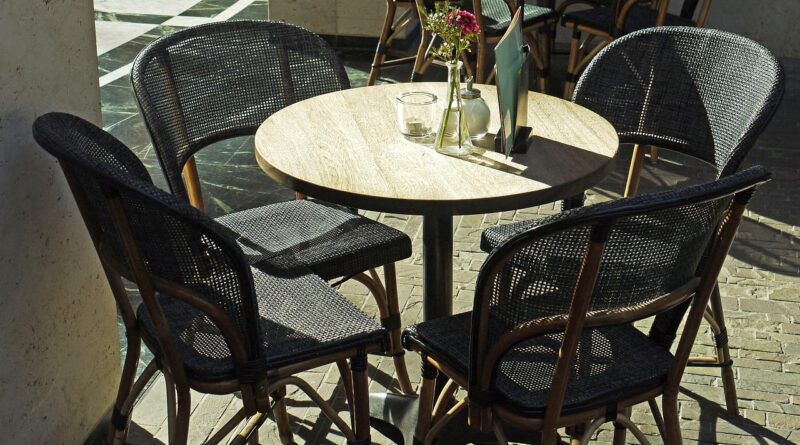
Round coffee table decor that looks balanced and still works every day
Start with the circle, not the accessories
Good round coffee table decor starts with the table shape itself. A round surface has no corners to frame the arrangement, so loose objects can look as if they are floating unless they are grouped with purpose. The most reliable approach is simple: create one clear focal point, vary height and texture, and keep enough open surface for drinks, remotes, books, or a casual snack. In many rooms, a tray, a low stack of books, a vase or bowl, and one personal object are enough. The aim is not to fill the tabletop. It is to make the seating area feel complete while keeping the table useful every day.
Round tables work especially well in compact rooms, homes with children, and seating areas where people move around the furniture from several directions. Their soft edge supports easier circulation than a rectangular table, but the open shape also makes clutter more visible. Editing is part of the design. A round coffee table usually looks best when the arrangement has a center of gravity, a few contrasting forms, and clear negative space.

Use a simple decor formula that can flex
Most decorating guidance from furniture retailers and interior design publishers comes back to the same core structure: use a tray or defined base, add books for a horizontal layer, bring in height with a vase or branches, and include something sculptural or personal. The formula works because it solves the main challenge of a round tabletop. It gives the eye a place to land.
Choose one anchor piece
An anchor is the object that visually organizes everything around it. On a round coffee table, this is often a tray, shallow bowl, large ceramic dish, or low basket. A round tray repeats the table shape and feels calm. A square or rectangular tray creates contrast and can make the arrangement look more structured. On a small table, the anchor should not take over the entire surface. On a large table, an undersized tray can look lost, so scale it up or pair it with a book stack beside it.
Add one vertical element
Height keeps the arrangement from feeling flat. A vase with branches, a small plant, a candleholder, or a sculptural object can provide that lift. The practical limit is the sightline. If the coffee table sits between a sofa and a television or fireplace, avoid anything so tall or dense that it interrupts conversation or viewing. In a high-traffic living room, a narrow vase with airy stems usually works better than a bulky arrangement.
Layer in a horizontal element
Books are useful because they add color, scale, and a flat platform for smaller pieces. One or two larger books usually look cleaner than several thin books. If the table is small, keep the stack low. If the table is large, use a broader book stack to balance the curve. The book does not have to be a design title. Travel, architecture, gardens, photography, and craft books can all work when they connect to the room or to the people who live there.
Finish with something personal
The final layer keeps the table from looking like a showroom display. A small handmade bowl, stone, vintage box, ceramic figure, match striker, or travel object can add character without creating mess. This is where restraint matters. One memorable object is stronger than five small pieces competing for attention.
Get the proportions right before styling
Decorating problems often begin with table size. Furniture buying guides commonly recommend that a coffee table be roughly one-half to two-thirds the length of the sofa, and close enough to the seat height to feel comfortable in use. These are not strict rules for every room, but they are useful starting points. If the table is much too small, decor tends to look scattered. If it is too large, even well-chosen styling can make the seating area feel blocked.
Clearance matters just as much. A coffee table should be close enough to reach from the sofa, but not so close that people hit their legs when standing. In many living rooms, a gap of about 14 to 18 inches between sofa and table is practical, though deeper sofas, recliners, and narrow rooms may need adjustment. The best test is simple: can someone set down a drink, walk around the table, and sit comfortably without moving the decor?
| Table situation | Decor approach | What to avoid |
|---|---|---|
| Small round table under 28 inches | Use one tray or one book stack with a small vase or candle | Multiple tiny objects spread around the edge |
| Medium table around 30 to 40 inches | Create a compact cluster with books, vessel, and one personal object | A centerpiece so wide that there is no usable surface |
| Large round table over 42 inches | Use two related groupings, such as a tray and a book stack, with open space between them | One small object in the center that looks accidental |
| Ottoman used as a coffee table | Use a firm tray to stabilize drinks and accessories | Loose candles, heavy ceramics, or unstable stacks |
Match the decor to the room’s daily use
A styled table has to survive the way the room is actually used. A formal sitting room can handle more delicate objects. A family room needs pieces that can be moved quickly, cleaned easily, and returned to place without fuss. The most successful round coffee table decor is not just attractive in a photograph. It supports the room’s routine.
For a small apartment living room
Keep the arrangement compact and multifunctional. A shallow tray can hold a remote, coaster, candle, and small plant. Choose low objects so the room feels open. Glass, pale wood, rattan, and light ceramic pieces can help the table feel less heavy. If the table is the only surface in the room, leave at least half of it open on most days.
For a family room
Use fewer, sturdier pieces. A woven tray, lidded box, washable coasters, and low bowl are easier to manage than fragile vases or loose decorative objects. If children use the room, avoid sharp stone pieces, tall glass vessels, and candles within easy reach. A lidded box is especially useful because it hides small clutter while still looking intentional.
For a room with a sectional
Round tables pair well with sectionals because they soften the strong L-shape. On a large round table, avoid placing everything in a tight bullseye at the center. Instead, create a slightly off-center arrangement that relates to the main seating position. A tray near the sofa side and a book stack toward the open side can make the table feel connected to the whole seating area.
For a formal or layered room
Use richer materials and more deliberate symmetry. A stone bowl, brass object, hardback books, and flowers can feel polished without becoming fussy. Formal styling still needs breathing room. The difference is in the finish and balance, not in the number of items.
Use material contrast to make the styling feel designed
Round coffee tables are often made from wood, glass, marble, metal, rattan, or upholstered materials. Decor should respond to the table surface rather than fight it. If the table is dark wood, lighter books and ceramics can keep the arrangement from disappearing. If the table is glass, add texture below or above it so the decor does not feel weightless. If the table is marble or stone, soften it with organic shapes, paper, linen, or wood. See also: Building Styles.
Color can be handled in two ways. A tonal palette creates calm: cream books, a beige ceramic bowl, pale flowers, and a natural tray. A contrast palette creates energy: black table, white books, green stems, and a warm brass object. Neither approach is automatically better. The right choice depends on whether the room needs quiet cohesion or a sharper focal point.
- Wood table: Add ceramic, glass, metal, or linen to avoid too much wood tone.
- Glass table: Use heavier visual pieces such as books, stone, or a tray to ground the surface.
- Marble table: Balance the cool surface with warm metal, flowers, rattan, or a textured box.
- Rattan table: Keep decor simple so the woven texture remains visible.
- Upholstered ottoman: Use a tray as the stable base and keep decorative pieces low.
A practical layout for different design styles
The same structure can work across many interiors. What changes is the material, color, and level of formality. This is where round coffee table decor becomes more than a set of objects. It should reinforce the room’s architecture, furniture lines, and mood.
| Interior style | Suggested tabletop mix | Why it works |
|---|---|---|
| Modern minimalist | One sculptural bowl, one book, and a single stem | Creates a focal point without visual noise |
| Warm contemporary | Wood tray, textured vase, candle, and two books | Balances clean lines with tactile materials |
| Traditional | Hardback books, small floral arrangement, brass object, and coasters | Adds symmetry, polish, and useful details |
| Organic modern | Stone bowl, branches, linen-covered book, and ceramic object | Combines natural texture with restrained form |
| Eclectic | Colorful book stack, vintage dish, unusual object, and small plant | Lets personality lead while the grouping keeps order |
For more living room furniture and styling ideas, explore the Furniture & Decor section on Archithaus.
Common round coffee table decor mistakes and easy fixes
The most common mistake is spreading small objects evenly around the perimeter. This makes the table look busy but unfinished. Pull the pieces into one cluster and vary their heights. Another mistake is using only round objects on a round table. Repeating curves can be beautiful, but too many circles may feel flat. Add a rectangular book, a square tray, or an angular sculpture for contrast.
Scale is another frequent issue. A tiny candle and a small bowl in the middle of a large table will not hold the surface. Build a stronger base layer with a larger tray or a substantial book. On the other hand, a large floral arrangement on a small table may look impressive for a photograph but fail in daily use. If you have to move the decor every time you sit down, the arrangement is too large for the room.
- If the table looks cluttered: Remove half the objects and rebuild around one anchor piece.
- If it looks too flat: Add height with stems, a taller vessel, or a candlestick.
- If it looks staged: Replace one generic object with something personal or useful.
- If it feels disconnected: Repeat a color or material already present in the sofa, rug, artwork, or lighting.
- If it blocks conversation: Lower the tallest piece or move it off center.
Seasonal updates without buying a new table setup
Seasonal styling should be subtle. The table does not need a complete redesign every few months. Change one layer at a time: fresh branches instead of dried stems, a darker candle for winter, a lighter linen book cover for spring, or a small bowl of natural objects that fits the season. This keeps the room current without creating waste or storage problems.
The easiest seasonal swap is the organic element. Flowers, greenery, branches, pinecones, shells, or fruit can change the feeling of the table while the tray, books, and core objects stay the same. Keep the color palette connected to the room. Seasonal decor works best when it looks like part of the interior, not a separate display placed on top of it.
Frequently asked questions
What should I put on a round coffee table?
Start with a tray or shallow bowl, add one or two books, include a vase or plant for height, and finish with a small personal object. If the table is small, reduce the formula to one tray, one low object, and open space.
Should a tray on a round coffee table also be round?
It can be, but it does not have to be. A round tray feels soft and harmonious because it repeats the table shape. A square or rectangular tray adds contrast and can make the arrangement look more architectural.
How much of the tabletop should stay empty?
There is no fixed percentage, but the table should still function. As a practical test, leave enough clear space for at least two drinks, a remote, and a book or small plate. If everyday use requires moving most of the decor, the arrangement is too full.
How do I decorate a large round coffee table?
Use larger-scale pieces or two related groupings instead of one tiny centerpiece. A tray on one side and a book stack with a vase on the other can fill the surface while keeping an open path through the middle.
What decor should I avoid on a round coffee table?
Avoid unstable tall objects, too many small accessories, strongly scented candles in tight seating areas, and anything fragile in a busy family room. The best styling supports the room’s use as well as its appearance.