
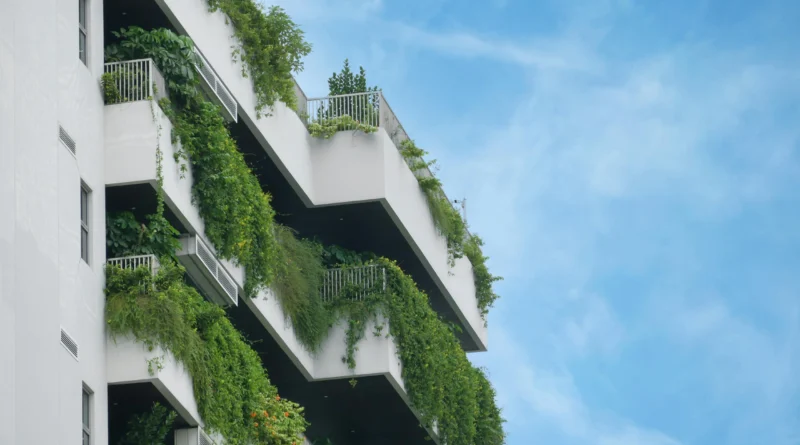
What Are The Principles of Green Design Architecture
Green design architecture refers to buildings that fulfill human needs while remaining within the limits of the environment. In order to achieve these goals, energy efficiency, the responsible use of materials, and sustainable performance in the long term are required. The key principles of green architecture or green buildings are designed to develop sustainable building in the long term and, therefore, represent a design approach as well as a technical means for future-oriented building.
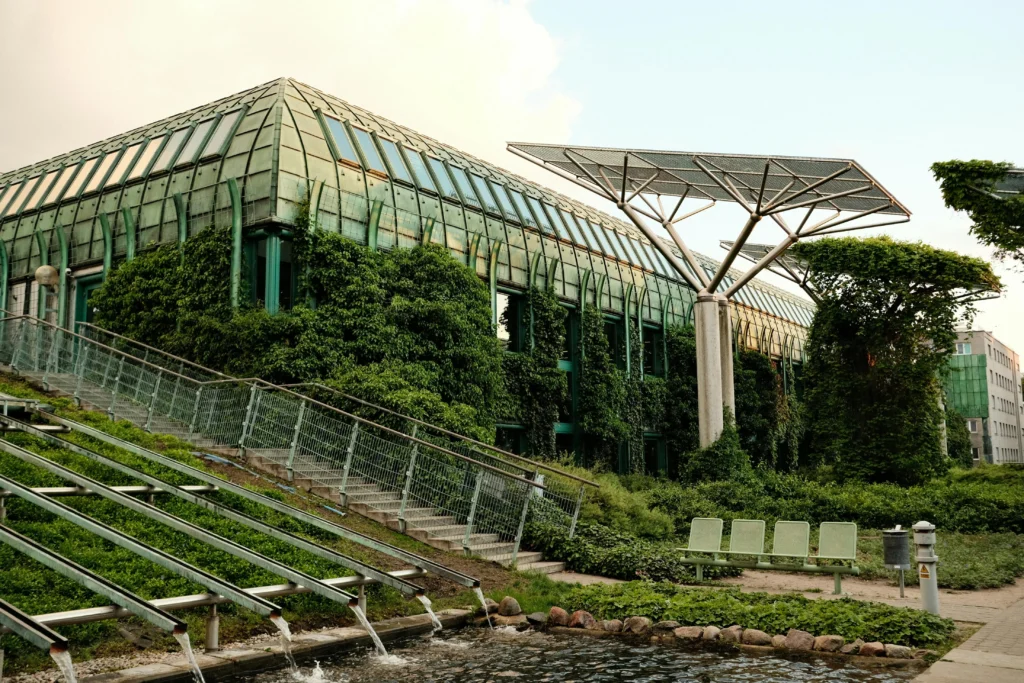
Why Does Green Design Architecture Matter?
Green design architecture is an important discipline that confronts three major problems of our times: climate change, urbanization and the limited resources available on earth. For many years, architecture involved a trade-off between a building’s sustainability and its livability. Yet in recent years, buildings’ sustainability has become the mainstream approach of architecture and construction, supported by the large number of policies in this area as well as by new building technologies. Today, architects all over the world have to tackle new challenges while designing buildings in fast-growing cities. They have to decrease a building’s carbon print while maintaining its comfort and beauty.
Environmental Responsibility as a Core Value
In recent years, the notion of environmental responsibility in architecture has become increasingly important and is played out through the quest for the smallest ecological footprint possible. The materials used in architecture are analyzed from a new perspective, in terms of their life-cycle. When calculating a building’s carbon cost, it is no longer sufficient to include the energy that the building requires for operation. The carbon cost must also include the embodied energy of the building’s structure. Timber from certified forests, for example, is a completely renewable material that is a viable alternative to concrete and steel. It even stores carbon during its lifetime.
Energy Efficiency as a Design Priority
Energy efficiency is about the amount of energy a building uses for heating, cooling and lighting. Passive design strategies try to reduce the need for mechanical systems like air conditioning or fans by using the building itself to maximize or minimize sunlight, for example by orienting the windows to face the right direction. Many modern buildings use passive design features like double-skin façades that naturally cool the building, or use photovoltaic panels to generate electricity on-site.
Social and Economic Dimensions
Beyond green numbers, green design makes for better people too. For example, having daylight in spaces improves the health and productivity of building users and, in the long term, makes green buildings economically viable too. As a result, more and more municipalities offer tax benefits or streamlined building permits to projects pursuing green certification, such as LEED or BREEAM.
How Do Energy Systems Influence Sustainable Building Design?
Sustainable buildings require an efficient energy system. By incorporating renewable energy systems into a building’s design, new possibilities for interaction between building and environment are created. To implement solar power systems and energy storage systems architects, engineers and suppliers have to work together.
Choosing the right supplier of solar inverter and energy storage systems for residential and commercial applications has become one of the most important factors determining the long-term operation of the relevant energy systems and their annual energy output over several decades. For architectural sustainability this means choosing the right technology supplier for achieving the energy targets of a building in the long term over several decades.
Integration of Renewable Energy Sources
Architecture that includes rooftop solar arrays, or integrated solar into building façades, as base building design as opposed to an add-on, to be ultimately paired with battery systems to create partially off-the-grid buildings or contribute to virtual power plants helping to support grid during peak demand.
Smart Management Through Digital Platforms
Modern green buildings are monitored and controlled in real time using digital platforms. This is exemplified by SolaXCloud, which links together the maximum output of solar panels, the discharge of battery storage systems, the charging of electric vehicles and the heating and cooling functions of heat pumps. The platform enables predictive maintenance and adaptive control on the basis of weather forecasts and the occupants’ requirements.
Long-Term Reliability Through Certified Components
Certification breadth ensures compliance across markets and climates—a principle equally vital in architectural design. A supplier targeting global distribution typically holds several hundred certifications covering electrical safety (IEC 62109, UL 1741), grid compliance (EN 50549, AS 4777.2), electromagnetic compatibility, and cybersecurity standards. Similar rigor applies when selecting building materials certified for low emissions or recycled content.
What Role Do Materials Play in Green Architecture?
Green building materials determine a building’s environmental footprint and its visual identity. The selection of materials for a sustainable building has to be a balance of the four key characteristics: durability, recyclability, local procurement and the embodied carbon values of the respective material.
Life-Cycle Thinking in Material Selection
Beyond the initial cost of a building’s construction, Life-cycle thinking includes consideration of ongoing maintenance as well as the expected lifespan of building components prior to replacement or recycling, with the potential to recover materials at the end of life. Examples of circular economy construction, which provide strength as well as evidence of sustainable materials use, include using reclaimed wood for flooring, and recycled steel for building framing.
Innovation in Bio-Based Materials
The field of bio-based building materials is rapidly developing and gaining interest for low-carbon construction. Hempcrete or mycelium insulation for example can store more carbon than it releases during production and offer better moisture regulation than other building materials, which is key to good indoor air quality in humid climates.
Regional Adaptation Through Local Resources
Using local stone or earth in building construction can prevent carbon emissions caused by transportation while giving a cultural identity to the buildings through vernacular forms. In climates with high solar radiation, architects could utilize various reflective surfaces or implement shading devices inspired by local building forms but with performance as per modern construction technologies.
How Can Water Management Be Integrated Into Building Design?
As water scarcity is becoming a global problem, water management in a sustainable way has to be part of a green design strategy in order to be effective.
Rainwater Harvesting Systems
Harvested rainwater collected off of roofs can be stored in tanks for irrigation or for flushing toilets while leaving municipal supplies untouched. Highly advanced filtration systems are also available for harvested rainwater to make it potable, subject to local code regulations.
Greywater Recycling Technologies
A greywater system captures lightly used water from sinks and showers. The treated water can then be reused after treatment such as settling or biological filtration. Reusing greywater can help reduce the amount of freshwater required in multi-residential dwellings by up to 40%.
Landscape Design That Supports Hydrology
Permeable pavements and bioswales allow stormwater to infiltrate the ground instead of generating more runoff. They can help to reverse the effects of urban drainage and return sites to natural drainage. They can also provide habitat for native plants and animals.
How Does Technology Enhance Green Building Performance?
Technology can be both enabling and verifying for sustainable performance goals. Measuring, for example, in an air-conditioning system by sensors, or by using an AI-based analytical software in other parts of the building, a static building can change into an adaptive environment that responds to human behavior.
Building Automation Systems
Automating the control of light level by means of sensors and/or of opening/closing of blinds in relation to levels of daylight perceived, leads to reduced operating expenditure and fulfils human needs as indicated by research into human-centric building design.
Predictive Maintenance Using Data Analytics
By predicting potential failures prior to their occurrence, predictive maintenance helps to avoid unscheduled downtime for repairs, particularly important for large commercial facilities that have very energy-intensive systems such as HVAC systems. Substantial savings can result from identifying wear on key components of these types of systems over time.
Cybersecurity Considerations for Connected Buildings
Smart infrastructure generates a large network of connections with all sorts of different devices. This is why it is fundamental to protect the continuity of the operations as well as the personal data of users. SolaX Solutions holds a GDPR compliant certificate released by TÜV Rheinland, the SOC 2 Type I and II audit reports for cyber security, and the ISO 27001 information security management system certificate. The same standards should apply for the Building Automation Systems that handle sensitive information.
What Are Emerging Trends Shaping Green Architecture?
The next generation of green architecture will integrate environmental science with digital intelligence in order to design self-regulating ecological systems rather than physical buildings.
Integration With Urban Energy Networks
Advanced Solar Storage System similar to those covered in TechBullion’s report on the top solar storage suppliers for 2026, allow buildings to become active energy participants within city-wide energy grids, through two-way power supply. Virtual power plant (VPP) management allows homeowners and businesses to generate an income from the grid by aggregating up together their dispersed power supply.
Adaptive Reuse Over New Construction
Repurposing existing structures is one of the best ways to conserve embodied carbon. This is true even when using the highest efficiency materials, for example reframing in new timber rather than steel. An example of this would be to convert industrial buildings into high quality offices or apartments. Heritgage building can be sustainable.
Climate-Responsive Urban Planning
Cities can benefit from each other by having zoning codes that require passive cooling corridors or even reflective roof surfaces, and while these are rooted in green design at the individual building level, together they can impact heat island effects at a city-wide level.
FAQ
Q1. What makes green design architecture different from conventional architecture? A. Green design architecture is efficient with respect to resources and occupant comfort during the entire lifecycle of a building by means of passive strategies rather than by means of mechanical systems.
Q2: What certifications are there to check for sustainable building performance? LEED (Leadership in Energy and Environmental Design) and BREEAM (Building Research Establishment Environmental Assessment Method) as well as the WELL Building Standard, for example, check sustainability related facts and figures for buildings on the basis of measurable key performance indicators. The categories are energy use as well as indoor air quality, among others.
Q3: How do renewable technologies fit into the architectural planning? A: Renewable technologies are embedded in the architectural planning from the early concept stage. This means the roof is inclined in such a way as to allow for optimal solar exposure, and the mechanical rooms are dimensioned such that they can also contain battery storage units without additional retrofits being required.
Q4: Are bio-based materials reliable enough for larger construction projects? A: Yes, they are. Timber engineered products, such as Cross-Laminated Timber (CLT), have the same load bearing capabilities as concrete when designed according to fire-resistance requirements.
Q5: Can smart building technologies compromise individuals’ and organizations’ privacy? A: Yes. But by adhering to international cybersecurity standards such as ISO 27001 the risk to privacy can be significantly decreased while remaining transparent as to the purposes of data collection etc.