
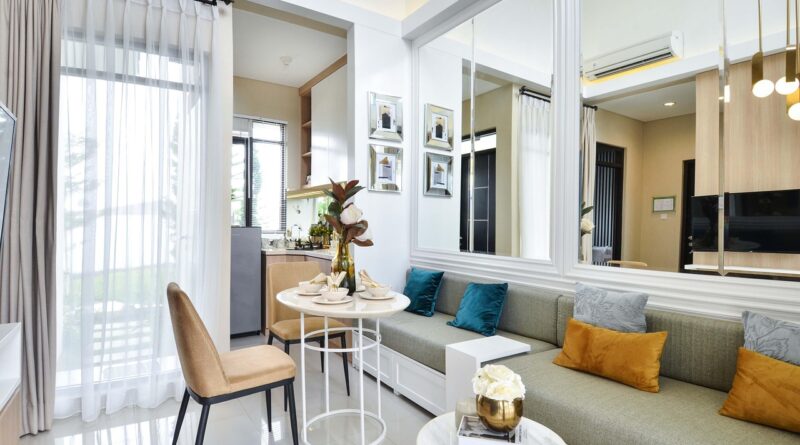
Modern home interior ideas that make rooms warmer, smarter, and more flexible
What modern home interior design means now
A modern home interior is no longer defined only by white walls, sharp furniture, and open space. In 2026, the stronger direction is cleaner living with more comfort: warm neutrals, flexible rooms, integrated storage, natural materials, better lighting, and healthier indoor choices. Recent industry outlooks from ASID, NKBA, NAHB, Houzz, and the U.S. Environmental Protection Agency suggest a similar broad shift. Homeowners still want uncluttered rooms, but they also want homes that support work, rest, cooking, movement, privacy, and connection to nature.
That makes modern design less about copying a single look and more about planning a room as a working system. The strongest interiors balance proportion, light, circulation, texture, and function, so the home feels simple without feeling empty. For more residential design coverage, explore the Home & Interior section.

Start with how the room will be used
Modern interiors often fall short when the design starts with finishes before function. A low-profile sofa, a sculptural chair, or a dramatic stone surface may look refined, but the room will not work if it ignores daily routines. Before choosing furniture, define the room’s main activities, secondary activities, storage needs, and points of friction.
This approach fits a wider housing trend. In its 2026 Best in American Living Awards announcement, the National Association of Home Builders described buyer interest in homes that adapt to work, wellness, and play. That does not mean every room needs to become multi-purpose. It means the design should make change easier: a dining area that can support laptop work, a guest room that can double as a quiet reading room, or a living room that allows conversation without blocking circulation.
Questions to ask before changing a room
- Who uses the room most often, and at what time of day?
- What activities create clutter, noise, or conflict?
- Where does natural light enter, and where does glare become a problem?
- Which items need to be displayed, hidden, charged, or moved often?
- Can furniture be rearranged without disrupting doors, walkways, or outlets?
In a modern home interior, negative space is useful only when it improves movement and clarity. Empty corners are not automatically elegant. A better goal is edited space, where each zone has a purpose and nothing feels visually overloaded.
Use warm minimalism instead of cold minimalism
The clean modern room remains popular, but the cold version of minimalism is less convincing for everyday homes. Warm minimalism keeps the discipline of modern design while adding softness through color, grain, tactility, and layered surfaces. Instead of relying on stark contrast, it uses quieter transitions.
ASID’s 2026 Trends Outlook, released on January 27, 2026, connects current interior design direction with lifestyle, wellness, technology, and economic change. For homeowners, the practical takeaway is that design choices are increasingly judged by how they affect daily comfort, not only by how photogenic they appear. A warm modern palette supports that shift because it can make rooms feel calm without turning them decorative or busy.
Materials that keep modern rooms grounded
- Wood: oak, walnut, ash, and other visible-grain woods add warmth to clean lines.
- Stone and stone-look surfaces: honed finishes often feel softer than high-gloss slabs.
- Limewash, plaster, or textured paint: subtle wall movement can reduce the flatness of plain white rooms.
- Wool, linen, cotton, and boucle: textile texture balances glass, metal, and concrete.
- Matte metals: brushed nickel, blackened steel, and aged brass can feel modern when used sparingly.
Color does not have to be dramatic. Warm whites, mushroom gray, clay, sand, muted olive, smoky blue, and deep brown can all work inside a modern scheme. The key is restraint. Choose one dominant neutral, one supporting tone, and one accent material before adding art or accessories.
Make lighting a design system, not an afterthought
Lighting is one of the fastest ways to separate a finished modern interior from a room that merely contains modern furniture. A single ceiling fixture rarely supports every activity. A stronger plan uses layers: ambient light for general visibility, task light for work, accent light for depth, and low-level light for evening comfort.
The NKBA 2026 Kitchen Trends Report press release is useful because kitchens show how homeowners think about function. Among NKBA community respondents, natural lighting, quality lighting, and task lighting ranked among leading kitchen considerations, while under-cabinet and interior cabinet lights were identified as important lighting types. Although those findings focus on kitchens, the principle applies across the home: modern rooms need lighting that supports specific actions.
A simple lighting plan for modern interiors
| Layer | Purpose | Modern home example |
|---|---|---|
| Ambient | Creates overall room brightness | Recessed fixtures, ceiling-mounted lights, or indirect cove lighting |
| Task | Supports reading, cooking, grooming, or work | Desk lamps, under-cabinet strips, vanity lighting, reading sconces |
| Accent | Adds depth and highlights features | Wall washers, picture lights, shelf lighting, fireplace lighting |
| Night | Improves comfort after dark | Dimmable floor lamps, toe-kick lighting, warm portable lamps |
Color temperature matters as much as fixture style. Cooler light can feel useful in task-heavy areas, while warmer dimmable light usually works better for evening living areas and bedrooms. The most adaptable homes separate circuits, so one switch does not force every fixture into the same mood.
Design for air, daylight, and everyday wellness
Wellness design can sound vague, but at home it starts with practical decisions: cleaner air, daylight access, comfortable temperature, moisture control, acoustic calm, and materials that are easy to maintain. These choices do not require a spa-like aesthetic. They require attention to building performance and daily behavior.
The U.S. Environmental Protection Agency’s indoor air quality guidance emphasizes source control as a central strategy for many indoor air problems. For interior design, that means selecting lower-emitting finishes where possible, using proper ventilation, avoiding moisture traps, and maintaining systems rather than masking problems with fragrance or decorative products.
Daylight also shapes how modern interiors feel. Large windows are valuable, but they need control. Sheer curtains, solar shades, exterior overhangs, and well-placed plants can soften glare while preserving brightness. In bedrooms, blackout control may matter more than maximum daylight. In living spaces, balanced daylight from more than one direction can reduce harsh contrast and make materials look more natural.
Wellness-minded choices that still look modern
- Use washable rugs or easy-clean flooring in high-traffic zones.
- Choose range hoods and bath fans based on performance, not just appearance.
- Keep upholstered pieces away from persistent dampness or direct moisture.
- Use plants as part of a maintenance plan, not as a substitute for ventilation.
- Add acoustic softness with curtains, rugs, upholstered seating, and textured wall elements.
These choices are not decorative extras. They affect whether a beautiful room remains comfortable after months of cooking, working, entertaining, and resting.
Build flexibility into furniture and storage
Modern interiors look calm when storage is planned early. Without storage, minimalism becomes a daily battle against visible clutter. The best modern storage is not always hidden, but it is intentional. Built-ins, wall-hung cabinets, full-height closets, drawer organizers, and furniture with concealed compartments can make a room feel larger because fewer loose items compete for attention. See also: Building Styles.
In kitchens and utility areas, storage is becoming more specialized. NKBA’s 2026 kitchen reporting highlighted demand for smarter storage, including floor-to-ceiling cabinetry, more drawers, walk-in or butler pantries, and islands designed with storage. The design lesson is not that every home needs a pantry. It is that storage should match habits. A household that cooks daily needs a different kitchen rhythm than one that uses the kitchen mainly for coffee, reheating, and entertaining.
Room-by-room storage ideas
| Space | Modern storage move | Why it works |
|---|---|---|
| Entry | Closed shoe storage with a bench and wall hooks | Keeps the first view of the home orderly |
| Living room | Low media cabinetry with cable management | Protects clean sightlines and reduces visual noise |
| Kitchen | Deep drawers, vertical tray storage, appliance garage | Improves access without filling counters |
| Bedroom | Full-height wardrobes and bedside drawers | Reduces furniture clutter while adding capacity |
| Home office | Closed files, charging drawer, floating shelves | Supports work without making the room feel corporate |
Flexible furniture should also earn its place. A nesting table, extendable dining table, modular sofa, storage ottoman, or wall-mounted desk can be useful when it solves a real space problem. Avoid buying multi-functional pieces only because they sound efficient. If a piece is awkward to operate, it will eventually become clutter.
Bring nature inside without losing the modern edge
Biophilic design is often reduced to adding houseplants, but the idea is broader. It includes daylight, natural textures, views, ventilation, water awareness, organic shapes, and materials that age gracefully. Fitwel and other healthy-building frameworks regularly discuss daylight, greenery, and access to nature as part of occupant well-being strategies. In a private home, the same ideas can be applied at a smaller scale.
To keep the look modern, use natural elements with discipline. A large tree in a simple planter can have more impact than ten small plants scattered around the room. One timber wall, a stone hearth, or a woven pendant can warm a space without turning it rustic. Curved furniture can soften a rectangular plan, but too many rounded pieces may weaken the clarity of a modern room.
- Frame an existing view rather than covering it with heavy window treatments.
- Use natural fiber rugs where maintenance conditions are appropriate.
- Repeat one wood tone instead of mixing many unrelated species.
- Choose planters with simple shapes and consistent finishes.
- Let one organic focal point stand against a restrained background.
The goal is contrast: clean architecture supported by materials and forms that remind the eye of nature.
Keep the design timeless by editing trends
Trend reports are useful because they show where preferences are moving, but they should not be treated as instructions. Houzz’s 2026 home design predictions and search insights point to interest in warmth, personalization, longevity, and more expressive materials. Those directions can be valuable, but a lasting interior still depends on proportion, quality, maintenance, and fit with the architecture.
A modern home interior becomes dated fastest when every surface follows the same trend at once. If you want to try a bold color, use it on paint, textiles, or a single furniture piece before committing to expensive permanent finishes. If you love patterned tile, consider whether it belongs in a small powder room rather than across a large open-plan floor. If you prefer strong veining in stone, balance it with quieter cabinetry and walls.
A practical editing checklist
- Keep expensive fixed elements simpler than easily replaced decor.
- Repeat materials across connected rooms to create continuity.
- Use contrast in shape, texture, or color, but not all three at maximum intensity.
- Leave enough plain surface for art, daylight, and architecture to breathe.
- Choose maintenance levels honestly, especially for stone, grout, upholstery, and wood floors.
The most livable modern interiors are not empty or over-designed. They are clear, responsive, and personal. They allow daily life to happen without making the home feel unfinished.
Frequently asked questions
What is the easiest way to make a home interior look more modern?
Start by reducing visual clutter, improving lighting, and simplifying the color palette. These changes often have more impact than replacing every piece of furniture. After that, update one or two anchor elements, such as a sofa, dining light, rug, or built-in storage wall.
Can a modern home interior still feel cozy?
Yes. Coziness comes from texture, scale, warmth, lighting, and acoustics. A modern room can feel cozy when it includes soft seating, warm light, natural materials, rugs, curtains, and a layout that supports conversation rather than only display.
What colors work best in modern interiors?
Warm whites, taupe, greige, clay, muted green, smoky blue, charcoal, and soft black all work well when used with restraint. The best color depends on daylight, flooring, ceiling height, and the materials already in the home.
How do you avoid making a modern interior feel sterile?
Add layered lighting, tactile fabrics, natural wood, art, books, plants, and a few irregular or handmade details. The room should still be edited, but it should show evidence of real use and personality.
Which modern interior updates are most worth prioritizing?
Prioritize changes that improve daily function: better lighting, storage, ventilation, durable surfaces, comfortable seating, and flexible room layouts. Decorative updates are most successful when the room already works well.