
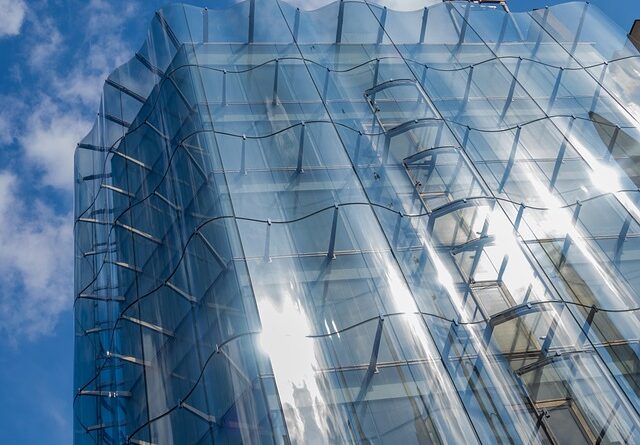
How Can a Facade for Building Integrate Wind-Driven Kinetic Systems Efficiently
Wind-Driven Kinetic Facade for Building Elevation
Wind-driven kinetic facades represent a convergence of architecture, engineering, and environmental science. These systems transform wind energy into motion, creating dynamic building envelopes that respond to natural forces in real time. The concept is not purely aesthetic; it enhances energy efficiency, daylight control, and ventilation. As cities move toward renewable power sources and sustainable design, kinetic facades are becoming a critical strategy for balancing performance with visual expression.
Principles of Wind-Driven Kinetic Facade Systems
The principles guiding wind-driven kinetic facades combine aerodynamics, materials science, and digital control. They aim to create responsive surfaces that interact with wind flow while maintaining structural reliability and architectural coherence.
Understanding the Concept of Kinetic Facades
Kinetic facades are architectural systems composed of movable elements that adjust according to environmental conditions. Their purpose is to mediate between interior comfort and exterior climate variability through controlled motion. The adaptability embedded in such systems allows buildings to reduce energy consumption by modulating solar gain and airflow. When integrated into the building envelope, these facades act as living membranes—responding dynamically to wind patterns while preserving transparency and form.
Aerodynamic Fundamentals Influencing Facade Motion
The aerodynamic behavior of a kinetic facade depends on the relationship between wind pressure, velocity, and surface geometry. Smooth surfaces generate laminar flow, whereas complex geometries can induce turbulence that drives mechanical motion in panels or fins. Parameters such as drag coefficient, angle of attack, and Reynolds number determine how efficiently wind energy converts into mechanical displacement. Computational fluid dynamics (CFD) modeling provides predictive insight into these interactions, allowing designers to simulate performance before fabrication.
Design Strategies for Integrating Wind-Driven Systems into Building Facades
Integrating kinetic systems into architectural envelopes demands careful coordination between mechanical design, structural engineering, and environmental analysis. The goal is to achieve continuous movement without compromising durability or safety.
Structural Considerations for Moving Components
Material selection plays a decisive role in enabling lightweight yet resilient movement. Aluminum alloys, carbon fiber composites, and reinforced polymers are often used because they balance flexibility with strength. Load distribution mechanisms—such as pivot joints or tension cables—help manage repetitive stresses from variable wind speeds. Engineers typically design tolerance margins that accommodate oscillation without fatigue failure over decades of operation.
Mechanisms for Energy Conversion and Control
Wind-driven facades can serve dual functions: kinetic shading devices and micro-generators producing on-site electricity from renewable power sources.
Mechanical-to-Electrical Conversion Methods
Micro-turbines embedded within facade modules capture rotational energy from moving panels. Alternatively, piezoelectric materials convert vibration caused by airflow into electrical charge. Efficiency depends on factors like turbine blade pitch or piezoelectric coupling coefficients. To enhance reliability, these systems often integrate with other renewable power sources such as photovoltaics or small-scale storage units that stabilize intermittent output.
Adaptive Control Systems and Automation
Sensor-based algorithms govern the movement of facade components by monitoring wind direction, speed, temperature, and light intensity. Data-driven control adjusts panel orientation to maintain optimal shading or energy generation throughout the day. Within smart buildings, centralized management platforms synchronize kinetic operations with HVAC systems to reduce total energy demand while improving occupant comfort.
Environmental and Energy Performance Assessment
Evaluating the performance of wind-driven kinetic facades requires both quantitative metrics and experiential assessment related to comfort and usability.
Evaluating Renewable Energy Contribution from Facade Systems
Energy yield measurement involves tracking electrical output per square meter of facade area under varying wind conditions. Comparative studies often benchmark results against photovoltaic panels or solar thermal collectors integrated into similar elevations. Lifecycle analysis further assesses embodied energy versus operational savings over time—a key determinant in long-term sustainability evaluations.
Impact on Thermal Comfort and Indoor Environmental Quality
Dynamic shading provided by moving panels reduces direct solar gain during peak hours while maintaining daylight penetration when needed. This modulation lowers cooling loads without sacrificing natural illumination quality. In naturally ventilated buildings, facade motion influences airflow distribution across interior zones, enhancing cross-ventilation effectiveness. Designers must balance the competing goals of maximizing harvested energy and preserving stable indoor conditions suitable for occupants’ well-being.
Architectural Integration and Aesthetic Implications
Architectural expression remains central to kinetic facade design since motion inherently alters perception of form over time.
Harmonizing Functionality with Visual Expression
Embedding kinetic elements within an architectural identity requires sensitivity to proportion and rhythm. Some projects draw inspiration from biological analogies—like the fluttering of leaves or shifting sand dunes—to express responsiveness visually tied to nature’s patterns. The challenge lies in achieving visual dynamism without overwhelming simplicity or readability in the overall composition.
Material Innovation and Fabrication Techniques
Advances in materials science have expanded what is technically feasible for moving facades.
Advanced Materials Supporting Kinetic Performance
Shape-memory alloys allow panels to deform under temperature changes then return to their original configuration once cooled. Flexible polymers absorb vibration loads while maintaining transparency options for daylighting applications. Durability testing under cyclic loading ensures long-term stability against fatigue induced by constant wind exposure.
Digital Fabrication and Modular Assembly Approaches
Prefabricated modules manufactured through CNC machining or robotic assembly improve precision in component alignment—a critical factor for smooth movement across large surfaces. Modularization simplifies maintenance since defective units can be replaced individually without dismantling entire sections of the facade system.
Future Directions in Wind-Kinetic Facade Research and Development
As digital technology converges with environmental engineering, new pathways emerge for more efficient adaptive building skins capable of interacting intelligently with their surroundings.
Emerging Technologies Enhancing System Efficiency
Artificial intelligence models trained on historical weather data can predict future wind behavior, allowing preemptive adjustment of panel positions before gusts occur. Hybrid designs combining photovoltaic layers with micro-turbine arrays create multi-source harvesting systems capable of capturing both solar radiation and aerodynamic forces simultaneously—an approach gaining traction among researchers exploring next-generation renewable power sources integration at façade scale.
Urban Application and Scalability Considerations
Deploying kinetic facades across dense urban environments introduces logistical challenges related to maintenance access, noise levels from mechanical parts, and regulatory compliance regarding moving structures near pedestrian zones. Policy frameworks encouraging building-integrated renewables could accelerate adoption by offering tax credits or performance-based incentives aligned with national decarbonization goals set by agencies like IEA or IRENA.
FAQ
Q1: How do wind-driven kinetic facades contribute to renewable power generation?
A: They convert mechanical motion caused by wind into electricity through micro-turbines or piezoelectric devices integrated within facade modules.
Q2: What materials are best suited for moving components?
A: Lightweight composites such as carbon fiber or aluminum alloys provide high strength-to-weight ratios essential for continuous operation under fluctuating loads.
Q3: Can these systems operate effectively in low-wind environments?
A: Yes, although efficiency decreases; hybridization with photovoltaic panels compensates by generating additional power during calm periods.
Q4: How do adaptive controls improve performance?
A: Sensors monitor environmental variables allowing automated adjustments that optimize shading angles or turbine orientation based on real-time data inputs.
Q5: Are there existing standards regulating kinetic facade safety?
A: While no universal code exists yet, engineers follow structural testing protocols derived from ISO 4355 (wind actions on structures) combined with local building codes governing movable architectural elements.