
Is Lokotrack LT1213S the Right Choice for C&D Recycling Efficiency
Choosing a Mobile Impact Crusher for C&D Recycling
Mobile impact crushers have reshaped how construction and demolition (C&D) waste is processed. Among them, the Lokotrack LT1213S stands out for its balance between productivity, mobility, and cost efficiency. For operators managing mixed demolition debris or asphalt recycling, it offers consistent performance across changing job conditions. Its integrated screen and recirculation system reduce the need for auxiliary equipment, cutting both setup time and operating costs. In practical terms, the LT1213S delivers a strong return on investment for companies prioritizing on-site material reuse and sustainable recycling operations.
Evaluating the Lokotrack LT1213S for Construction and Demolition (C&D) Recycling
Mobile impact crushers play a central role in modern recycling workflows. Their ability to crush mixed materials on-site saves transport costs while enabling immediate reuse of aggregates.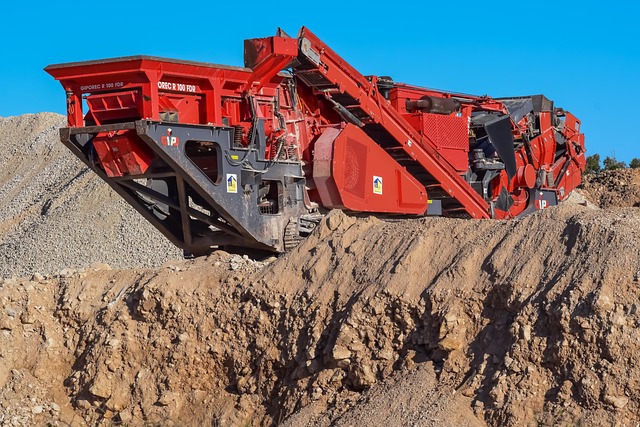
Understanding the Role of Mobile Impact Crushers in C&D Recycling
These machines are designed to process concrete, brick, asphalt, and other debris into reusable fractions. By reducing waste volume directly at demolition sites, they help meet environmental goals and regulatory requirements. Key performance factors—mobility, throughput, and output quality—determine their suitability for different project scales.
The Position of the Lokotrack LT1213S in the Market
The Lokotrack LT1213S represents Metso’s mobile impact crushing solution tailored for recycling applications. It integrates advanced screening with recirculation features that maintain consistent product sizing. Built for high productivity under variable conditions, it remains one of the most versatile models in its class.
Technical Overview of the Lokotrack LT1213S
The technical design of the LT1213S reflects decades of engineering refinement aimed at maximizing reliability without compromising portability.
Core Components and Engineering Design
At its heart lies the NP1213 impact crusher unit known for achieving high reduction ratios even with tough feed materials. The dual-slope screen efficiently separates materials into desired sizes while maintaining steady flow. A hydraulic drive system provides responsive control during operation, improving adaptability across changing site demands.
Mobility and Setup Efficiency
The compact frame allows easy transport between sites without disassembly—a valuable feature when working across multiple urban projects. Hydraulic folding conveyors simplify setup and teardown procedures. Its onboard diesel engine supports independent operation in remote or temporary locations where grid power is unavailable.
Performance Factors Affecting C&D Recycling Efficiency
Performance in real-world conditions depends not only on raw capacity but also on how efficiently energy is used and how consistently materials are processed.
Throughput Capacity and Material Versatility
The LT1213S handles concrete, asphalt, brick, and mixed demolition debris effectively through adjustable rotor speeds that fine-tune crushing intensity. This flexibility helps maintain uniform particle size distribution, which simplifies downstream screening or blending processes.
Energy Consumption and Cost Considerations
Fuel-efficient engines lower long-term operational expenses while intelligent control systems adjust power use according to load demands. Maintenance intervals are optimized to reduce downtime—an important factor when operating continuously during large-scale demolition phases.
Integration of Screening and Recirculation Systems
Beyond crushing capacity alone, integrated screening defines how efficiently a mobile unit can produce consistent end products without external support equipment.
The Function of the Onboard Screen Module
The onboard screen module separates fine fractions directly at the site, eliminating reliance on external screening units. Adjustable screen angles make it possible to tailor production according to specific aggregate requirements or local standards.
Closed-Circuit Operation Advantages
The recirculating conveyor automatically returns oversize material back into the crusher chamber, maintaining continuous flow dynamics. This closed-loop operation ensures consistent sizing with minimal manual intervention while boosting total system efficiency.
Comparing Lokotrack LT1213S with Alternative Solutions
Selecting among mobile crushers often comes down to balancing output needs with available space and logistical constraints on-site.
Key Differentiators Among Mobile Impact Crushers
Comparison parameters such as chamber geometry, automation level, wear part durability, and integration define each model’s market position. The LT1213S distinguishes itself through its built-in screening capability that reduces total equipment footprint—a key advantage where space is limited.
Considerations When Selecting Equipment for C&D Operations
Site logistics, material variability, and end-product expectations all influence equipment selection. Machines like the LT1213S offer versatility suited to diverse waste streams rather than single-material specialization. Long-term service availability often outweighs initial purchase price when calculating lifecycle cost efficiency.
Practical Insights from Field Application Scenarios
Field experience shows that real productivity depends as much on operator habits as machine specifications.
Operational Flexibility Across Different Job Environments
Its low noise profile makes it suitable for urban demolition projects where environmental restrictions apply. In remote areas lacking infrastructure, self-contained power generation keeps operations autonomous. It can serve both primary crushing roles or secondary recycling within closed-circuit setups depending on project design.
Maintenance Practices Enhancing Machine Longevity
Routine inspection of rotor wear parts preserves crushing consistency over time. Adhering to lubrication schedules prevents mechanical stress accumulation that could shorten component life. During maintenance work requiring precise cutting or fitting adjustments, simple tools like a hacksaw blade assist technicians in safely replacing components without damaging assemblies—a small but practical detail often overlooked in field manuals.
Strategic Assessment: Is the Lokotrack LT1213S the Right Choice?
For contractors weighing investment decisions in mobile recycling equipment, practical economics matter as much as rated capacity figures.
Evaluating Return on Investment in C&D Recycling Applications
The machine’s design balances productivity with fuel economy while minimizing auxiliary equipment needs through its integrated configuration. Over extended use cycles this translates into reduced capital expenditure per ton processed—a measurable advantage in competitive recycling markets.
Matching Equipment Capabilities with Project Requirements
It fits best where mobility and modularity drive project success: city centers with tight access or multi-site operations requiring frequent relocation. Projects demanding ultra-high throughput beyond its rated range may require larger dedicated systems instead. Aligning technical specifications with throughput targets ensures each investment meets both operational goals and financial constraints effectively.
FAQ
Q1: What materials can the Lokotrack LT1213S process?
A: It can handle concrete, asphalt, bricks, natural stone, and mixed demolition debris efficiently using adjustable rotor speeds to adapt crushing force to feed characteristics.
Q2: How portable is the Lokotrack LT1213S between sites?
A: Its compact chassis allows transport without dismantling major components; hydraulic folding conveyors further shorten setup times between jobs.
Q3: Does it require external power supply?
A: No, it includes an onboard diesel engine enabling fully independent operation even in remote or off-grid locations.
Q4: How does integrated screening improve performance?
A: The onboard dual-slope screen separates fine fractions immediately after crushing while oversize material is automatically recirculated for reprocessing—ensuring consistent output quality.
Q5: What maintenance practices extend its service life?
A: Regular checks on rotor wear parts, adherence to lubrication intervals, and safe component replacement using proper tools such as a hacksaw blade contribute significantly to long-term reliability.