
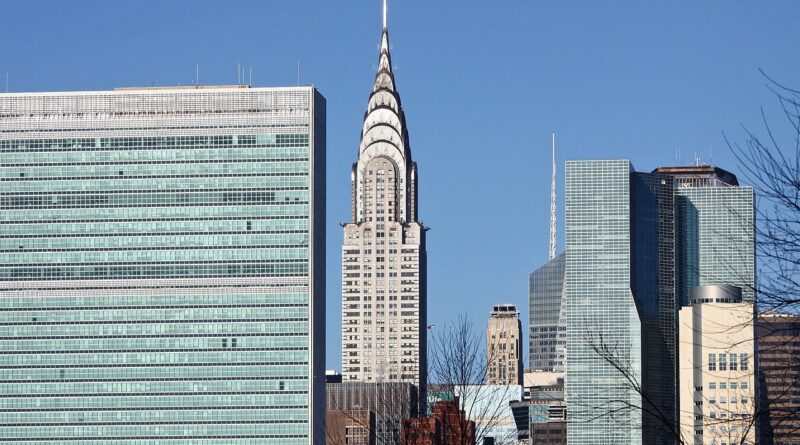
The architectural style of the Chrysler Building explained
What is the architectural style of the Chrysler Building?
The architectural style of the Chrysler Building is Art Deco, more specifically the highly ornamented skyscraper form of Art Deco that developed in New York in the late 1920s and early 1930s. Designed by William Van Alen and built between 1928 and 1930 at 405 Lexington Avenue, the tower combines vertical massing, geometric decoration, polished metal, stylized machine-age imagery, and luxurious interior materials. Its stainless-steel crown, eagle ornaments, radiator-cap motifs, and dramatic setbacks make it a clear example of how Art Deco turned ideas of speed, industry, commerce, and modernity into architecture.
That answer is accurate, but it does not fully explain why the building is so distinctive. The Chrysler Building is not simply an office tower with Art Deco decoration added to its surface. Its style is built into its profile, materials, symbolism, engineering drama, and skyline presence. In its 1978 designation report, the New York City Landmarks Preservation Commission described it as an outstanding example of Art Deco architecture and as a building that embodied the romantic essence of the New York skyscraper.
Why Art Deco fits the Chrysler Building so well
Art Deco architecture often combined geometric order, rich materials, modern construction, stylized ornament, and a strong interest in speed and technology. The Chrysler Building brings these ideas together in a particularly visible way. It was built at a time when New York skyscrapers were becoming taller, more technically ambitious, and more visually competitive. Van Alen treated the office tower not only as rentable space, but also as an image of progress.
The style can be read from the sidewalk to the skyline. At street level, the materials and lobby communicate luxury and corporate ambition. Higher up, the setbacks shape the tower into a vertical composition rather than a plain shaft. At the top, the crown and spire create one of the most recognizable silhouettes in New York. Each part supports the building’s Art Deco identity.
Verticality and setback massing
The Chrysler Building rises through a series of setbacks that make the tower appear taller and more slender than a simple rectangular block. This massing was partly shaped by New York’s early zoning environment, which encouraged tall buildings to step back so that light and air could reach the street. Art Deco architects turned that practical requirement into a visual language. The stepped profile became a way to create rhythm, drama, and a strong sense of upward movement.
On the Chrysler Building, the setbacks do not feel like leftover engineering decisions. They frame the tower as an ascending composition. The eye moves from the base through the shaft and up to the radiant metal crown. This vertical emphasis is one reason the building still looks dynamic even in a skyline filled with much taller skyscrapers.
Geometric ornament and the sunburst crown
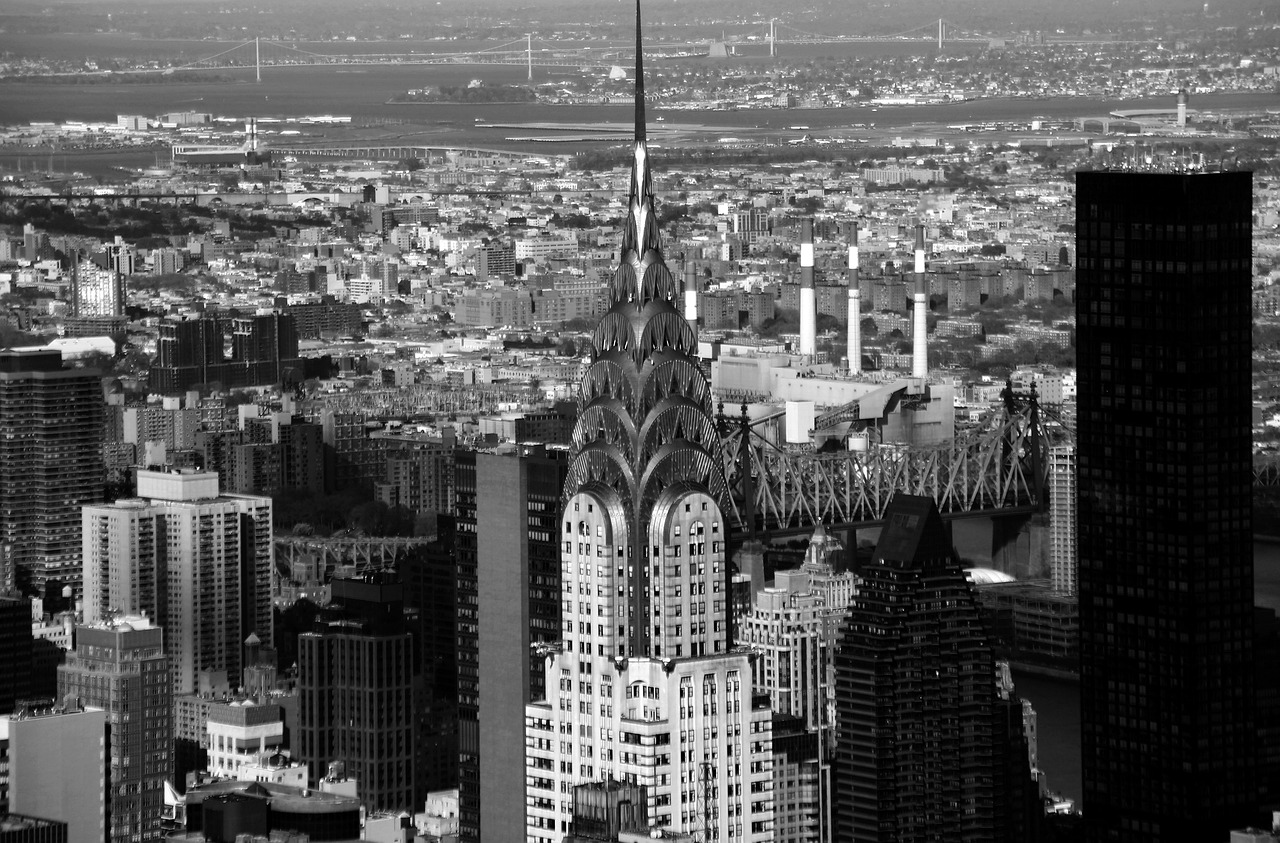
The building’s most famous feature is its terraced stainless-steel crown. Its stacked arches and radial pattern create a sunburst effect, one of the motifs closely associated with Art Deco design. The crown gives the building its identity, makes the tower legible from a distance, and turns the roofline into a sculptural feature rather than a simple termination.
The geometry matters. Art Deco ornament generally avoids the naturalistic curves of Art Nouveau and the historical quotations common in older revival styles. It favors stylized forms, sharp lines, zigzags, rays, chevrons, and repeated patterns. The Chrysler crown uses repetition and symmetry to create glamour without relying on classical columns or Gothic tracery.
Luxury materials and machine-age imagery
The Chrysler Building’s style depends heavily on material contrast. The tower uses brick, stone, metal, and richly finished interior surfaces, while its defining exterior material is gleaming stainless steel. The Landmarks Preservation Commission report specifically noted Van Alen’s use of Nirosta steel for exterior ornament, the dome, the spire, and the framing of openings. That material choice was significant because it connected the building to modern industry rather than to older masonry traditions alone.
The ornament also speaks the language of the machine age. The building includes motifs associated with Chrysler automobiles, including radiator-cap and wheel-related forms. At the 31st-floor level, the celebrated eagle ornaments project from the corners, turning the skyscraper into a kind of modern urban gargoyle. These details do more than advertise Chrysler as a company; they translate automotive culture into architectural form.
How William Van Alen turned an office tower into a corporate symbol
William Van Alen’s design gained much of its power by linking architectural style with personal and corporate identity. Walter P. Chrysler wanted more than an efficient office building. He wanted a landmark associated with commerce, industry, and modern achievement. The Chrysler Building therefore became both a business address and a symbolic object.
Several facts explain why the building’s style feels so theatrical. First, the tower was completed during a public race for height in Manhattan. Second, Van Alen designed a 185-foot spire that was assembled inside the building and raised into position in November 1929. Contemporary and later accounts from preservation sources describe the operation as an engineering feat that took roughly 90 minutes once the pieces were hoisted into place. Third, when the building formally opened on May 27, 1930, it briefly held the title of the tallest building in the world before being surpassed by the Empire State Building in 1931.
This history matters because the building’s Art Deco style is inseparable from ambition. The spire was not only a device for adding height. It was also the visual climax of the design. Without the crown and spire, the Chrysler Building would still be a notable 1930 office tower. With them, it became a symbolic peak of American Art Deco skyscraper design.
A style guide to the Chrysler Building’s key features
One useful way to understand the Chrysler Building is to read its design as a set of coordinated Art Deco decisions. The main elements are summarized below.
| Feature | Where it appears | Why it matters to the style |
|---|---|---|
| Stepped massing | Upper tower and setbacks | Creates a vertical, ascending silhouette associated with New York’s Art Deco skyscraper era. |
| Stainless-steel crown | Top of the tower | Combines modern material, geometric repetition, and skyline identity in one dramatic element. |
| Sunburst pattern | Crown arches and radial detailing | Reflects Art Deco’s preference for stylized rays, symmetry, and energetic geometric motifs. |
| Automotive ornament | Exterior details and upper setbacks | Connects the building to Chrysler’s car business and to the machine-age culture of the 1920s. |
| Eagle ornaments | 31st-floor corners | Recasts the traditional gargoyle as a sleek modern emblem rather than a medieval reference. |
| Rich lobby materials | Ground-floor interior | Shows Art Deco’s interest in luxury, color, craft, and total design rather than bare functionalism. |
These elements work together. The tower is not Art Deco because of one decorative feature; it is Art Deco because its massing, materials, ornament, and symbolism all support the same modernizing idea.
How it differs from other New York Art Deco skyscrapers
The Chrysler Building is often discussed alongside the Empire State Building, 30 Rockefeller Plaza, and other interwar New York towers. They all belong broadly to the Art Deco or Moderne world, but they do not express the style in the same way.
The Empire State Building is also an Art Deco skyscraper, but its expression is more restrained and monumental. Its silhouette is powerful and its vertical lines are clear, yet it does not depend on the same level of metallic ornament or corporate automotive symbolism. The Chrysler Building is more exuberant, more decorative, and more directly tied to a patron’s brand identity. See also: Building Layout.
30 Rockefeller Plaza presents another variation: a large commercial complex with an integrated urban plan, sculptural programs, and a more corporate, civic form of Art Deco. By contrast, the Chrysler Building reads as a singular object in the skyline. It behaves almost like a tower-shaped emblem. Its profile can be recognized quickly even by people who do not know the address, architect, or technical history.
This distinction is useful for readers studying building styles. Art Deco is not one fixed look. It ranges from highly ornamental towers to streamlined commercial buildings and civic structures. The Chrysler Building sits near the glamorous, theatrical end of that spectrum.
Why the style still matters
The Chrysler Building remains important because it shows how architectural style can communicate more than taste. Its Art Deco language expressed a specific historical moment: confidence in technology, fascination with machines, corporate ambition, and the belief that the modern city could be spectacular as well as efficient.
It also shows how ornament can carry meaning when it is tied to structure, identity, and urban form. The eagle heads, radiator imagery, metal crown, and sunburst patterns are decorative, but they are not random. They reinforce the building’s story as a monument to industry and motion. In that sense, the Chrysler Building differs from a tower that merely wears fashionable details. Its decoration clarifies its cultural message.
There are practical lessons for contemporary architecture as well. Modern buildings often separate branding, structure, and envelope design into different visual layers. The Chrysler Building demonstrates an older but still relevant approach: the building itself becomes the brand. Its silhouette, material palette, and ornament form a complete identity, which is why the tower remains visually competitive among taller and newer structures.
Common misconceptions about the Chrysler Building’s style
A frequent misconception is that the Chrysler Building is Gothic because of its height, spire, and gargoyle-like ornaments. The comparison is understandable, especially because the eagles play a role similar to historic gargoyles on older buildings. However, the design language is not Gothic Revival. The forms are stylized, metallic, geometric, and machine-age rather than medieval.
Another misconception is that Art Deco means only surface decoration. The Chrysler Building shows otherwise. Its style includes the tower’s stepped form, the way its top resolves the vertical composition, the use of modern materials, and the connection between automobile imagery and architectural identity.
A third misconception is that the building’s style is simply Moderne. National Register material has used the term Moderne, and historians sometimes discuss Art Deco within the broader Style Moderne context. For general architectural reading, Art Deco is the clearest and most widely used label. For more precise historical discussion, the Chrysler Building can be understood as an Art Deco skyscraper within the broader Moderne movement of the interwar period.
Frequently asked questions
Is the Chrysler Building Art Deco or Moderne?
The Chrysler Building is best described as Art Deco. Some preservation records and historians also use the broader term Moderne or Style Moderne for related interwar design. In practical architectural terms, its geometric ornament, metal crown, stylized motifs, and machine-age symbolism make Art Deco the most accurate common label.
Who designed the Chrysler Building?
The Chrysler Building was designed by architect William Van Alen. It was built for Walter P. Chrysler and completed in 1930. Van Alen’s design is especially known for its dramatic crown, spire, setbacks, and automobile-inspired ornament.
What makes the Chrysler Building’s crown Art Deco?
The crown uses stainless steel, stepped arches, symmetry, and radial sunburst-like geometry. These features align closely with Art Deco’s interest in modern materials, stylized ornament, and visual movement. The crown also transforms a technical roofline into a memorable skyline image.
Why are there eagles on the Chrysler Building?
The eagles are part of the tower’s stylized exterior ornament. They function like modern gargoyles, projecting from the upper corners and contributing to the building’s dramatic skyline identity. Their sleek metal form fits the machine-age character of the design.
Was the Chrysler Building the tallest building in the world?
Yes. When completed in 1930, the Chrysler Building was briefly the tallest building in the world. It held that distinction until the Empire State Building surpassed it in 1931. This height race is part of the reason its spire and crown are so central to its architectural story.