

Bedroom dresser decor ideas for a calm, organized, and safer room
What bedroom dresser decor needs to do
Bedroom dresser decor works best when it serves three purposes at the same time: it creates a visual focal point, organizes the items used every day, and keeps the surface safe and easy to clean. Rather than filling the top with unrelated accessories, start with a simple structure: one vertical anchor, one practical storage zone, one softening element, and enough negative space for daily use. This approach works across many bedroom sizes and styles because it treats the dresser as furniture, storage, and part of the room architecture, not just as a display shelf. For more ideas across the home, visit the Furniture & Decor section.
Good dresser styling is usually more about editing than adding. A mirror, framed art, lamp, tray, small bowl, vase, or plant can all work, but only when the scale fits the dresser and the placement supports how the bedroom is used. Recent design reporting from Houzz has emphasized warm neutrals, natural materials, layered textures, vintage character, and expressive personal details. Those directions translate well to dresser styling because the surface is small enough to refresh without redesigning the whole room.
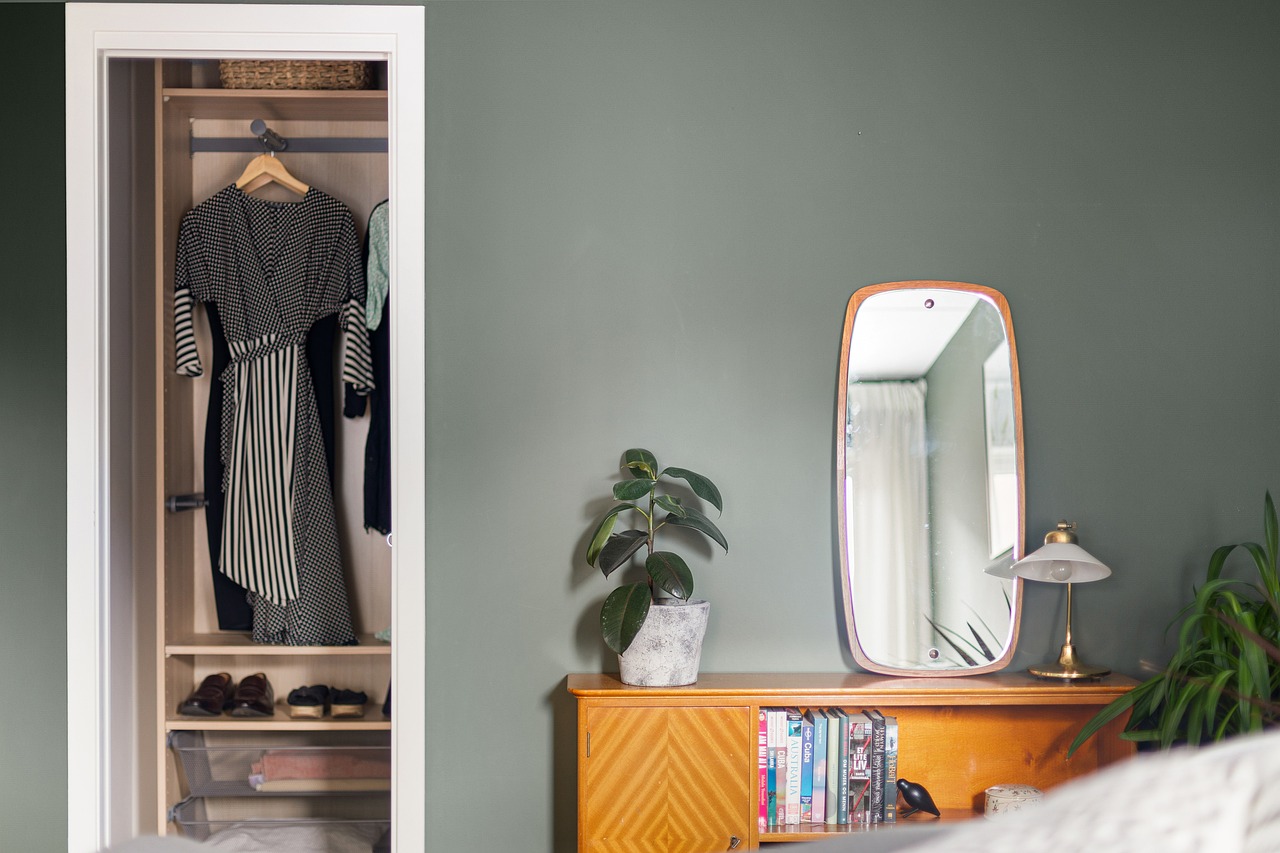
Start with scale, proportion, and breathing room
The most common mistake in bedroom dresser decor is using objects that are too small. A wide dresser can make tiny frames, candles, and jars look scattered. A narrow dresser can feel crowded if every inch is filled. Before choosing accessories, look at the dresser as a rectangle. Its width, height, wall space, drawer pulls, and relationship to the bed all affect how the top should be styled.
A useful guideline is to leave at least one-third of the dresser surface visually open. This does not need to be an exact measurement, but the eye should register some empty space. That open area makes the composition feel calmer and gives you a practical place to set down a book, watch, phone, folded clothing, or cup of water without disrupting the arrangement.
Use one main vertical anchor
A dresser usually needs one larger vertical element to connect the furniture to the wall behind it. The anchor can be a mirror, framed artwork, a sculptural lamp, or a pair of taller objects. A mirror is practical in a bedroom because it supports dressing and reflects light. Artwork can feel softer and more personal. For a low dresser, a taller mirror or artwork adds height. For a tall chest, a smaller artwork or wall-mounted accent may be enough.
Match the anchor to the dresser width
As a design rule of thumb, the main mirror or artwork should look visually related to the dresser without matching it edge to edge. If it is too narrow, the dresser can look bottom-heavy. If it is wider than the dresser, the furniture may feel squeezed. A piece that spans roughly half to two-thirds of the dresser width usually feels balanced, although asymmetrical rooms can justify different proportions.
Build the surface in layers
A dresser surface becomes more interesting when it has layers of height, texture, and purpose. Think in groups rather than single objects. A lamp with a small bowl beside it reads as one practical zone. A vase with a leaning frame behind it reads as one decorative zone. A tray holding perfume, jewelry, or grooming items reads as one organized zone.
For most bedrooms, three to five visible elements are enough. That might mean a mirror, lamp, tray, ceramic dish, and leafy branch. In a compact room, it may be only a mirror, lamp, and tray. In a larger bedroom, a pair of lamps or a wider arrangement can work if the dresser is long enough.
Try the anchor, utility, and softness formula
A reliable formula is to combine one anchor, one useful item, and one softening item. The anchor gives height. The useful item supports daily habits. The softening item adds texture or life. For example, place a round mirror above the dresser, a table lamp on one side, and a low tray with a small vase on the other. The result feels complete without crowding the surface.
Vary height without creating clutter
Objects of identical height can make the dresser look flat. A stronger composition moves from tall to medium to low. A lamp or vase may be the tallest object on the surface. A frame, stack of books, or lidded box can sit at a middle height. A tray, dish, or folded textile can stay low. This creates visual rhythm without requiring many accessories.
Choose colors and materials that support rest
Bedrooms need a different decorative mood than kitchens, entryways, or living rooms. The dresser is often one of the last things seen at night and one of the first things seen in the morning, so its palette should support a calmer setting. That does not mean everything must be beige. It means colors should feel deliberate and connected to the bed, rug, curtains, wall color, or hardware.
Warm neutrals, wood, stone, linen, rattan, ceramic, aged brass, and muted greens or blues are useful because they add depth without making the dresser feel busy. Houzz trend reporting in 2025 pointed to increased interest in warm color schemes, wood details, vintage style, warm metal accents, and layered textures. For dresser decor, that can mean a walnut tray, a linen lampshade, a ceramic vase, a vintage-framed mirror, or brushed brass hardware rather than a full room makeover.
Repeat at least one finish
A dresser top looks more intentional when one finish repeats. If the drawer pulls are black, a black picture frame or lamp base can connect the display to the furniture. If the bed has warm wood, a wood tray or box can carry that tone across the room. If the room uses brass, a small brass bowl or lamp detail can make the dresser feel more integrated.
Use contrast carefully
Contrast is helpful when the dresser and wall are similar in color. A light oak dresser against a white wall may need darker art, a shaded lamp, or a colored vase to avoid disappearing. A dark dresser may need pale ceramics, glass, linen, or reflective metal to keep the surface from feeling heavy. The goal is not high drama in every case, but enough contrast for the dresser to have shape.
Make storage part of the display
Because dressers attract small personal items, storage should be planned from the start. If storage is treated as an afterthought, jewelry, receipts, cosmetics, charging cables, and loose change quickly become the decor. The simplest fix is to give each category a visible home.
| Everyday item | Best dresser solution | Why it works |
|---|---|---|
| Jewelry and watches | Small dish, divided tray, or lined box | Keeps delicate pieces contained and easy to find |
| Perfume or grooming products | Tray with a wipeable surface | Groups bottles and protects the dresser finish |
| Keys, coins, and earbuds | Low bowl near the edge | Creates a landing spot without spreading clutter |
| Chargers and cables | Box, cable clip, or rear cord path | Reduces visual noise and prevents tangles |
| Seasonal accessories | Drawer organizer or lidded box | Hides items that are not attractive enough for display |
Trays are especially effective because they make mixed objects look like one decision. A tray can hold perfume, lotion, a jewelry dish, and a small vase while still reading as an organized composition. Choose a material that suits the room: wood for warmth, stone for weight, lacquer for polish, woven material for texture, or metal for a sharper modern look. See also: Building Styles.
Use lighting to make the dresser feel intentional
Lighting can turn a dresser from simple storage into a finished design moment. A lamp adds height, softens the room at night, and creates a more flattering atmosphere than relying only on overhead lighting. The American Lighting Association commonly describes layered lighting as a mix of ambient, task, and accent light. On a bedroom dresser, a table lamp or shaded accent lamp can serve both a practical and atmospheric role.
If the dresser is used for grooming, place the light so it improves visibility without glaring into a mirror. A lamp positioned slightly to one side can work well for atmosphere, but it may cast shadows if the mirror is used for makeup or shaving. In that case, the dresser may need support from nearby wall sconces, better ceiling light, or daylight rather than a single decorative lamp.
Think about cord control
A beautiful lamp can still look messy if the cord runs across the surface or drops down the front. Place lamps near outlets when possible, route cords behind the dresser, and avoid overloading the surface with charging devices. If a phone charger must stay on the dresser, hide the cable behind a tray or inside a small box designed for cable access.
Keep safety and maintenance visible in the plan
Dresser decor should never make the furniture less safe. The U.S. Consumer Product Safety Commission has repeatedly urged households to anchor dressers and other furniture securely to the wall. In 2025, CPSC marked the 10th anniversary of its Anchor It campaign and again advised anchoring furniture such as dressers and bookcases. The agency has also noted that the federal mandatory standard for clothing storage units went into effect in September 2023 under the STURDY Act framework.
For styling, this means heavy objects should not sit where they can be pulled down easily, and tempting items should not be placed high on a dresser in a child’s room. CPSC guidance also recommends avoiding storage of appealing items, such as toys or remotes, where children may climb to reach them. Decorative choices should support that principle: keep heavier items low, use stable accessories, and avoid tall stacks that can slide.
Maintenance matters as well. Bedrooms collect dust, textile fibers, and skin-care residue. A dresser with too many small objects becomes harder to clean, so choose fewer pieces with stronger impact. If you use candles, keep them decorative unless you can follow safe burning practices. If you use plants, place a saucer or waterproof liner beneath the pot to protect wood and veneer.
Bedroom dresser decor formulas by style
Once the basics are clear, style decisions become easier. The following formulas can be adapted to different dresser sizes without making the room feel overdesigned.
| Style direction | Dresser decor formula | Best materials |
|---|---|---|
| Minimal calm | Large mirror, single lamp, shallow tray, one ceramic vessel | Oak, white ceramic, linen, matte black |
| Warm modern | Abstract art, wood tray, brass lamp, sculptural vase | Walnut, brass, textured glass, stone |
| Vintage collected | Antique mirror, framed photo, jewelry box, small floral arrangement | Aged wood, brass, patterned ceramic, glass |
| Organic bedroom | Round mirror, woven tray, branch arrangement, soft fabric accent | Rattan, clay, linen, light wood |
| Hotel-inspired | Symmetrical lamps, large artwork, polished tray, minimal accessories | Stone, metal, lacquer, crisp cotton |
These formulas are starting points, not rules. A minimal bedroom can still include one vintage object. A traditional bedroom can still use a clean-lined tray. The strongest dresser styling usually has some tension between old and new, soft and structured, practical and decorative.
Frequently asked questions
What should I put on top of a bedroom dresser?
Start with one vertical anchor, such as a mirror or artwork. Add a practical piece like a lamp or tray, then include one soft decorative element such as a vase, plant, or framed photo. Leave visible open space so the dresser remains useful.
Should a dresser have a mirror above it?
A mirror is useful but not required. It works well when the dresser supports dressing or when the room needs more reflected light. If the bedroom already has enough mirrors, framed art may feel calmer and more personal.
How do I decorate a small dresser without clutter?
Use fewer, larger pieces. A small dresser may only need a wall-mounted mirror, one compact lamp, and a tray or bowl. Avoid several tiny accessories because they make the surface look busier and are harder to clean around.
How can I make dresser decor safer in a child’s room?
Anchor the dresser to the wall, keep heavy decor low or off the surface, and avoid placing toys, remotes, or attractive objects where a child may climb to reach them. Choose stable, lightweight accessories and keep cords out of reach.
How often should I refresh bedroom dresser decor?
Refresh it when the surface stops supporting your routine. Seasonal flowers, a different tray, or rotated artwork can change the mood without replacing the main furniture. If clutter returns quickly, the dresser needs better storage rather than more decor.