
Traditional furniture style and how to use it in modern interiors
What traditional furniture style means
Traditional furniture style is an umbrella term for furniture that draws on established historic design languages, especially European and American forms from the 18th and 19th centuries. It is usually recognized by balanced proportions, shaped wood frames, familiar silhouettes, refined ornament, and materials that age well. The category can include genuine antiques, vintage reproductions, and newly made pieces with classic lines. The goal is not to make a room look like a museum. Used well, traditional furniture gives an interior structure, warmth, and continuity while still allowing modern lighting, art, rugs, and architecture to feel current.
For architects, designers, and interiors readers, the most useful way to understand traditional furniture is as a design vocabulary. A cabriole leg, a wingback chair, a mahogany sideboard, a roll-arm sofa, or a pedestal dining table can all signal tradition, but the final mood depends on scale, finish, fabric, and what surrounds the piece. For more interior context, see Archithaus’ Furniture & Decor section.
The design language behind traditional pieces
Symmetry and proportion
Traditional furniture tends to favor visual balance. A pair of chairs beside a fireplace, a centered dining table under a chandelier, or a console aligned with a mirror all reflect the same underlying principle. Symmetry does not mean every object has to match. It means the eye can read the room as composed rather than accidental. This is why traditional pieces often work well in rooms with fireplaces, wall paneling, axial plans, tall windows, and other architectural features that already create a sense of order.
Wood, veneer, upholstery, and metal details
Wood is central to the style. Walnut, mahogany, cherry, oak, and satinwood have all been associated with different periods and regions. Museum histories from the Metropolitan Museum of Art note the movement from walnut in Queen Anne furniture to mahogany in later Chippendale work in colonial America. Veneer and inlay also matter because they introduce contrast, pattern, and refined detail without relying on heavy carving. Upholstery usually leans toward linen, wool, velvet, leather, damask, tapestry, or updated performance fabrics with a classic texture. Brass pulls, escutcheons, nailheads, casters, and key plates add small points of warmth.
Ornament with purpose
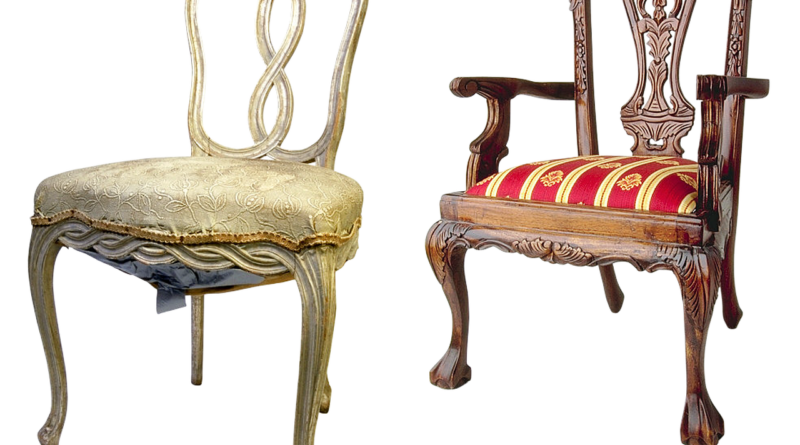
Traditional furniture is often described as ornate, but the better word is articulated. A carved shell, pierced splat, fluted leg, gadrooned edge, or shaped apron is not just decoration; it helps identify a lineage and gives the piece a readable profile. The V&A’s design histories describe Rococo ornament as curved, naturalistic, and often asymmetrical, while neoclassical furniture moved toward cleaner geometry and lighter decorative inlay. That contrast explains why not all traditional furniture feels heavy. Some pieces are bold and sculptural; others are slim, restrained, and almost architectural.
A short style map for traditional furniture
Traditional interiors often mix references instead of following one strict period. The table below is a practical guide, not an authentication chart. Dates are approximate and reflect broad design periods described in museum and decorative arts sources such as the V&A, the Metropolitan Museum of Art, and the National Gallery of Art.
| Influence | Approximate period | Typical furniture cues | Modern use |
|---|---|---|---|
| Queen Anne | About 1730 to 1760 in American furniture histories | Cabriole legs, shaped aprons, curved chair forms, pad or slipper feet | Useful when a room needs elegance without excessive ornament |
| Chippendale and Rococo | Mid to late 18th century | Carved details, pierced splats, claw-and-ball feet, Gothic, Chinese, and French Rococo references | Works best as a focal point because the forms can be visually strong |
| Federal and neoclassical | Late 18th to early 19th century | Straighter lines, tapered legs, ovals, urns, bellflowers, contrasting veneers and inlay | A good bridge between traditional and transitional interiors |
| Regency | Early 19th century | Classical motifs, sabre legs, brass accents, Greek, Roman, Egyptian, and Empire influences | Pairs well with contemporary art and clean-lined architecture |
| Victorian and revival styles | 19th century | Heavier scale, deep upholstery, turned legs, carved frames, historical revival motifs | Best used selectively so the room does not feel crowded |
| Colonial Revival | Late 19th and 20th century revivals | Reinterpreted Queen Anne, Chippendale, Hepplewhite, Sheraton, and Federal forms | Common in American homes and often easier to source than period antiques |
How to identify traditional furniture without dating the room
The quickest identification test is silhouette. Traditional pieces usually have shaped arms, curved or tapered legs, defined backs, panelled doors, carved edges, or visible joinery details. Modern furniture often reduces the profile to simple planes. Transitional furniture sits between the two, borrowing traditional proportions while simplifying ornament. If a piece has a historic form but a plain finish, it may work easily in a modern room. If it combines heavy ornament with a dark finish, it usually needs lighter surroundings.
Scale is just as important as style. Many older dining chairs, side tables, and occasional chairs are smaller than today’s oversized upholstery, which can be an advantage in apartments and townhouses. The risk comes from placing too many dark, medium-height, similarly detailed pieces in one room. That can create a heavy band around the walls. A better approach is to give each substantial traditional piece breathing room, then balance it with simple lamps, a lighter rug, modern art, or a cleaner sofa.
Finish also changes the mood. Polished mahogany can feel formal, while matte walnut, limed oak, or gently worn cherry can feel more relaxed. Upholstery has the same effect. A carved chair in burgundy damask reads very differently from the same chair in oatmeal linen, olive velvet, or a small-scale stripe. When traditional furniture feels dated, the issue is often not the frame itself; it is the combination of fabric, wall color, lighting, and too many matching pieces.
How to use traditional furniture in key rooms
Living rooms
In a living room, start with one or two anchor pieces. A roll-arm sofa, wing chair, wood-framed armchair, antique chest used as a side table, or carved coffee table can establish the style without overwhelming the space. Pairing traditional seating with a clean-lined cocktail table, a plain wool rug, or a contemporary floor lamp keeps the room layered. If the room has a fireplace, use it as the organizing point. Traditional furniture usually looks strongest when it supports an architectural focal point rather than competing with it.
Dining rooms
Dining rooms are natural settings for traditional furniture because sideboards, pedestal tables, china cabinets, and shield-back or ladder-back chairs have strong historic associations. The more current approach is to avoid complete matching sets unless the room is intentionally formal. A dark wood table can be paired with upholstered end chairs, rush-seat side chairs, or a lighter cabinet. A traditional sideboard can also be the room’s most useful piece, adding storage while giving the wall a sense of weight and permanence. See also: Building Styles.
Bedrooms and studies
Bedrooms benefit from traditional furniture when the pieces create calm rather than clutter. A poster bed, panel bed, painted chest, or small writing desk can make the room feel settled. In a study, traditional furniture has a practical advantage: desks, bookcases, leather chairs, and file cabinets already suit the idea of concentration. To avoid a staged look, combine old and new. A classic writing table can sit with a modern task chair, or a wall of books can be balanced by simple window treatments and uncluttered surfaces.
Traditional, transitional, vintage, and antique are not the same
These terms are often used together, but they describe different things. Traditional refers to style. It can be new or old. Antique refers to age and usually requires specialist evaluation when value, attribution, or legal definitions matter. Vintage is a looser market term for older pieces that may not be antique. Transitional describes a blend of traditional and contemporary design, usually with cleaner lines and less ornament.
This distinction matters because a homeowner may want traditional furniture style without wanting antiques. Newly made pieces can deliver the silhouette and comfort with modern dimensions, fabrics, and finishes. Conversely, an antique can look surprisingly modern if it has a simple neoclassical shape or a pale, restrained surface. The question is not only whether the piece is old; it is whether its form, scale, and material support the room being built.
A practical checklist before buying or styling
- Choose the role first. Decide whether the piece should be a focal point, a supporting layer, or a practical storage item.
- Check scale in the actual room. Traditional furniture can have high backs, deep aprons, projecting feet, or wide arms that affect circulation.
- Limit matching sets. Rooms often feel fresher when only the wood tone, period cue, or upholstery color repeats.
- Look at the profile, not only the finish. A dated glossy surface can often be toned down, but an awkward silhouette is harder to solve.
- Inspect condition carefully. Loose joints, lifting veneer, unstable drawers, strong odors, and poor repairs can turn a good-looking piece into a difficult project.
- Be cautious with attribution claims. Names such as Chippendale, Hepplewhite, and Sheraton often describe style, not verified maker or period.
- Use contrast deliberately. Traditional furniture looks more intentional when balanced with clean walls, tailored upholstery, simple lighting, or contemporary art.
Frequently asked questions
Is traditional furniture style the same as antique furniture?
No. Traditional is a style description, while antique refers to age. A new sofa with rolled arms and turned legs can be traditional, and an old piece can belong to a different style entirely. For valuable or inherited items, authentication should come from a qualified appraiser or specialist.
Can traditional furniture work in a modern home?
Yes. Traditional furniture often works best in modern homes when used as contrast. A single chest, chair, dining table, or desk can add warmth to a clean space. The key is to control the number of ornate pieces and keep surrounding elements simpler.
What colors suit traditional furniture?
Warm neutrals, ivory, taupe, camel, olive, navy, oxblood, muted green, and deep brown all work well. Lighter wall colors can soften dark wood, while richer colors can make traditional pieces feel more enveloping and formal. Fabric choices often matter more than wall color.
How do you make inherited traditional furniture feel updated?
Start with placement and editing before refinishing. Give the piece space, remove competing items, and try updated lamps, art, rugs, or hardware where appropriate. Upholstered pieces can often be transformed with simpler fabric. For antiques or potentially valuable pieces, avoid irreversible changes until the piece has been assessed.
What is the easiest traditional piece to add first?
A side table, chest, writing desk, mirror, or dining chair is usually easier than a full sofa or cabinet. Smaller pieces let you test wood tone, scale, and ornament without committing the whole room to a formal look.