
Is Eco Building Design Redefining Eco Brutalism or Reinforcing Its Limits
What Is Eco Brutalism? Is It the Beginning or the End of Sustainable Design?
Eco Brutalism is not a contradiction but a recalibration. It reclaims the raw power of mid-century concrete architecture and infuses it with ecological intelligence. Rather than ending sustainable design, it signals a shift toward material realism and environmental accountability. By merging eco building design with Brutalist honesty, architects are redefining what sustainability looks like when expressed through mass, texture, and permanence. The movement’s future lies not in rejecting its past but in evolving its ethics for a climate-conscious age.
Origins and Philosophical Foundations of Brutalism
The roots of Eco Brutalism trace back to the ideological clarity of post-war modernism. Brutalism emerged as an architectural language defined by social purpose and material truth. Its revival through ecological reinterpretation reveals how sustainability can coexist with monumentality.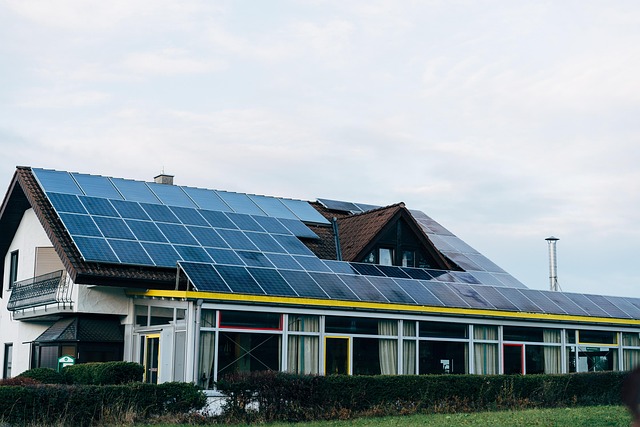
Exploration of Brutalism’s Mid-20th-Century Roots in Material Honesty and Social Purpose
Brutalism rose during the 1950s as an ethical statement against ornamentation. Architects such as Alison and Peter Smithson emphasized that buildings should reveal their structure rather than conceal it. Concrete became both medium and message—symbolizing equality, durability, and transparency in construction. This architectural honesty reflected a social mission: to rebuild cities devastated by war through accessible public architecture rooted in civic duty.
Examination of the Transition From Concrete Monumentality to Ecological Reinterpretations
The reinterpretation began when designers realized that mass could serve more than aesthetics—it could regulate temperature, store heat, and reduce energy demand. The transition from pure monumentality to ecological pragmatism reframed concrete as both structure and environmental device. Today’s architects experiment with recycled aggregates, bio-cement, and carbon-sequestering additives that transform Brutalism’s heavy legacy into a sustainable framework.
Discussion on How Post-War Ideals Shaped Architectural Ethics and Aesthetics
Post-war reconstruction fostered optimism about technology’s ability to improve life. That ethos remains embedded in Eco Brutalism’s moral code: architecture must serve society responsibly. The aesthetic of exposed materials now aligns with environmental transparency—revealing how buildings consume energy or conserve resources mirrors the ethical clarity once sought through visible structure.
The Emergence of Eco Brutalism as a Design Response
Eco Brutalism arises from tension between nostalgia for concrete power and urgency for ecological restraint. It reformulates old ideals through new technologies that prioritize sustainability without diluting expressive strength.
Analysis of How Environmental Consciousness Reshapes Traditional Brutalist Principles
Environmental awareness pushes architects to reconsider massing, orientation, and material sourcing. Instead of pure concrete slabs, hybrid assemblies combine timber cores or earthen infills to reduce embodied carbon. The result is not softening but refining—retaining geometric rigor while embedding climate logic into every joint.
Integration of Sustainable Materials, Passive Systems, and Adaptive Reuse Within Heavy Structures
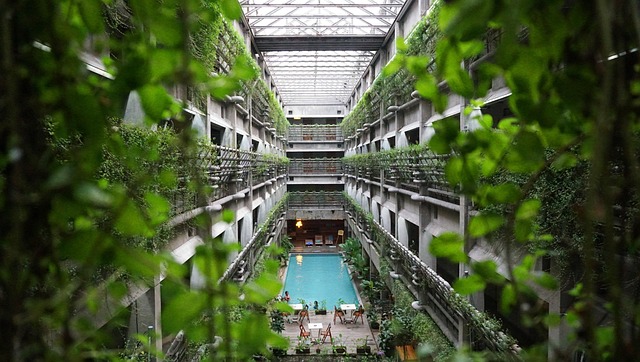
Adaptive reuse has become central to eco building design within this style. Repurposing aging concrete shells avoids demolition waste while extending cultural memory. Passive ventilation shafts cut into existing façades allow airflow without mechanical dependence. These interventions preserve visual gravity yet deliver measurable environmental gains.
The Balance Between Raw Expression and Ecological Responsibility
Balancing brutal honesty with ecological care demands restraint. Designers must maintain expressive authenticity while minimizing wasteful excess. When done well, rough surfaces coexist with green roofs; thermal mass complements daylight control; solidity becomes sustainability rather than opposition to it.
The Role of Eco Building Design in Shaping Eco Brutalism
Eco building design provides the technical backbone for this movement’s evolution. It transforms philosophical intent into measurable performance while preserving aesthetic continuity across scales.
Integrating Sustainability Into Structural Expression
Recycled concrete mixes reduce emissions by up to 40 percent compared with virgin cement production (ISO 14040 life-cycle standards). Modular construction shortens build times and limits onsite waste. Within rigid geometries, biophilic insertions—courtyards, vertical gardens—soften microclimates without compromising formality.
Influence of Biophilic Design Principles Within Rigid Geometric Frameworks
Biophilic principles bring sensory relief to dense compositions: filtered light through perforated panels or vegetation cascading from terraces introduces natural variation against uniform grids. These gestures humanize monumental volumes while improving air quality and occupant well-being—metrics now tracked under LEED v4 performance categories.
How Energy-Efficient Systems Coexist With Monumental Architectural Forms
Massive façades act as thermal buffers when paired with phase-change materials or radiant cooling networks monitored by smart controls (IEEE Smart Building Standards). Energy efficiency thus integrates invisibly into form rather than dictating appearance—a quiet evolution consistent with Brutalist integrity.
Ecological Performance vs. Aesthetic Continuity
Eco Brutalism constantly negotiates between measurable outcomes and visual identity preservation. Its success depends on reconciling data-driven sustainability with emotional resonance.
Tension Between Environmental Optimization and Visual Identity Preservation
Optimization often calls for lighter materials or reflective coatings that risk diluting tactile depth. Architects counter this by using textured finishes on low-carbon composites to mimic traditional concrete grain while maintaining performance goals defined by IEA energy benchmarks.
Evaluation of Performance Metrics—Embodied Carbon, Energy Use, Thermal Mass Efficiency
Performance evaluation now extends beyond operational energy toward embodied carbon accounting (EN 15978 standard). Thick walls once criticized for inefficiency now gain value through thermal inertia that stabilizes indoor climates over decades—an argument favoring longevity over replacement cycles.
The Aesthetic Implications of Green Technologies on the Brutalist Visual Language
Photovoltaic skins or algae façades introduce new textures that challenge purity yet expand expression. When integrated thoughtfully, they continue the tradition of revealing function honestly—a solar panel becomes ornament only because it performs visibly.
Redefining or Reinforcing the Limits of Eco Brutalism
Debate surrounds whether Eco Brutalism renews or merely updates its predecessor’s ideology. The answer may lie between continuity and transformation shaped by digital tools and ethical reflection.
The Architectural Debate: Innovation or Continuation?
Some critics view Eco Brutalism as aesthetic recycling; others see it as conceptual renewal enabled by computation-driven form-finding that optimizes structural efficiency through parametric modeling (ISO 29481 BIM standards). Both positions highlight architecture’s struggle between heritage fidelity and forward experimentation.
Examination of How Digital Fabrication and Computational Design Expand Formal Possibilities
Digital fabrication allows casting complex geometries using minimal material volume while maintaining surface roughness reminiscent of hand-poured concrete. Robotic milling reproduces texture without waste molds—a convergence of craft memory and algorithmic precision rarely possible before.
The Philosophical Discourse Around Authenticity, Adaptation, and Sustainability Ethics
Authenticity once meant exposing structure; today it implies revealing environmental impact transparently through data dashboards or lifecycle disclosures compliant with ISO 21930 product declarations. Ethics shifts from visual truth to quantifiable responsibility—a subtle but profound evolution in architectural morality.
Materiality, Scale, and Human Experience
Materiality defines perception; scale defines emotion; together they shape how humans inhabit massive eco-conscious forms that remain tactile despite their size.
How Eco-Informed Material Choices Influence Spatial Perception and Tactility
Replacing Portland cement with geopolymer blends changes surface warmth under touch while reducing emissions drastically per IRENA decarbonization studies. Such sensory nuances remind occupants that sustainability is felt physically as much as measured scientifically.
Interplay Between Monumental Scale and Human-Centered Environmental Comfort
Large atriums channel daylight deep inside heavy envelopes; acoustic absorption panels made from recycled cellulose soften echoes typical in concrete halls. Human comfort thus mediates between monumental ambition and daily usability—a balance many early Brutalist works lacked.
The Sensory Dimension of Sustainability Within Massive Concrete Forms
Moisture-regulating plasters derived from lime-hemp composites release subtle scent variations responding to humidity shifts—a minor yet intimate indicator that even monolithic spaces breathe alongside their users.
Global Perspectives on Eco Brutalism’s Evolution
Across continents, climates reshape how this hybrid language manifests—from tropical shading strategies to Nordic insulation systems—all grounded in local culture yet unified by shared ecological logic.
Regional Adaptations in Diverse Climates
In humid regions like Southeast Asia, deep-set façades double as passive cooling devices; in arid zones such as North Africa, thick walls store night-time coolness; temperate cities retrofit existing towers with green terraces acting as carbon sinks validated under ISO 37120 urban indicators framework.
Cultural Reinterpretations That Merge Local Vernaculars With Ecological Imperatives
Regional stone aggregates replace imported cement mixes; bamboo scaffolding informs permanent structural rhythms; these adaptations root global sustainability ideals within vernacular traditions rather than imposing uniform solutions.
Comparative Analysis of Global Architectural Practices Adopting Eco Brutalist Principles
European retrofits emphasize circular economy targets under EU taxonomy regulations; Asian megacities focus on adaptive reuse due to density constraints; North American campuses experiment with modular precast panels integrating photovoltaic glazing—each path distinct yet interconnected through shared pursuit of durable ecology.
Policy, Technology, and Urban Integration
Urban policy increasingly dictates how large-scale eco building design operates within dense fabrics where infrastructure resilience meets expressive ambition.
Impact of Urban Sustainability Policies on Large-Scale Eco Brutalist Projects
Municipal codes mandating net-zero targets push developers toward embodied-carbon reporting aligned with ISO 14067 standards. This regulatory context encourages retaining existing structures rather than demolishing them—a pragmatic foundation for eco-brutalist renewal at city scale.
Role of Smart Technologies in Monitoring Building Performance Within Dense Urban Fabrics
IoT sensors track temperature gradients across thick façades feeding real-time analytics platforms following IEC Smart City protocols. Such continuous feedback loops transform static monuments into responsive organisms adjusting energy flows dynamically throughout seasons.
Integration Challenges Between Infrastructure Resilience and Expressive Architectural Form
Balancing flood mitigation systems or rooftop photovoltaics within sculptural silhouettes tests coordination between engineers and architects—but also exemplifies how expressive form can coexist with infrastructural pragmatism when guided by shared environmental objectives.
The Future Trajectory of Sustainable Architectural Expression
Eco Brutalism may represent an intermediary stage toward more regenerative paradigms where architecture not only reduces harm but actively restores ecosystems through design intelligence embedded at every scale.
Beyond Eco Brutalism: Emerging Paradigms in Sustainable Design
Hybrid typologies merge additive manufacturing with living materials such as mycelium composites capable of self-healing microcracks documented under IEEE biomaterial research frameworks. Regenerative approaches aim beyond neutrality toward positive ecological contribution—an evolution surpassing current eco-aesthetic boundaries.
Potential for Regenerative Architecture to Supersede Current Eco-Aesthetic Boundaries
Future buildings might capture carbon via mineralization processes integrated into façade panels or produce surplus energy feeding urban grids monitored under IEA renewable integration models—transforming static structures into active participants within planetary metabolism.
Ethical Implications for Architects Redefining Sustainability Through Form-Making Practices
Architects face renewed ethical responsibility: designing not just efficient envelopes but equitable environments where resource cycles respect both human communities and nonhuman ecologies—a shift from style revival toward systemic empathy embedded within every decision-making layer.
Reassessing the Relationship Between Form, Function, and Ecology
As sustainable discourse matures, distinctions between aesthetics and performance blur further until form itself becomes evidence of ecological reasoning rather than decoration applied afterward.
Reconsideration of Architecture’s Environmental Agency Beyond Stylistic Categories
Architecture no longer acts merely as backdrop but as mediator between natural forces and urban life cycles measured via ISO 50001 energy management frameworks—asserting agency beyond visual rhetoric toward tangible planetary stewardship.
How Future Eco Building Design May Dissolve the Dichotomy Between Aesthetics and Performance
Advanced simulation tools already allow simultaneous modeling of daylight patterns alongside structural stress fields so beauty emerges from efficiency itself—not added later—which may finally dissolve long-standing oppositions between artfulness and responsibility.
Vision for a Holistic Architectural Language Grounded in Ecological Reciprocity Rather Than Style Revivalism
The next era envisions reciprocity instead of dominance: materials sourced regeneratively return nutrients after use; spatial systems adapt dynamically over time; architecture becomes less about permanence than participation—a living dialogue between matter, climate, and culture continuing well beyond Eco Brutalism’s current frame.
FAQ
Q1: What distinguishes Eco Brutalism from traditional Brutalism?
A: Traditional Brutalism emphasized raw material expression without explicit environmental goals; Eco Brutalism retains that honesty but integrates sustainable technologies like passive cooling or recycled aggregates to reduce ecological impact.
Q2: Is concrete still compatible with sustainable construction?
A: Yes when modified through low-carbon cements or reused aggregates verified under ISO life-cycle assessments—it remains viable if designed for longevity rather than disposability.
Q3: Why is eco building design central to this movement?
A: Because it translates philosophical intent into measurable outcomes such as reduced embodied carbon or improved indoor comfort metrics defined by international standards frameworks like LEED or BREEAM certifications.
Q4: Which regions are leading experiments in Eco Brutalist projects?
A: Europe leads adaptive reuse initiatives due to strict emission policies; Asia explores dense retrofits integrating greenery; North America focuses on modular prefabrication linked with smart monitoring systems across campuses or civic complexes.
Q5: Could regenerative architecture replace Eco Brutalism entirely?
A: Possibly—as regenerative models evolve beyond minimizing harm toward restoring ecosystems—but many principles developed within Eco Brutalism will remain foundational stepping stones guiding that transition.