
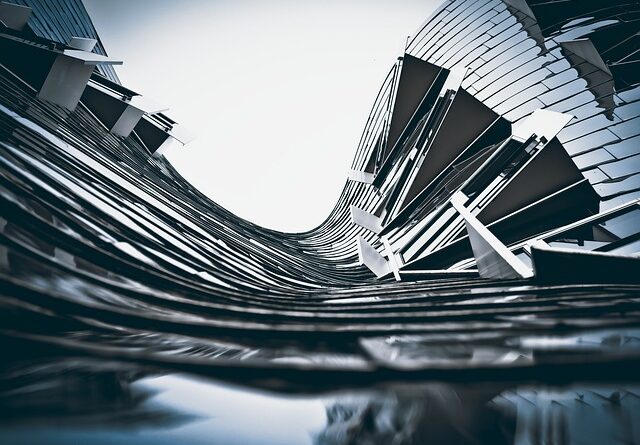
Is 3D Printing Transforming Wall Facade Design in Modern Architecture
Troy Business Makes First 3D-Printed Wall Facade
A Troy-based architectural firm has completed the region’s first fully 3D-printed wall facade, signaling a shift in how contemporary architecture merges design with digital fabrication. The project demonstrates that additive manufacturing can produce structurally sound, aesthetically refined, and sustainable exterior systems faster than traditional methods. This milestone underscores how digital workflows and robotic precision are reshaping construction norms, particularly in facade engineering where geometry and material performance intersect.
The Intersection of 3D Printing and Contemporary Wall Facade Design
The adoption of 3D printing in facade design represents more than a technological novelty—it redefines the architectural language itself. By merging computational design with automated fabrication, architects gain new freedom to sculpt forms that were once impossible or prohibitively expensive to realize.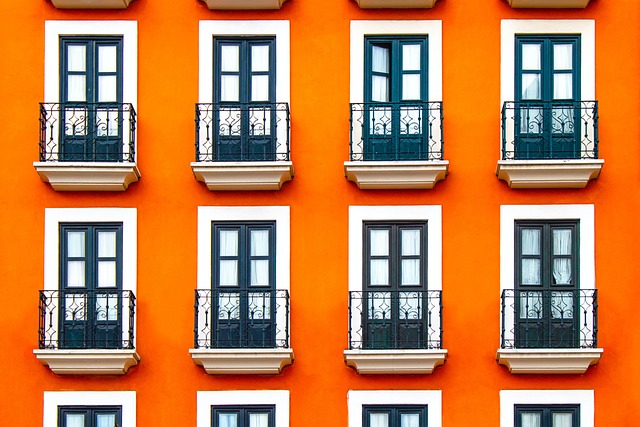
Redefining Architectural Aesthetics Through Additive Manufacturing
3D printing enables intricate geometries that conventional fabrication cannot replicate. Curved panels, perforated lattices, and gradient textures can now be printed directly from parametric models. This evolution allows facades to become expressive surfaces rather than mere protective skins. Architects also achieve tighter integration between structural and aesthetic elements since both can be designed within a single digital model. In practice, this means a wall facade can simultaneously manage loads, daylight, and ventilation through its printed form.
The Shift from Traditional Cladding to Digitally Fabricated Facades
Traditional cladding systems rely on modular repetition—flat panels bolted together by hand. Additive manufacturing breaks this limitation by producing seamless, continuous surfaces that follow organic contours. Each printed layer contributes not only to structure but also texture and insulation strategy. Material efficiency improves because printing deposits matter only where needed, reducing waste by up to 60% compared with subtractive methods. As precision rises, architects rethink the very concept of facade assembly—from discrete panels to monolithic prints produced on or off site.
Technological Foundations of 3D Printed Facades
Behind every printed facade lies an ecosystem of materials science and computational tools. These two domains define what can be built and how faithfully digital concepts translate into physical outcomes.
Materials Used in 3D Printed Architectural Applications
Concrete remains the dominant medium for large-scale architectural printing due to its compressive strength and adaptability to custom mixes. Recent developments include fiber-reinforced polymers and composite blends that balance strength with lightness for non-load-bearing facades. Material choice directly affects thermal resistance, surface finish, and weathering performance over time. Researchers are experimenting with geopolymer cements and recycled aggregates to extend durability while lowering carbon footprints—an essential step toward sustainable wall facade production.
Digital Design Tools Enabling Complex Facade Geometries
Parametric modeling software such as Grasshopper or Dynamo allows designers to control every curve mathematically. Once forms are defined, integration with Building Information Modeling (BIM) ensures coordination between structural engineers and fabricators before printing begins. Computational workflows minimize translation errors between concept and machine code; each point on the surface corresponds precisely to printer movement paths. This digital continuity transforms facades into data-driven constructions rather than manually interpreted designs.
Structural and Environmental Considerations in 3D Printed Wall Systems
As additive manufacturing enters mainstream construction, questions about safety, performance, and environmental impact become central. Printed facades must meet building codes while delivering measurable sustainability benefits.
Structural Integrity of Additively Manufactured Facades
The bond between printed layers determines overall strength much like mortar joints in masonry. Print resolution—the thickness of each layer—also influences load-bearing capacity; finer layers yield denser structures but increase print time. Many projects use hybrid systems where a printed shell encloses steel or carbon-fiber reinforcement for added rigidity. Testing under ASTM standards verifies compressive strength and flexural stability before installation approval.
Energy Efficiency and Thermal Regulation in Printed Facades
One advantage of 3D printing is its ability to embed insulation cavities directly into wall assemblies during fabrication. Designers can vary wall thickness or internal voids for passive thermal control without additional materials. Surface morphologies may include micro-textures that diffuse sunlight or reflect heat depending on orientation. Because printing minimizes waste material, embodied energy per square meter drops significantly compared with cast or cut alternatives—aligning additive construction with low-carbon goals set by international energy agencies.
Integration of 3D Printing into Architectural Practice and Construction Workflows
Introducing additive manufacturing into architectural workflows requires more than new machines—it demands cultural change across disciplines from design studios to job sites.
Design-to-Fabrication Workflow Adaptations
Effective projects begin with early collaboration among architects, engineers, material scientists, and fabricators. Digital prototypes replace multiple physical mock-ups; adjustments occur virtually before full-scale production starts. Whether printing occurs on site or off site depends on logistics: onsite reduces transport emissions but demands controlled environments; offsite offers higher precision under factory conditions yet involves shipping large modules.
Challenges in Scaling 3D Printed Facade Production
Scaling remains difficult because current printers have limited build volumes—often restricting continuous prints beyond several meters in width or height. Quality control is another challenge: temperature fluctuations or nozzle inconsistencies can compromise adhesion mid-print. Real-time monitoring systems using sensors and cameras now track layer deposition accuracy throughout production runs. Regulatory frameworks still lag behind technology; most building codes lack explicit provisions for printed concrete facades, forcing approvals through case-by-case evaluation.
Future Directions for 3D Printed Wall Facades in Architecture
The next phase of development aims not only at refinement but integration—combining structure, performance, and expression within unified printed systems that redefine how cities look and function.
Emerging Research and Development Trends
Multi-material printing is advancing rapidly: future machines may extrude different substances simultaneously so one layer provides strength while another delivers insulation or color variation. Bio-based materials derived from cellulose or algae offer biodegradable alternatives for temporary installations or adaptive shading devices. Robotics-driven precision expands feasible geometries beyond planar walls toward doubly curved envelopes responding dynamically to environmental inputs.
Potential Impact on Urban Design and Architectural Identity
As customization becomes economical at scale, buildings could display unique facades tailored to local climate data or cultural motifs without cost penalties typical of bespoke fabrication. Localized production centers might print components using regionally sourced aggregates or recycled glass powders—shortening supply chains while reinforcing local identity through material expression. Over time this fusion of digital craftsmanship blurs boundaries between architecture, art installation, and engineering prototype—a convergence already visible in experimental pavilions worldwide.
FAQ
Q1: What makes a 3D-printed wall facade different from traditional cladding?
A: It’s fabricated as a continuous form directly from digital data rather than assembled from prefabricated panels, allowing more complex shapes with less waste.
Q2: Which materials are most used for printed facades?
A: Specialized concretes dominate structural applications; polymers and composites appear in lighter decorative panels where flexibility matters more than load capacity.
Q3: How does additive manufacturing improve sustainability?
A: By depositing material only where necessary it cuts waste dramatically while enabling integrated insulation cavities that reduce operational energy demand.
Q4: Are there size limits for current facade printers?
A: Yes—most large-scale printers can handle sections up to several meters wide before requiring segmentation or modular assembly on site.
Q5: When will building codes fully support printed architecture?
A: Regulatory adaptation is underway but uneven; widespread inclusion will likely follow continued testing under standardized protocols proving long-term reliability.