
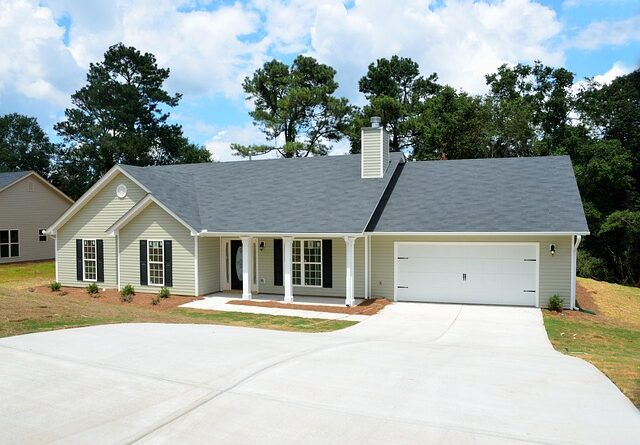
Are Single Story House Floor Plans Defining The New Era Of Modern Living
The Comeback Of One-Story Homes—And Why It Makes Sense Right Now
The renewed interest in single story house floor plans signals a broader architectural and social shift. As modern lifestyles prioritize accessibility, energy efficiency, and adaptable design, one-level homes are re-emerging as the most practical solution. Architects now treat them not as suburban relics but as models of spatial intelligence—balancing comfort, sustainability, and cost control. Their simplicity aligns with contemporary minimalism while integrating advanced materials and smart technologies that redefine how space functions in daily life.
The Architectural Relevance of Single Story House Floor Plans in Contemporary Design
The evolution of architectural priorities has placed simplicity and human-centered design at the forefront. In this context, single story layouts stand out for their ability to merge form and function within a compact footprint that encourages both aesthetic clarity and operational efficiency.
The Shift Toward Simplified Spatial Planning
Modern architecture increasingly favors open layouts that dissolve boundaries between living zones. In single story house floor plans, this approach eliminates unnecessary partitions, creating fluid transitions between indoor and outdoor areas. The absence of staircases or vertical divisions enhances accessibility while reducing construction complexity. This horizontal emphasis also supports minimalist design principles—favoring clean lines, uncluttered interiors, and an intuitive flow of movement that complements modern living habits.
Integrating Modern Materials and Technologies
Technological progress has expanded the potential of one-level architecture. Energy-efficient glazing systems, cross-laminated timber structures, and recycled composite materials allow larger spans without compromising strength or aesthetics. Smart home systems—from adaptive lighting to zoned climate control—are easier to install on a single level because wiring paths are shorter and more accessible. Moreover, sustainable insulation materials improve thermal performance while maintaining visual consistency across the structure.
Structural Innovations Supporting Design Integrity
Engineering advances now enable architects to achieve wider open spaces with minimal load-bearing walls. Steel framing systems and post-tensioned slabs have replaced traditional supports in many designs, allowing uninterrupted views across living areas. These innovations not only enhance flexibility but also preserve architectural purity by minimizing visual clutter.
Lifestyle Factors Driving the Preference for Single Story Living
The appeal of single story homes extends beyond aesthetics; it reflects deeper lifestyle values centered on inclusivity, comfort, and adaptability to future needs.
Accessibility and Universal Design Considerations
Single story layouts inherently support universal design principles by eliminating barriers such as stairs or split levels. This makes them ideal for multi-generational households or residents with mobility challenges. Wider corridors, flush thresholds, and accessible bathrooms can be seamlessly incorporated without altering the home’s appearance. Such foresight ensures long-term usability as occupants age or family dynamics evolve.
The Appeal of Open Concept Living Spaces
Open concept planning fosters stronger social interaction by connecting cooking, dining, and relaxation zones into one cohesive environment. Without upper floors obstructing light or airflow, natural illumination spreads evenly throughout the space. This enhances both comfort and energy performance by reducing reliance on artificial lighting during daylight hours. Additionally, flexible furniture arrangements allow rooms to adapt easily to changing functions—from workspaces to entertainment areas—without structural modification.
Integration of Multifunctional Zones
In contemporary practice, architects often design multipurpose rooms that blur distinctions between private and communal spaces. A study corner may double as a guest area; a kitchen island might serve as both workspace and dining surface. These hybrid zones demonstrate how thoughtful single-level planning can accommodate evolving lifestyles without expanding square footage.
Economic and Environmental Implications of One-Level Homes
Beyond design appeal, single story homes present tangible economic advantages through efficient construction methods and reduced operational costs—all while aligning with sustainability objectives.
Cost Efficiency in Construction and Maintenance
The absence of upper floors simplifies structural engineering requirements, cutting both labor hours and material usage. Roofing systems are less complex; plumbing runs shorter distances; HVAC networks require fewer ducts. These efficiencies translate into faster build times and lower maintenance bills over the building’s lifespan. For developers managing multiple units, such economies can significantly improve project margins without sacrificing quality.
Energy Performance and Sustainability Benefits
A single level structure naturally optimizes passive solar strategies since roof-to-wall ratios remain balanced across orientations. Heat distribution is more consistent due to minimized vertical air movement between floors. When paired with rooftop solar panels or green roofing membranes, these designs achieve measurable reductions in carbon footprint. Compact volumes also retain heat more effectively during winter months while facilitating cross-ventilation in summer—reducing mechanical energy demand year-round.
The Influence of Urban Planning Trends on Single Story Architecture
Urban development patterns continue to shape how architects reinterpret horizontal housing typologies within both suburban expansions and dense city environments.
Adaptation to Suburban Expansion Patterns
Suburban growth encourages low-density configurations where land availability allows horizontal sprawl without ecological strain. Zoning policies increasingly promote such developments to balance green spaces with residential needs. In these contexts, custom-designed single story homes integrate seamlessly into natural landscapes through landscaped courtyards or extended verandas that blend indoor comfort with outdoor leisure.
Reimagining Compact Urban Lots Through Horizontal Design Innovation
Even within constrained city plots, architects are finding inventive ways to apply one-level logic through layered spatial organization rather than vertical stacking. Courtyard-centered layouts bring daylight deep into interiors while maintaining privacy from neighboring buildings. Modular prefabrication further enables scalability—allowing homeowners to expand laterally when needed without disrupting existing structures or stylistic coherence.
Future Prospects for Single Story House Floor Plans in Modern Living Paradigms
As demographic shifts intersect with technological innovation, the architectural potential of one-story housing continues to evolve toward smarter adaptability rather than mere simplicity.
Evolving Consumer Preferences and Market Dynamics
Today’s buyers value practicality over excess size hierarchy. They seek homes that perform efficiently across decades rather than impress through scale alone. Developers respond by offering customizable blueprints emphasizing natural ventilation, energy autonomy, and flexible room configurations suited for remote work culture—a trend reshaping residential demand worldwide.
Architectural Innovation Shaping the Next Generation of One-Level Homes
Emerging trends such as biophilic design integrate greenery directly into built environments through interior gardens or living walls that enhance mental well-being while improving air quality indoors. Hybrid indoor-outdoor concepts extend usable space beyond walls via retractable glazing systems or covered patios that transform seasonally adaptable living zones into core lifestyle features.
Digital Modeling Tools Enabling Precision Design
Advanced 3D modeling software allows precise simulation of sunlight exposure, airflow dynamics, and thermal behavior before construction begins. This data-driven approach refines spatial proportions for maximum comfort within minimal footprints—a hallmark of next-generation single story architecture focused equally on human experience and environmental responsibility.
FAQ
Q1: Why are single story house floor plans gaining popularity again?
A: They combine accessibility with modern aesthetics while offering lower construction costs and better energy performance compared to multi-story designs.
Q2: Are one-story homes more sustainable than two-story ones?
A: Generally yes; their compact form improves heat retention efficiency and supports renewable energy integration like rooftop solar panels more effectively.
Q3: How do architects make small lots work for single level homes?
A: Through techniques like courtyard-centered layouts or modular extensions that maximize usable area without building upward.
Q4: What demographic benefits most from single story living?
A: Aging populations benefit greatly due to barrier-free circulation; however young families also appreciate safety advantages for children.
Q5: Can smart home technology be integrated easily in one-level houses?
A: Yes; wiring routes are shorter which simplifies installation for automated lighting systems, security networks, or climate control devices across all rooms uniformly.