
Patio furniture design principles for comfortable outdoor rooms
Start with the room, not the set
Good patio furniture design is not simply a matter of buying a matching collection. It starts with the way an outdoor room will be used, how people will move through it, and how the furniture will hold up to sun, rain, wind and routine maintenance. Color, texture and styling come later. Industry data supports this broader view: the International Casual Furnishings Association reported in its 2025 Outdoor Living Trend Report that most U.S. households have some form of outdoor space, while the 2026 U.S. Houzz Outdoor Trends Study found that seating and lounging are central to many renovated outdoor areas. In practical terms, the patio is increasingly planned as an extension of daily living, not as a leftover slab outside the door. For more design ideas across interiors and outdoor furnishings, see the Furniture & Decor section.
The first decision is the room type. A patio for weeknight dinners has different furniture requirements than one used for morning coffee, poolside lounging or entertaining ten guests. Before choosing a sofa depth or table finish, define the primary use and one secondary use. This helps avoid a common problem: pieces that look well proportioned in a showroom but leave too little room for movement, shade devices, planters or serving surfaces once they are installed.
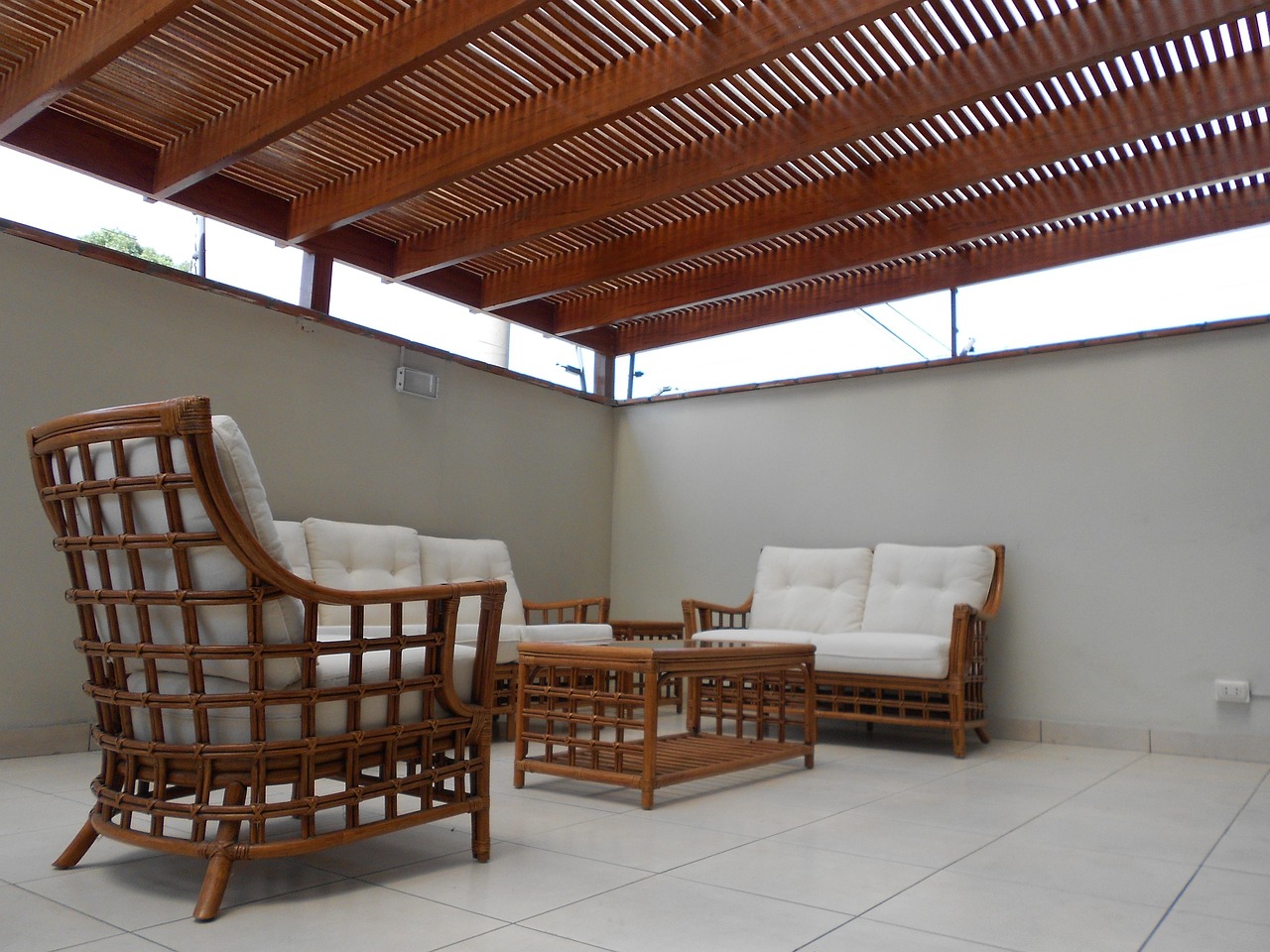
A simple planning sequence is usually enough. Measure the usable patio surface, mark door swings and grill zones, then sketch the route people will take from the house to the seating area. Common residential planning practice allows wider paths where people carry food or move around dining chairs, with narrower clearances beside occasional chairs or planters. These are comfort guidelines rather than building-code rules, but they make a noticeable difference in daily use.
| Design question | Why it matters | Practical response |
|---|---|---|
| How many people use the patio most days? | Daily comfort should guide scale more than occasional parties. | Choose enough seats for the household first, then add flexible stools or folding chairs. |
| Where does sun hit in the afternoon? | Heat and glare often decide whether furniture is used. | Plan umbrellas, pergolas, trees or movable shade before finalizing the seating position. |
| What stays outside year-round? | Exposure affects frames, cushions and fasteners. | Prioritize weather-ready materials and storage for textiles in wet or freeze-thaw climates. |
Choose a layout that supports how people gather
Outdoor furniture layout should support conversation before it supports symmetry. On a deep patio, a sofa and two lounge chairs can create a living-room pattern, with a low table at the center and smaller side tables near each seat. On a narrow balcony or townhouse patio, two comfortable chairs angled toward each other may work better than a compact sofa that blocks circulation. For dining patios, the table should sit where chairs can be pulled back without hitting walls, railings, planters or grill equipment.
Conversation seating usually works best when seats are close enough for relaxed speaking but not so close that knees compete for space. A coffee table should be reachable from the primary seats. Side tables matter more outdoors than many people expect because guests often need a stable place for glasses, books, phones or small plates. If the patio has a view, angle the seating so people can enjoy it without turning their backs completely on one another.
Modular furniture can be useful when a patio hosts different activities during the week. Armless lounge modules, lightweight ottomans and nesting tables can turn a reading corner into a small gathering area. However, modularity only works when the pieces are easy to move and when there is a place to store or park unused sections. Large modular sofas can be less flexible than they appear if every configuration still occupies the same footprint.
Materials should match exposure before style
Material choice is the technical core of patio furniture design. Outdoor furniture is exposed to UV radiation, heat, humidity, wind, rain, salt air in coastal regions and, in many climates, freeze-thaw cycles. BIFMA’s work on outdoor furniture has emphasized the difficulty of testing exterior furnishings for both weathering and structural integrity. That is a useful reminder that a chair is not outdoor-ready simply because it has an outdoor look.
Each material has strengths and limitations. Aluminum is light and corrosion-resistant, but very light pieces may need protection in windy locations. Powder-coated steel can feel sturdy and slim, yet scratches should be addressed before rust spreads. Teak and other dense hardwoods can be long-lived with correct sourcing and care, but they change color outdoors and may require maintenance depending on the desired appearance. Synthetic wicker varies widely in quality; the weave, frame and UV resistance matter more than the general category name.
| Material | Design advantage | Watch point |
|---|---|---|
| Powder-coated aluminum | Lightweight, clean-lined and broadly suitable for contemporary patios. | May move in high wind if the pieces are very light. |
| Steel | Strong, often slim and stable for dining chairs and benches. | Needs intact coating and careful maintenance in wet or coastal settings. |
| Teak or dense hardwood | Warm appearance and strong architectural character. | Requires responsible sourcing and realistic expectations about weathering. |
| Synthetic wicker | Soft visual texture and a relaxed lounge feel. | Quality depends on UV stability, frame construction and weave tension. |
| Concrete or stone-look pieces | High visual weight and strong performance as occasional tables. | Heavy to move and sometimes uncomfortable without material contrast. |
| Performance fabric | Improves comfort and helps outdoor seating feel more like indoor furniture. | Still needs cleaning, drying and storage discipline. |
Standards can help set expectations, but they are often product-specific. ASTM performance requirements exist for certain outdoor furniture categories, such as plastic chaise lounges, but no single label replaces the need to check intended use, weight rating, warranty terms, fasteners and care instructions. For homes near pools or saltwater, hardware and frame details deserve as much attention as the visible finish.
Design for shade, heat, water and storage
A patio that looks good at 9 a.m. may be uncomfortable by 3 p.m. if shade has not been planned with the furniture. The U.S. Environmental Protection Agency has long identified vegetation and shade as tools that can help reduce heat buildup around hard surfaces. For patio design, that means furniture should be coordinated with trees, umbrellas, pergolas, awnings, screens and planting beds rather than selected as a separate decorative layer.
Shade devices also affect furniture dimensions. A cantilever umbrella needs a base location and swing radius. A pergola may require furniture to align with posts. A tree canopy can drop leaves, fruit or sap, which affects cushion storage and cleaning routines. On roof terraces and exposed decks, wind matters as much as sun. In those locations, heavier frames, lower profiles and secured umbrellas are often safer and more comfortable than tall, lightweight pieces.
Water management is another design issue. Cushions should dry quickly and should not sit in puddles or against surfaces that trap moisture. Slatted seats, mesh supports, breathable cushion construction and slight patio slope can all help. Storage is part of the furniture plan, not an afterthought. A weather-resistant deck box, covered bench or nearby interior storage zone can extend the life of cushions, throws and small accessories.
Indoor comfort is shaping outdoor style
Recent industry surveys point to steady demand for outdoor spaces that behave more like rooms. The American Institute of Architects’ Home Design Trends Survey has repeatedly shown strong interest in outdoor living areas and covered outdoor spaces. Houzz’s 2026 outdoor study, based on a survey of 1,191 U.S. homeowners on the platform, reported that lounge or seating areas appear in a large share of renovated outdoor spaces, with sofas and lounge chairs also prominent. These findings do not mean every patio needs a full outdoor sectional, but they do help explain why deeper seats, softer cushions and layered accessories have become central to the category. See also: Building Styles.
The indoor-outdoor influence is visible in color and form. Softer silhouettes, rounded corners, woven texture, low lounge profiles and mixed materials make patios feel less like temporary outdoor setups. Neutral frames remain practical because they work with changing accessories, while richer greens, clay tones, warm browns, muted blues and patterned cushions can connect furniture to planting, masonry and interior palettes.
Restraint is important. Outdoor rooms already contain visual activity: sky, planting, fences, paving, facade materials and neighboring views. Too many competing finishes can make a patio feel smaller and less restful. A strong scheme usually has one dominant frame finish, one or two textile families and a limited number of accent colors repeated through cushions, planters, tableware or rugs.
Sustainability depends on longevity and repair
Sustainable patio furniture design should not be reduced to a recycled-content claim. Longevity, repairability and right-sizing often matter more. A durable chair that can be cleaned, refinished or re-cushioned may have a lower practical impact than a trend-led piece replaced every few seasons. Look for replaceable cushion covers, available spare parts, clear care instructions and materials that match the site’s exposure.
Wood furniture should come with credible sourcing information, especially for tropical hardwoods. Metal furniture should be assessed for coating quality, welds and hardware. Plastic lumber and recycled composites can be useful in wet climates, but buyers should still check structural stiffness, heat retention and repair options. With textiles, removable covers and documented outdoor performance are more important than vague weatherproof language.
Choosing fewer, better pieces can also improve the patio. A generous dining table with comfortable chairs may serve a family better than a crowded mix of bench, bistro set, lounge chair and storage box. Leaving open floor area gives the space flexibility and reduces the chance that furniture becomes clutter rather than architecture.
Common mistakes to avoid
- Buying by set size instead of patio size. A seven-piece set may be a poor choice if it blocks the door, grill or garden path.
- Ignoring afternoon sun. Shade should be planned with the same seriousness as seating.
- Choosing cushions without a storage plan. Even outdoor fabrics last longer when they can dry and be protected during storms or long periods of non-use.
- Using indoor furniture outdoors. Indoor frames, glues, foams and fabrics are rarely built for sustained moisture, UV exposure or temperature swings.
- Forgetting maintenance access. Furniture should be movable enough to clean paving, clear leaves and inspect fasteners.
- Overlooking safety and recalls. When buying secondhand or older outdoor pieces, check for stability, rust, cracked plastic, weakened folding mechanisms and relevant product safety notices.
A practical patio furniture design checklist
- Define the main use: dining, lounging, conversation, poolside rest or flexible entertaining.
- Measure the patio and mark doors, stairs, railings, grill zones, planters and drainage points.
- Choose the layout before choosing the furniture collection.
- Match frame materials to sun, rain, wind, salt air and winter storage conditions.
- Plan shade and lighting as part of the furniture arrangement.
- Select cushions and fabrics with cleaning, drying and storage in mind.
- Limit the palette so the patio connects to the architecture and landscape.
- Leave open space for movement, serving, children, pets and seasonal changes.
Frequently asked questions
What is the most important rule in patio furniture design?
The most important rule is to design for use before appearance. A beautiful patio will still fail if chairs are hard to move, the table is too large, afternoon sun makes seating uncomfortable or cushions have nowhere to go during storms.
How do you make patio furniture look connected to the house?
Repeat materials, colors or proportions from the architecture. For example, black metal frames can echo window trim, warm wood can connect to decking or interior floors, and cushion colors can relate to nearby planting or masonry. The goal is coordination, not perfect matching.
Is modular patio furniture always better?
No. Modular furniture is helpful when the pieces are light enough to move and the patio has space for different configurations. On small patios, a fixed pair of lounge chairs or a compact dining set may provide more comfort with less clutter.
How should small patios handle seating?
Small patios benefit from fewer pieces with better proportions. Consider two deep chairs with a shared table, a built-in bench with loose cushions, nesting tables or stools that can act as extra seating only when needed.
Can outdoor cushions stay outside all season?
Some outdoor cushions are designed for regular exposure, but they still last longer when they can dry fully and be stored during heavy rain, snow, pollen season or long periods without use. Always follow the manufacturer’s care instructions.