
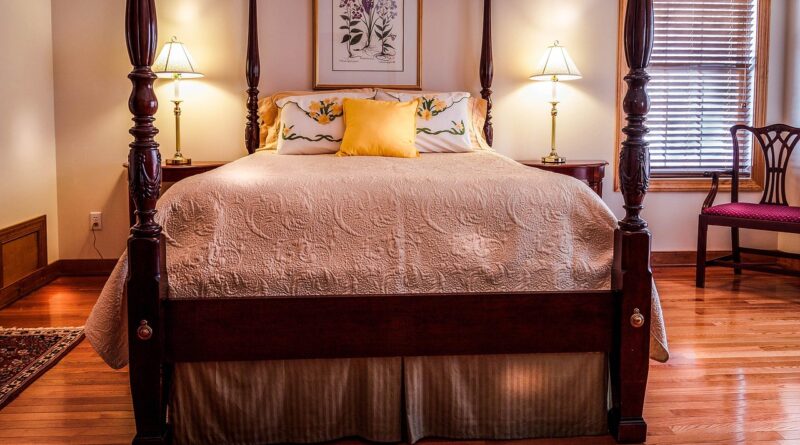
Interior decoration for bedroom comfort, storage, and calm
Start with sleep, not just style
Interior decoration for bedroom spaces should make the room calmer, easier to use, and more supportive of rest. It is not only about bedding colors, wall art, or a fashionable headboard. The strongest bedroom schemes usually come from five linked decisions: where the bed sits, how light is controlled, how much storage remains visible, which materials are brought into the room, and how the space feels at night as well as during the day.
A bedroom can look finished in photographs and still fail in daily use. Streetlight glare, nowhere to place a book, drawers that block circulation, or dust-catching textiles can quickly undermine the design. For more home design coverage, visit the Home & Interior section. This guide focuses on practical choices that can be checked before buying furniture, ordering window treatments, or repainting a room.

Use the bed as the planning anchor
The bed is the largest visual object in most bedrooms, so it should set the room geometry before decorative details are selected. A balanced bedroom does not need perfect symmetry, but it does need clear walking paths, reachable lighting, and enough space to open drawers and wardrobe doors without conflict.
As a planning step, start by identifying the quietest wall that allows a view of the door without placing the pillow directly under a drafty window or beside a noisy mechanical unit. In compact rooms, this may point to a lower bed frame, a wall-mounted shelf instead of a full nightstand, or a slim upholstered headboard rather than a deep storage headboard. In larger rooms, the issue is often the opposite: the bed can look stranded unless it is grounded with a rug, lamps, artwork, or a bench that relates to the width of the bed.
Scale matters more than matching sets. A king bed with tiny nightstands can feel accidental, while oversized bedside chests can make a modest room feel congested. A good bedside setup normally includes a surface for essentials, a light source that can be switched from bed, and a small amount of concealed storage. The decorative goal is calm proportion, not simply filling every wall.
Build a decoration scheme in layers
Bedroom decoration works best when it is built in layers rather than assembled from isolated purchases. The first layer is the fixed background: walls, flooring, ceiling color, windows, and built-in storage. The second layer is large movable furniture, especially the bed, wardrobes, dressers, and seating. The third layer is soft decoration: bedding, curtains, rugs, cushions, lampshades, and art.
This layered approach helps avoid a common mistake: choosing accent items before the room has a base palette. If the walls, flooring, and wardrobe finishes already carry strong color or grain, bedding can be quieter. If the room is architecturally plain, texture can do more work through linen, wool, bouclé, cane, paper shades, or wood. Texture is often safer than high-contrast pattern in a room intended for rest because it adds depth without creating visual noise.
A useful palette structure is 60 percent background, 30 percent secondary material, and 10 percent accent. This is not a strict rule, but it is a helpful editing tool. For example, warm white walls and oak flooring may form the background; taupe curtains, a fabric headboard, and a rug may form the secondary layer; muted blue lamps or rust-colored cushions may provide the accent. The result feels decorated without making every object compete for attention.
Choose color with light and maintenance in mind
Color changes throughout the day, especially in bedrooms used early in the morning and late at night. A wall color that looks soft in a showroom can appear gray, yellow, or flat under different artificial lighting. Before painting a whole room, test large swatches on at least two walls and check them in morning light, afternoon light, and after sunset with the lamps that will actually be used.
Soft neutrals remain popular for bedrooms because they are flexible, but neutral does not have to mean cold white. Warm white, clay, oatmeal, mushroom, greige, pale olive, powder blue, and muted terracotta can create a restful base while still giving the room identity. Deeper colors can also work well, particularly behind the bed, but they need careful lighting and enough contrast in bedding or trim so the room does not feel heavy.
Maintenance should also influence color decisions. Very dark floors show dust and lint; brilliant white upholstery can be unforgiving in rooms shared with pets or children; highly textured walls may be harder to patch. A bedroom is a lower-traffic room than an entry or kitchen, but textiles, skin oils, humidity, and dust still affect surfaces over time. The best palette is one the occupant can live with, clean, and refresh without replacing everything.
Plan lighting for morning, evening, and sleep
Lighting is one of the clearest differences between a decorated bedroom and a functional bedroom. A single ceiling fixture rarely provides enough control. Better bedroom lighting usually includes three layers: ambient light for general visibility, task light for reading or dressing, and low-level accent light for winding down.
Sleep organizations commonly describe a supportive sleep environment as cool, dark, and quiet. Published guidance is not identical on temperature: the National Sleep Foundation has often cited a bedroom range of 60 to 67 degrees Fahrenheit, while Sleep Foundation guidance has cited the mid-to-upper 60s as a common target. The useful design point is not that every room must meet one number, but that bedding, curtains, HVAC placement, and lighting should help occupants avoid overheating and excessive nighttime brightness.
For decoration, this means window treatments should be selected for performance as well as appearance. Sheer curtains can soften daylight but may not control streetlights. Blackout linings, layered drapery, or properly fitted shades can make a noticeable difference in urban rooms. Bedside lamps should avoid harsh glare at pillow height; opaque or fabric shades often create a calmer effect than exposed bulbs. Dimmers, warm-color lamps, and separate switching allow the room to shift from daytime use to evening rest without changing the furniture.
Make storage part of the visual design
Storage is not separate from decoration in a bedroom. Open clutter changes the perceived color, texture, and mood of the room. A calm scheme can quickly disappear under visible charging cables, laundry, cosmetics, packaging, and seasonal clothing. The solution is not always more furniture; it is better allocation.
Start with what must be stored in the bedroom and what can live elsewhere. Daily clothing, bedding, sleep accessories, books, and personal items need reachable homes. Luggage, old paperwork, and seldom-used decor may be better outside the bedroom if space allows. In small rooms, under-bed storage can be useful, but it should be easy to access and not so full that cleaning becomes difficult. In larger rooms, a dresser, wardrobe, or built-in wall can become a major design feature if its finish is coordinated with the bed and flooring. See also: Building Styles.
Closed storage creates visual calm, but a completely closed room can feel sterile. A good balance is to hide repetitive items and display only a few intentional objects: a lamp, a small tray, one artwork, a plant suited to the light level, or a ceramic piece. The goal is not minimalism for its own sake. It is reducing the number of decisions the eye has to process when the room is supposed to support rest.
Use textiles to control comfort and acoustics
Textiles give a bedroom softness, but they also affect temperature, sound, cleaning, and seasonal comfort. Bedding should be chosen by climate and sleep preference before pattern. Hot sleepers may prefer breathable layers that can be adjusted; cold sleepers may value heavier quilts, wool blankets, or lined curtains. A decorative bed with too many cushions can look styled in the morning and become inconvenient every night, so the number of pillows should match the occupant’s actual habits.
Rugs can make a bedroom feel warmer and quieter, especially in rooms with hard flooring. The rug should be large enough to relate to the bed rather than appearing as a small island at the foot. If a large rug is not possible, runners on both sides of the bed can still provide softness where feet land in the morning.
Curtains also contribute to acoustics. Heavier fabric can reduce the hard, echoing feeling of a bare room, although it should not be presented as a full soundproofing solution. If outside noise is a serious problem, decoration may help only partially; window quality, sealed gaps, white-noise strategies, or building-level solutions may matter more. The honest design approach is to use textiles for comfort while recognizing their limits.
Check air quality, material choices, and safety
Decorating a bedroom often brings in new paint, adhesives, rugs, mattresses, composite-wood furniture, and scented products. The U.S. Environmental Protection Agency identifies volatile organic compounds as chemicals that can evaporate at room temperature and notes that paints, finishes, cleaners, and some household products can contribute to indoor concentrations. EPA guidance emphasizes ventilation during painting, remodeling, and use of products that release VOCs. For a bedroom, this supports a practical rule: schedule painting and major furnishing changes with enough airing-out time before the room is used for sleep.
Material choices can also affect cleaning. Smooth washable surfaces may be better for people sensitive to dust, while heavy drapery, deep-pile rugs, and many upholstered pieces require more maintenance. This does not mean a bedroom must be bare. It means every soft surface should earn its place through comfort, acoustics, or beauty.
Safety is another part of good decoration. The U.S. Consumer Product Safety Commission’s Anchor It! campaign advises anchoring furniture with drawers, doors, or shelves to help prevent tip-over incidents. This is especially important in children’s rooms, guest rooms used by families, and any bedroom with tall dressers or freestanding wardrobes. Decorative styling should never block safe hardware, stable installation, or clear exits.
A practical bedroom decoration checklist
| Decision | What to check | Why it matters |
|---|---|---|
| Bed placement | Clear walking paths, access to both sides where possible, no blocked drawers | Improves daily use and makes the room feel intentional |
| Color palette | Test paint in daylight and lamplight before committing | Bedroom colors can shift strongly at night |
| Window treatment | Match fabric, lining, and shade type to privacy and light control needs | Supports both decoration and sleep comfort |
| Lighting | Use separate ambient, task, and low-level lighting | Allows the room to change from active use to rest |
| Storage | Hide repetitive items and display only selected objects | Reduces visual clutter without removing personality |
| Materials | Plan ventilation after painting or installing new furnishings | Helps manage odors and indoor air concerns |
| Safety | Anchor tall or unstable storage furniture | Reduces preventable tip-over risk |
Frequently asked questions
What is the easiest way to improve bedroom decoration without replacing furniture?
Start with lighting, bedding, and clutter control. Matching lamp color temperature, upgrading window treatments, simplifying visible surfaces, and choosing bedding that coordinates with the wall and floor can change the room more effectively than buying a new dresser or bed frame.
Which colors are best for a calm bedroom?
Calm bedrooms often use muted, lower-contrast colors such as warm white, soft gray-green, pale blue, oatmeal, taupe, clay, or gentle brown. The best choice depends on daylight, flooring, and the occupant’s preference. Testing paint in the actual room is more reliable than choosing from a small chip.
Should bedroom furniture match?
Furniture does not need to come from a matching set. A room often feels more natural when finishes are coordinated rather than identical. For example, a fabric bed, wood nightstands, and a painted dresser can work together if their scale, undertone, and hardware feel compatible.
How many decorative objects should a bedroom have?
There is no fixed number, but bedrooms usually benefit from editing. Keep objects that add comfort, memory, texture, or function, and remove items that only fill space. A few strong choices are easier to live with than many small pieces competing for attention.
What should be avoided in bedroom interior decoration?
Avoid harsh glare, blocked circulation, oversized furniture, too many visible storage items, strong odors from rushed decorating projects, and tall unanchored furniture. These issues affect comfort and safety more than any single style choice.