
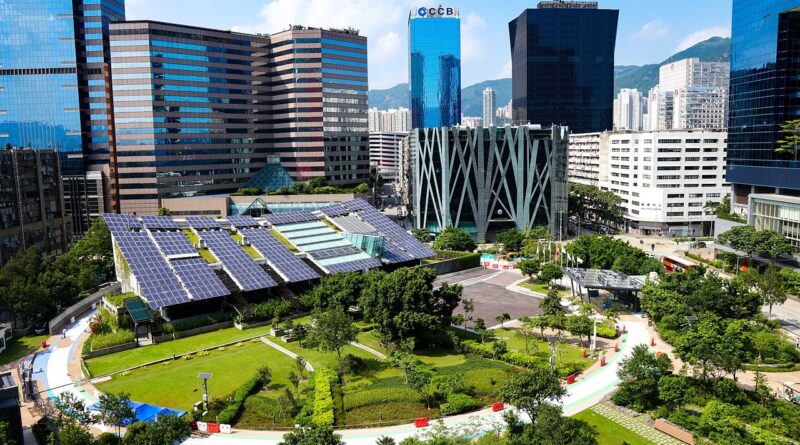
Is Green Sustainable Architecture the Smartest Way to Build for the Future?
Green sustainable architecture is not a side topic for unusual houses anymore. It is a working method for planning buildings that use less energy, waste fewer materials, and feel better for the people inside. If you are reviewing options for a home, office, hotel, or mixed-use project, the Green Architecture approach gives you a sensible place to start: reduce demand first, then select cleaner systems and materials.
The better projects do not buy every green product that appears in a catalogue. They begin with climate, site, budget, and comfort. A shaded window in Phoenix, a thicker wall in Chicago, and a reused brick facade in London can all be sustainable choices, but each one works for a different reason. Good design is usually local, checked by numbers, and often quite normal in appearance.
Why Does Green Sustainable Architecture Matter Right Now?
The building sector is one of the main areas where climate targets meet daily use. Most owners do not think about global emissions when they open a window or pay a power bill, yet the connection is real. The data also explains why architects, owners, and developers are looking at building performance more closely.
Buildings Carry a Large Carbon Load
According to the UN Environment Programme and GlobalABC Global Status Report for Buildings and Construction 2024/2025, published in March 2025, buildings and construction consumed 32 percent of global energy and contributed 34 percent of global carbon dioxide emissions. That is a large share, so it cannot be treated as a small design issue.
Every wall assembly, glazing ratio, mechanical system, and material order becomes part of this wider carbon picture. When these choices are made early, the project team has more room to cut waste without forcing awkward changes later.
Energy Demand Is Still Rising
The International Energy Agency reported in Energy Efficiency 2025 that buildings account for around 30 percent of global energy demand. It also noted that homes make up about 70 percent of energy demand in buildings, while commercial and public buildings use the rest.
For project owners, this means green design is not only for major office towers or public showcase buildings. Apartments, townhouses, clinics, schools, and small hotels also have a real effect because there are so many of them.
Design Decisions Last for Decades
A weak envelope can leave a building with high heating and cooling loads for 40 years or more. Replacing a boiler is manageable, but fixing poor orientation, thin insulation, or oversized west-facing glass is much harder and costs more.
Sustainable architecture works best when the main decisions are made early. That should happen before the floor plan feels locked in and before the contractor has priced several rounds of changes.
What Makes a Building Truly Sustainable?
A truly sustainable building is not just a normal building with solar panels on the roof. It lowers damage across its whole life, from material extraction and construction to daily operation, maintenance, and future reuse. The better projects combine basic building science, careful sourcing, and performance checks that can be verified.
Passive Design Before Equipment
Passive design means the building itself does part of the work. Orientation, shade, natural light, thermal mass, insulation, and ventilation are used before the design depends on machines.
In warm climates, deep overhangs and exterior screens can block strong heat before it reaches the glass. In cold climates, compact forms and airtight construction can reduce heat loss, and these plain details often save more energy than expensive add-ons.
Low Carbon Materials With Clear Data
World Green Building Council’s 2019 report Bringing Embodied Carbon Upfront separated building carbon into operational emissions from heating, cooling, and power, and embodied emissions from materials and construction. Its widely cited estimate puts buildings at 39 percent of global energy related carbon emissions, with 28 percent from operations and 11 percent from materials and construction.
The boundary is not the same as UNEP’s 2025 global figure, but the message is steady. Materials need proper review, not just a quick green label or a short note in the specification.
Water, Landscape, and Site Health
Sustainability also includes water and land. The U.S. EPA WaterSense program states that WaterSense labeled homes are 30 percent more water efficient than typical new construction.
That gives owners a useful benchmark when choosing fixtures, irrigation plans, and hot water layouts. A smaller lawn, native planting, rain gardens, and short pipe runs may not stand out in a brochure, but they can reduce waste every day.
Which Strategies Cut Energy Use Without Making the Building Weird?
Some clients worry that a green building will look strange, cost too much, or feel like a test project. It does not have to be that way. Many useful strategies fit inside familiar architecture, and users may first notice better daylight, quieter rooms, and lower bills rather than the technical choices behind them.
Orientation, Shading, and Daylight
Start with the sun. Put the right rooms in the right places, and control glare before it turns into a daily problem.
In a small office, moving meeting rooms away from the hottest exposure can improve comfort without adding equipment. In housing, shaded balconies can protect glass while giving residents outdoor space, but daylight still needs to be useful rather than dramatic. A bright room that overheats every afternoon is not a good result.
Insulation, Airtightness, and Better Windows
The envelope is the first line of defense. Better insulation slows heat flow, airtightness reduces drafts and uncontrolled moisture movement, and high quality windows can cut heat loss and solar gain when they match the climate.
The IEA’s Energy Efficiency 2025 report notes that in advanced economies, space and water heating together account for about 70 percent of home energy use. That makes the envelope a cost and comfort issue, not only an environmental point.
Efficient Heating, Cooling, and Controls
Once demand is lower, efficient systems make more sense. Heat pumps, balanced ventilation, smart thermostats, ceiling fans, and zoned controls can help the building respond to real use.
The control system still needs to be simple enough for people to operate. A building manager should not need a weekend course to adjust a schedule after a holiday, and in many real buildings, clear controls work better than complicated ones.
How Should You Think About Embodied Carbon?
Embodied carbon is less obvious than a utility bill because much of it is spent before move-in day. Steel, cement, insulation, glass, finishes, transport, and site work all carry impact. The earlier the team asks about these items, the more choices remain open.
Reuse Beats Replacement When It Works
The greenest structure is often the one already standing, as long as it can be adapted safely. Reusing foundations, frames, masonry, and interior elements can avoid a large amount of new material production.
This is not a fixed rule based on sentiment. Some buildings are damaged, inefficient, or unsafe, but demolition should not be the default answer. A proper reuse study can compare carbon, cost, schedule, and code issues before heavy equipment comes to site. See also: Building Styles.
Concrete and Steel Need Careful Specification
UNEP’s 2024/2025 buildings report states that the sector depends on materials such as cement and steel, which are responsible for 18 percent of global emissions. That does not mean concrete and steel are wrong in every situation.
It means they should be specified with care. Right-sized structural grids, lower carbon concrete mixes, recycled steel content, and less waste on site can all help, and a few inches saved across a large slab can matter.
Life Cycle Assessment Keeps Choices Honest
Life cycle assessment, often called LCA, compares material and design choices across different stages of a building’s life. It helps reduce greenwashing because it asks for numbers instead of claims.
For example, a product with recycled content may still be a poor choice if it travels a long distance, fails early, or increases energy use. Ask for environmental product declarations when they are available, and also ask whether the design team has compared realistic alternatives.
Can Green Buildings Feel Better to Use Every Day?
A sustainable building should not feel like a tradeoff. If rooms are stuffy, noisy, too hot, or hard to maintain, people will find their own workarounds. They may open windows at the wrong time, block vents, add plug-in heaters, or ignore controls, so comfort has to be treated as part of performance.
Fresh Air, Quiet Rooms, and Steady Temperatures
Good ventilation, filtered air, acoustic control, and steady temperatures make a building easier to use. Schools need students who can focus, hotels need guests who sleep, and offices need workers who are not arguing over the thermostat by 2 p.m.
These are human results, but they come from technical choices. Ventilation rates, envelope quality, equipment sizing, duct layout, and commissioning all affect how the building feels after people move in.
Cool Roofs, Green Roofs, and Shade
Roof and landscape choices can lower heat stress. The U.S. Department of Energy’s Federal Energy Management Program calculated that ENERGY STAR qualified cool roof products can deliver lifetime savings of about 64 cents per square foot compared with less efficient models under its stated 2020 assumptions, while best available models can save up to 1.11 dollars per square foot.
The EPA also notes that green roofs and trees can reduce heat island effects. Climate still matters, because a cool roof helps most in hot areas, while in cold regions the winter tradeoff should be checked before approval.
Simple Operations for Real People
Many green buildings miss their targets because the handover is weak. The owner receives a thick manual, the facilities team gets a short training session, and six months later nobody knows why the ventilation schedule changed.
A better plan uses plain-language guides, labeled equipment, seasonal checkups, and a short list of performance items to watch. Fancy dashboards can be useful, but a clear filter schedule may prevent more daily problems.
How Can You Start a Project the Right Way?
Green design is easier when it is part of the brief from the start, not an item added near the end. Before drawings go too far, the team can set priorities, define proof, and decide which tradeoffs are acceptable. That keeps the discussion tied to budget, performance, and use.
Set Targets Before Sketch Design
Choose targets early, including energy use intensity, embodied carbon, water use, daylight, comfort, and budget. They do not need to be perfect on day one, but they should be clear enough to guide design choices.
If you are building rental housing, durability and low maintenance may be more important than complex technology. If you are planning a public library, daylight, comfort, and low operating cost may need more attention.
Ask for Measurable Proof
Ask the design team how each major claim will be checked. Energy modeling, LCA, water calculations, commissioning reports, and post-occupancy reviews all give the owner something concrete to review.
The IEA notes that building energy codes apply to around half of new floor area in emerging economies, which shows that policy coverage is still uneven. When codes are weak, project-level targets become more important.
Plan for Maintenance From Day One
A durable green building needs maintenance access, spare parts, clear warranties, and materials that age well. A planted roof without irrigation planning can become a dry mess, and a high performance facade without cleaning access can become a long-term headache.
Before approving a detail, ask who will maintain it in year five. That simple question can prevent expensive regret later.
FAQ
Q1: What Is Green Sustainable Architecture? A: Green sustainable architecture is a design approach that reduces energy use, carbon emissions, water waste, and material impact while improving comfort, health, and long term building value.
Q2: Is Green Sustainable Architecture More Expensive? A: It can cost more upfront if complex systems are added late. It is often more cost effective when passive design, efficient envelopes, and material choices are planned from the start.
Q3: Which Green Strategy Should Come First? A: Start with lower energy demand. Orientation, shading, insulation, airtightness, and efficient windows usually create a stronger base than adding renewable energy to an inefficient building.
Q4: How Do You Avoid Greenwashing in a Building Project? A: Ask for measurable proof, such as energy models, life cycle assessment, environmental product declarations, water calculations, commissioning records, and real performance reviews after occupancy.
Q5: Can Existing Buildings Become Sustainable? A: Yes. Many existing buildings can improve through envelope upgrades, efficient heating and cooling, better controls, water saving fixtures, reused materials, and careful maintenance planning.